
Running a business in Texas means protecting yourself from unexpected liability claims. General and professional liability insurance are two distinct policies that cover different risks-and many businesses need both.
At Brooks Insurance, we help Texas business owners understand which coverage types apply to their operations. This guide breaks down what each policy covers and when you need them.
What General Liability Insurance Actually Covers
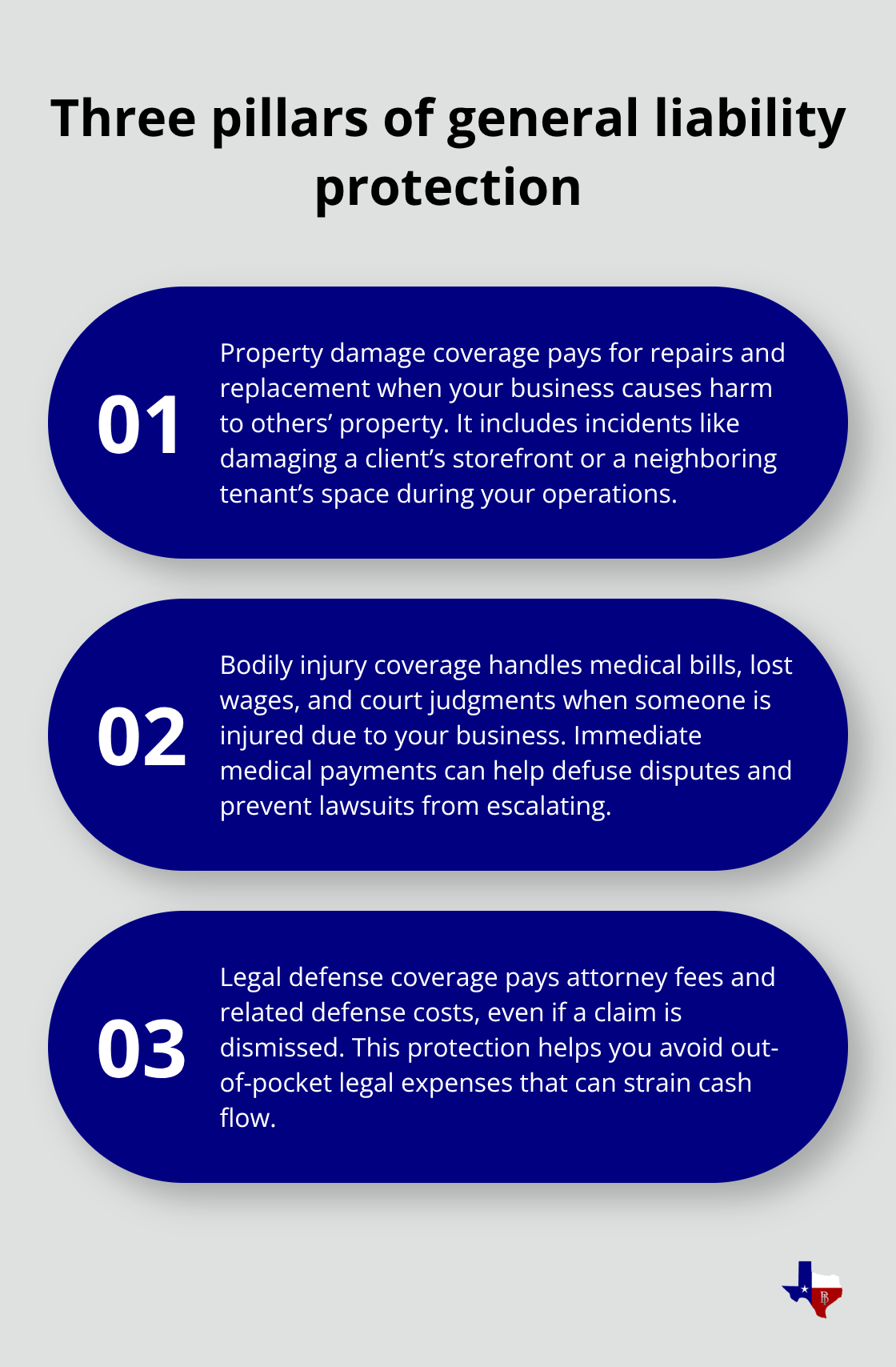
General liability insurance protects your Texas business from three major financial threats: property damage you cause to others, bodily injuries that occur on your premises or result from your operations, and the legal costs to defend yourself. Property damage claims happen more often than business owners expect. If a client trips over equipment at your office and sues, or your delivery vehicle damages a customer’s storefront, general liability covers the repair costs and settlement expenses. Bodily injury protection works similarly-it pays for medical bills, lost wages, and court judgments when someone is injured due to your business activities. Medical payments coverage handles immediate hospital bills without waiting for fault to be determined, which often satisfies injured parties and prevents lawsuits from escalating. Legal defense costs are included in most policies, meaning the insurer pays your attorney fees even if the claim is ultimately dismissed. General liability protects against premises liability, products liability, and advertising injury claims.
The average cost for general liability insurance in the U.S. runs about 360 dollars annually, though Texas rates vary based on your industry, business size, and claims history.
Property Damage Claims and Your Operations
Your business operations create property damage risk constantly. A construction company’s equipment damages a neighbor’s fence, a restaurant’s plumbing leak damages the tenant’s space below, or a contractor’s worker accidentally breaks a client’s window during installation. General liability covers these scenarios because you caused the damage. However, damage to your own work is typically excluded-if you install flooring and it fails, that’s a warranty issue, not a liability claim. This distinction matters because many business owners assume general liability covers their own defective work, which it does not. Exclusions vary by insurer, so you should review your specific policy language with your agent before a claim arises.
How Defense Costs Work in Your Policy
Most Texas general liability policies include defense costs, but how they’re treated varies significantly. Some policies pay defense costs on top of your coverage limit, while others deduct defense spending from your limit. This difference can be substantial. If your limit is 1 million dollars and defense costs reach 150,000 dollars, you want those costs paid separately. Ask your agent explicitly how defense costs are handled in any quote you receive. Settlement negotiations occur in roughly 95 percent of liability claims before trial, according to risk data, so adequate coverage and clear policy language prevent financial surprises when claims develop.
What Happens When Claims Settle
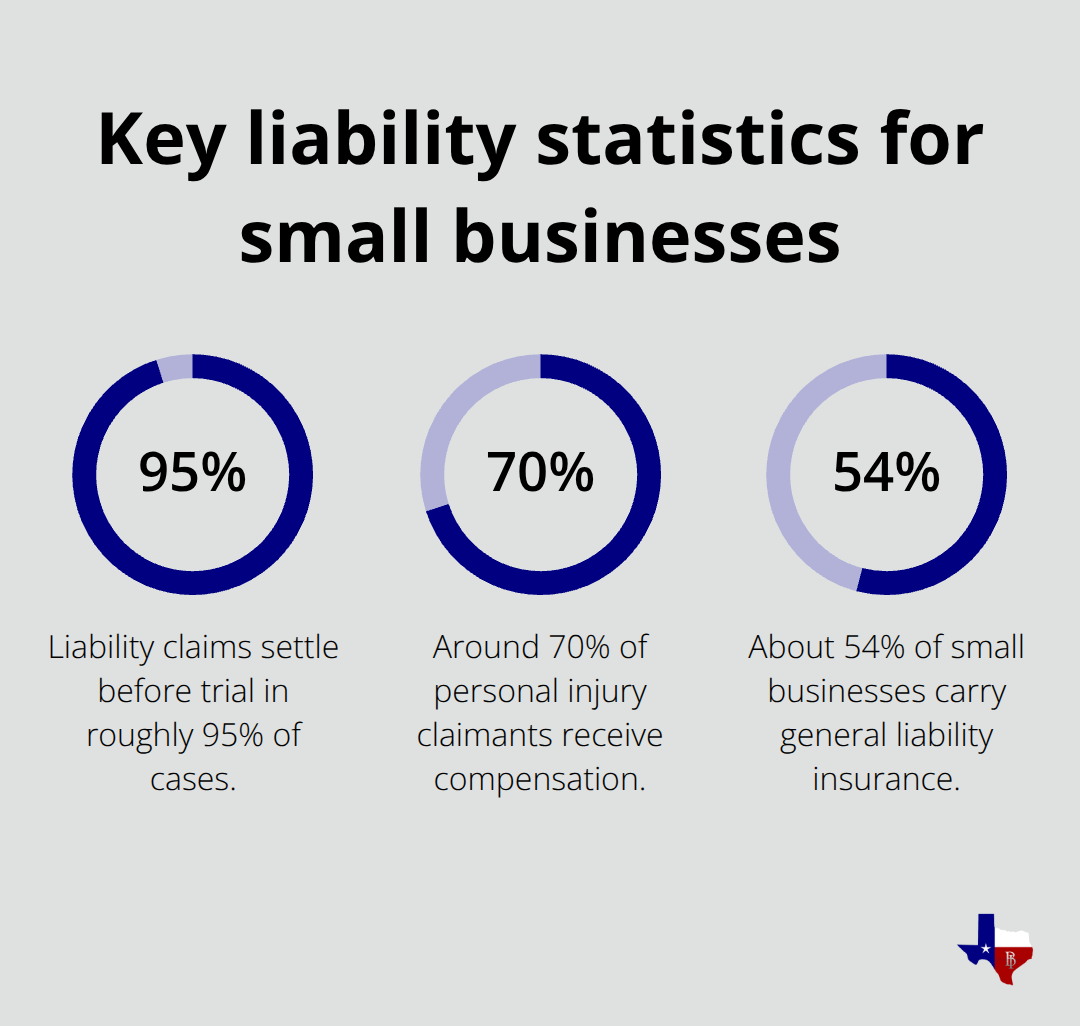
Most Texas business owners never expect to face a liability claim, yet the data tells a different story. About 36 to 53 percent of small businesses face lawsuits annually, and roughly 70 percent of personal injury claimants receive compensation. The median settlement sits around 31,000 dollars, though amounts vary widely depending on injury severity and circumstances. Your general liability policy handles these settlements directly, which means you avoid paying out of pocket. Without coverage, a single claim could drain your business reserves or force you to close operations entirely.
Understanding what general liability covers is only half the equation. Many Texas businesses also face risks that general liability does not address-specifically, errors and omissions in the professional services you provide. That’s where professional liability insurance enters the picture.
What Professional Liability Insurance Actually Covers
Professional liability insurance, also called errors and omissions coverage, protects your Texas business from financial losses when your professional advice or services cause client harm. Unlike general liability, which covers physical injuries and property damage, professional liability addresses the financial consequences of mistakes in what you do. An accountant’s tax filing error that triggers IRS penalties, a consultant’s faulty business strategy that costs a client money, or a web developer’s site failure that prevents customer transactions-these scenarios demand professional liability coverage. The Texas Department of Insurance identifies professional liability as a core coverage category for professionals, yet many business owners operate without it. If a client sues claiming your services caused financial damage, you’ll pay legal defense costs out of pocket without coverage. Medical malpractice claims average approximately $242,000, making coverage essential for healthcare professionals. Real-world examples from accounting firms show that bookkeeper errors in financial records, tax calculation mistakes, and improper account reconciliation create substantial liability exposure. Your professional liability policy covers the legal fees to defend yourself, settlement amounts the client receives, and court judgments-all critical protections when clients claim your work caused them financial harm.
When Professional Mistakes Turn Into Expensive Claims
Professional liability claims arise from situations general liability simply doesn’t address. A real estate agent provides inaccurate property information that leads a client to overpay, an interior designer chooses materials that damage the client’s home during installation, or a consultant’s strategic recommendation results in significant business losses for the client. These aren’t bodily injuries or property damage in the traditional sense-they’re professional errors with financial consequences. Your professional liability policy covers defense costs, settlements, and judgments related to these claims. Texas professionals often discover too late that their client contracts require professional liability coverage, making it impossible to obtain retroactive protection. The practical solution is obtaining coverage before you need it.
How to Shop for Professional Liability Coverage
When shopping for professional liability quotes in Texas, provide your agent with details about your specific services, client types, and contract requirements. Different professions face different risks, so customized quotes matter far more than generic estimates. Technology professionals, for example, face different exposure than consultants or accountants, and your policy should reflect your actual practice. Your claims history, years in business, and number of employees all influence your premium. Location also affects pricing, particularly in areas with higher litigation activity. Gathering this information upfront helps your agent obtain accurate quotes that match your actual risk profile.
What Professional Liability Does Not Cover
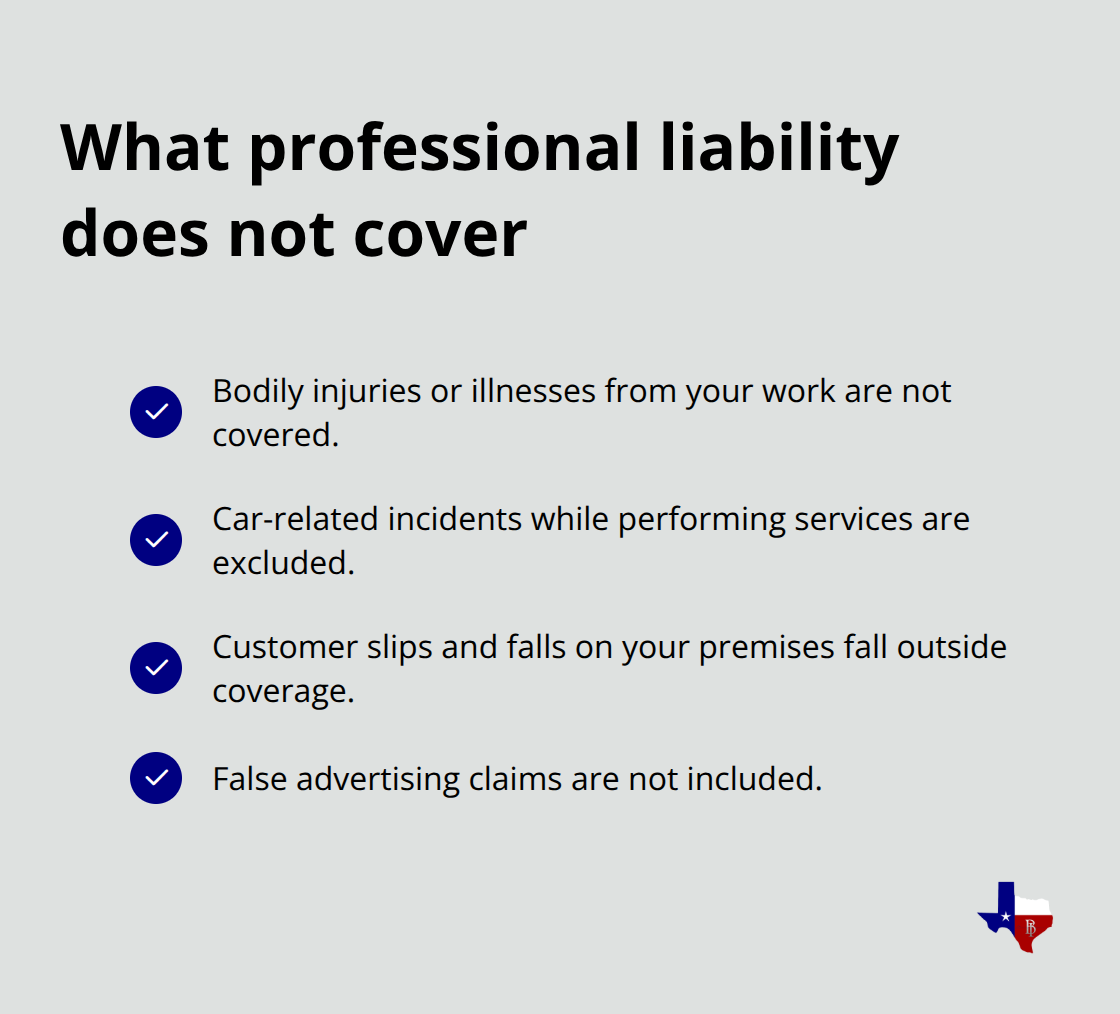
Professional liability policies exclude certain exposures that other insurance types address. Bodily injuries or illnesses from your work, car-related incidents while performing services, customer slips and falls on your premises, and false advertising claims fall outside professional liability coverage.
For these exposures, you need general liability or commercial auto insurance. Understanding these gaps prevents costly coverage surprises when claims arise. Many Texas professionals operate with only professional liability coverage, leaving themselves exposed to bodily injury or property damage claims that their policy won’t cover.
The distinction between what professional liability covers and what it excludes reveals why most Texas businesses need both professional and general liability protection. Your next step involves evaluating which coverage types apply to your specific operations and risk profile.
Why General and Professional Liability Cover Different Risks
General liability and professional liability protect against fundamentally different exposures, and conflating them is one of the costliest mistakes Texas business owners make. General liability addresses physical harm-bodily injuries, property damage, and medical expenses resulting from your business operations or premises. Professional liability addresses financial harm caused by errors, omissions, or negligence in the services or advice you provide. A roofing contractor’s equipment damages a client’s car while parked at the job site; that’s general liability. The same contractor installs the roof incorrectly, causing water damage months later; that’s professional liability if the client sues for the faulty workmanship and resulting losses. The Texas Department of Insurance treats these as distinct coverage categories because they cover entirely different claim scenarios. About 54 percent of small businesses carry general liability insurance, but the adoption rate for professional liability is significantly lower despite its equal importance for service-based professionals.
This gap exists because many business owners assume general liability covers everything, which creates dangerous exposure gaps when claims arise.
Which Industries Absolutely Need Professional Liability
Certain professions face such acute professional liability exposure that operating without coverage is reckless. Accountants, bookkeepers, tax preparers, consultants, web developers, real estate agents, and technology professionals all face routine exposure to financial loss claims. An accounting firm’s tax filing error triggers IRS penalties, a consultant’s faulty strategic advice costs a client six figures, or a web developer’s site failure prevents customer transactions-these scenarios demand professional liability protection. Healthcare professionals including nurses, therapists, and medical technicians may require malpractice coverage depending on state regulations and client contracts. Technology professionals face particularly acute exposure because their work failures often cascade into significant client losses. Real estate professionals frequently discover that their client purchase agreements require professional liability coverage, making it impossible to obtain retroactive protection once a claim surfaces. If your client contracts specify professional liability insurance as a requirement, you cannot obtain coverage after a claim arises-you must secure it before signing agreements. The practical reality is that most service-based Texas businesses need professional liability coverage regardless of industry, yet many operate without it.
Building a Liability Strategy That Actually Works
Determining whether you need one coverage type or both requires honest assessment of your actual business operations and client interactions. If you have employees, you face bodily injury exposure from workplace incidents, making general liability essential. If you provide professional services or advice, you face professional liability exposure from errors and omissions, making professional liability essential. Most Texas businesses face both exposures and therefore need both policies. The median general liability settlement sits around $31,000, while professional liability claims average significantly higher because they involve financial damages rather than simple injury costs. A single professional liability claim can exceed your annual revenue if you lack coverage. Shopping for coverage separately yields better pricing than bundling, contrary to conventional wisdom. Obtain separate quotes for general liability and professional liability, then compare total costs. Some insurers offer better rates on general liability while others excel at professional liability pricing. Your agent should obtain quotes from multiple carriers to identify which insurer offers the best value for your specific risk profile. Location matters considerably-coastal Texas businesses face windstorm exposure affecting property damage claims, while high-litigation urban areas see elevated claim frequencies and settlement amounts. Document your claims history, years in business, employee count, and revenue figures before requesting quotes, as accurate information produces accurate pricing.
Final Thoughts
Running a Texas business without both general and professional liability insurance leaves you financially exposed to claims that could devastate your operations. General liability protects against bodily injuries and property damage your business causes, while professional liability protects against financial losses from errors in the services you provide. Most Texas businesses face both types of risk, making dual coverage essential rather than optional.
Evaluating your liability insurance needs starts with honest assessment of your actual operations and the specific risks you face. Do you have employees? You need general liability for workplace injury exposure. Do you provide professional services or advice? You need professional liability for errors and omissions exposure. Shopping for general and professional liability insurance requires obtaining separate quotes from multiple carriers, since different insurers excel at different coverage types and comparing quotes from one carrier only leaves money on the table.
We at Brooks Insurance have spent over 50 years helping Texas business owners find the right coverage for their specific operations. As an independent agency, we represent multiple top-rated insurance companies, giving you access to a larger selection of coverage options and pricing than you’d find working with a single carrier. Our licensed agents understand Texas business risks and can help you evaluate whether you need general liability, professional liability, or both-contact us at brooksinstx.com to discuss your liability insurance needs with an agent who understands your industry and risk profile.
Disclaimer: The information provided in this blog is for general informational purposes only and does not constitute legal, financial, or insurance advice. Coverage options, terms, and availability may vary. Please consult with a licensed professional for advice specific to your situation