

Finding the right insurance agent in Texas can feel overwhelming. You need someone who understands your specific situation and has access to multiple carriers, not just one company’s products.
At Brooks Insurance, we believe independent agents are the best choice for Texas consumers. They work for you, shop around for better rates, and provide the guidance you actually need when it matters most.
Why Independent Agents Matter in Texas
Access to Multiple Carriers Saves You Real Money
Texas consumers who work with independent agents gain access to multiple insurance carriers instead of accepting one company’s limited options. When you call a captive agent who works for State Farm or Allstate, they can only quote you that one company’s rates. An independent agent shops your coverage across multiple carriers in minutes. This matters because insurance pricing varies dramatically between companies. A homeowner in Austin might pay $1,200 annually with one carrier and $950 with another for identical coverage. That $250 difference compounds over years.
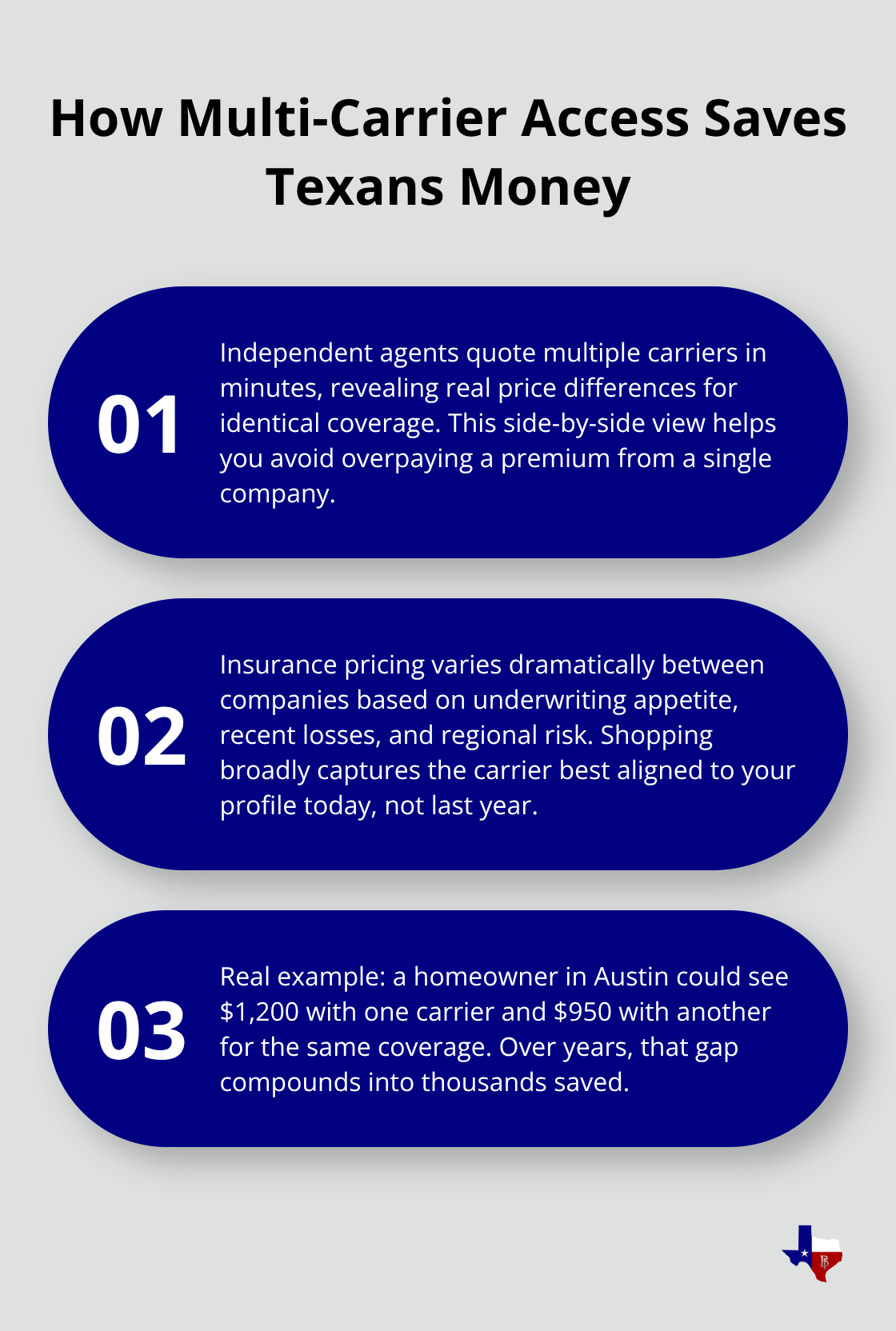
Texas has over 2,000 licensed independent agents according to the Texas Department of Insurance, and they exist specifically to do this legwork for you. Independent agents earn commissions from insurers, so their services cost you nothing extra. You pay no additional fee for access to better rates and more options.
Local Expertise Shapes Better Coverage Decisions
An independent agent working in Houston understands hurricane exposure, coastal flooding, and hail damage in ways a national call center cannot match. They know which carriers offer the best rates for Gulf Coast properties, which ones process wind damage claims faster, and which ones provide superior coverage for the specific risks your home or business faces. They also understand local market conditions. If you own rental property in Dallas, an experienced independent agent knows which carriers actively write investment properties in that area and which ones have tightened their underwriting.
This local knowledge combined with multi-carrier access means you receive personalized guidance tailored to your actual situation, not a one-size-fits-all product pushed by a single company. Your independent agent advocates on your behalf when you file a claim. They follow up with the carrier, answer coverage questions, and help resolve disputes. They maintain long-term relationships with claims adjusters and underwriters, which translates into faster resolutions and better outcomes for you.
Finding the Right Agent Requires Verification
The next step involves evaluating which independent agent truly serves your interests and has the credentials to back up their claims.
How to Verify Your Agent and Compare Your Options
Confirm Your Agent Holds a Valid License
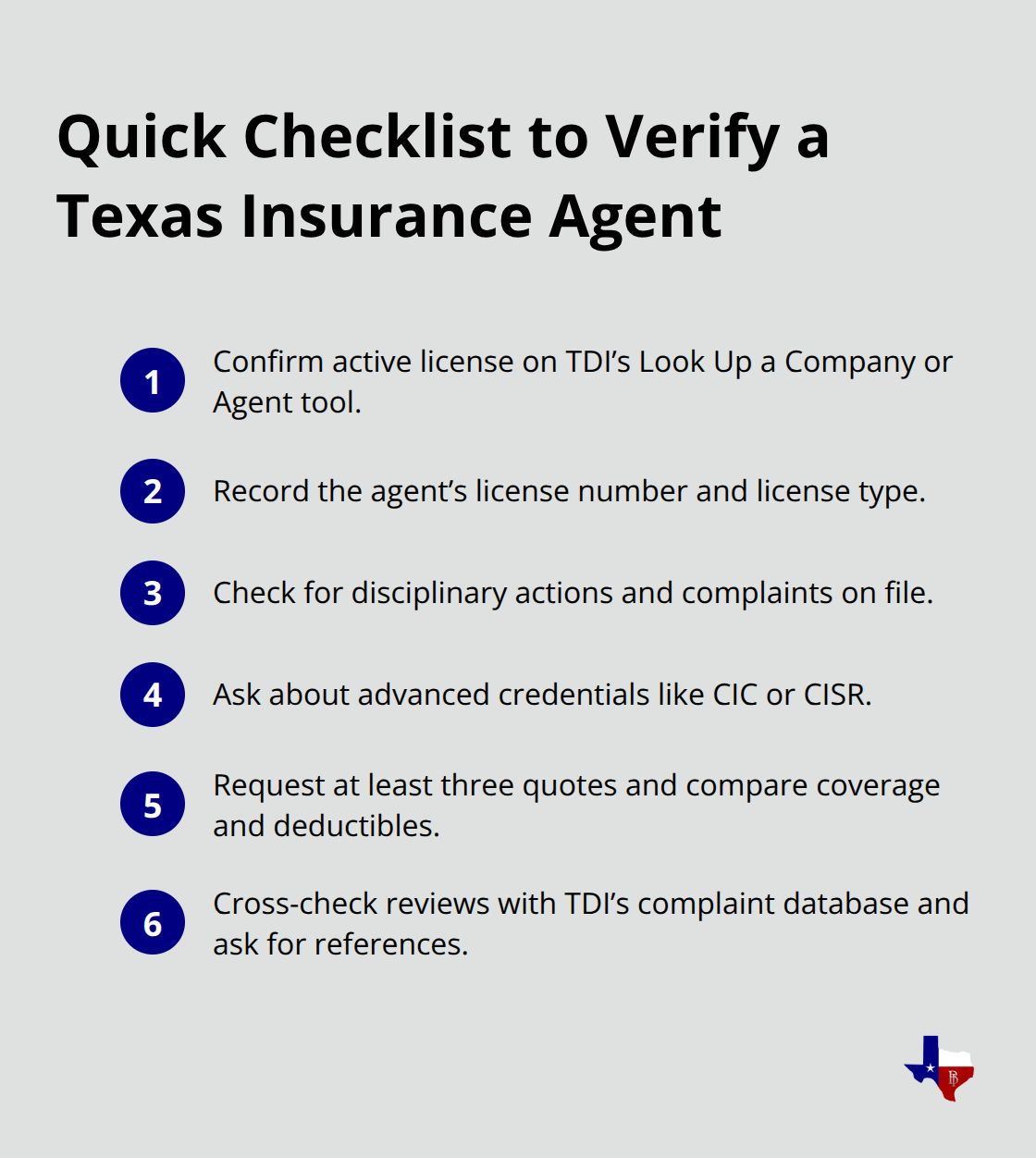
Start by confirming your agent holds a current license from the Texas Department of Insurance. Visit the TDI’s Look Up a Company or Agent tool and search by the agent’s last name, first name, or their agency name. This step takes two minutes and reveals whether they hold an active license, what type of license they carry, and any disciplinary actions or complaints filed against them. If an agent cannot provide their license number or resists verification, that’s a red flag. Texas law requires every insurance agent to be licensed, and unlicensed agents may fail to pay claims or disappear with your money.
Look for Industry Credentials and Expertise
Ask about industry credentials beyond basic licensing. Many independent agents pursue designations like the Certified Insurance Counselor (CIC) or Certified Insurance Service Representative (CISR), which require continuing education and demonstrate deeper expertise. These credentials matter because they show the agent invests in staying current with coverage changes and industry standards. An agent who holds these designations has proven their commitment to professional development and client service.
Request and Compare Multiple Rate Quotes
Request rate quotes from at least three carriers through your prospective agent. A legitimate independent agent will shop multiple companies and show you the actual differences in coverage, deductibles, and annual premiums side by side. If an agent quotes only one or two carriers, they’re not fully leveraging their access to multiple companies. Compare the quotes yourself using the HelpInsure website, which lets you enter your details and see rates from multiple insurers independently. This comparison reveals whether your agent’s quotes align with market rates or if they’re steering you toward higher-priced options.
Verify Reviews Against Complaint Records
Read online reviews on Google and the Better Business Bureau, but verify those reviews against TDI’s complaint database. A company with five-star reviews but multiple filed complaints deserves scrutiny. Contact the TDI Help Line at 800-252-3439 if you spot discrepancies. This cross-check protects you from misleading testimonials and reveals patterns of actual client problems.
Request References From Similar Clients
Ask your prospective agent for references from clients with similar coverage needs-a homeowner in your neighborhood or a small business owner in your industry. Legitimate agents provide references confidently because satisfied clients validate their work. Speaking directly with past clients who faced situations similar to yours gives you insight into how the agent handles claims, responds to questions, and delivers on promises. Once you’ve narrowed your choices through verification and comparison, the final step involves understanding what truly sets independent agents apart from direct insurers and captive representatives.
Why Independent Agents Outperform Direct Insurers and Captive Representatives
The Structural Advantage of Multi-Carrier Access
A captive agent employed by State Farm, Allstate, or Geico sells only that company’s products, period. They cannot quote Travelers, USAA, or any competitor no matter how perfectly suited that carrier might be for your situation. This structural limitation costs Texas consumers thousands of dollars annually. When you call a direct insurer’s 1-800 number, you speak with someone trained to sell you that company’s policies, not to find you the best option in the market. An independent agent operates under a fundamentally different model: they profit only when you remain satisfied long-term, not from pushing you into a single company’s overpriced product. This alignment matters enormously when claims arrive or your coverage needs shift.
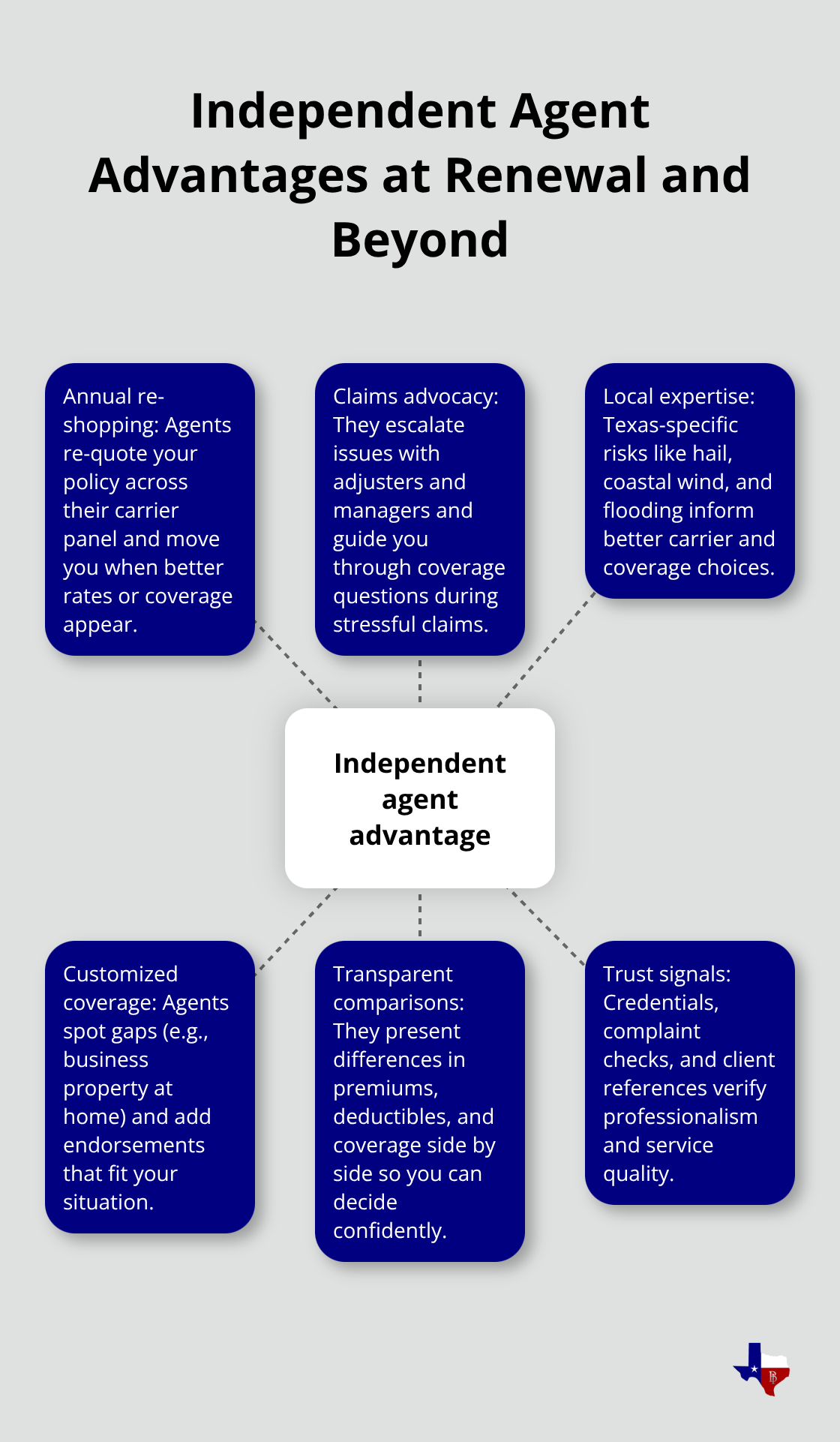
An independent agent shops your renewal annually and moves you to a better rate if one appears. A captive agent cannot do this because they lack authority to quote competitors.
Claims Advocacy and Long-Term Relationships
When you file a claim, your independent agent becomes your advocate inside the insurance company. They follow the claim, answer your questions about coverage interpretation, and escalate problems directly to claims managers they’ve built relationships with over years. A direct insurer’s phone line routes you to a claims adjuster who has no incentive to resolve your case favorably beyond legal obligation. Your independent agent’s reputation depends on claims getting paid fairly and quickly, so they push harder on your behalf.
The practical difference emerges most clearly when you face a complex claim or coverage dispute. A homeowner in San Antonio with water damage discovers their policy excludes gradual seepage but covers sudden pipe bursts. An independent agent immediately clarifies the distinction, documents the incident properly, and presents evidence to the carrier that supports coverage. A direct insurer’s claims line reads the policy language and denies the claim if any ambiguity favors the company.
Identifying Coverage Gaps and Customizing Protection
Independent agents identify coverage gaps you wouldn’t spot yourself. They know that standard homeowners policies exclude business property, so if you run a consulting firm from home, they add a business personal property endorsement. They understand that investment properties in Houston face different underwriting standards than owner-occupied homes, so they place you with a carrier that actively writes rental properties rather than one that treats them as secondary risks. Captive agents lack this incentive to dig deeper because they earn commission either way.
The Annual Renewal Advantage
The annual renewal process reveals this difference starkly. An independent agent reruns your quote across their carrier panel each year and alerts you if a competitor now offers better rates or coverage. Many independent agents guarantee rate shopping: if your renewal premium jumps unexpectedly, they automatically re-shop to find lower options before presenting you the bill. Direct insurers send renewal notices with rate increases that reflect their underwriting decisions and nothing more. You cannot negotiate or shop alternatives because there are no alternatives within that company.
This is why independent agents consistently deliver better long-term value. They must earn your business every year through results, not through trapping you in a single company’s renewal cycle.
Final Thoughts
Independent agents deliver transparent guidance because their business model aligns with your interests, not a single insurance company’s profit margins. When you read independent agent reviews Texas, you’ll notice satisfied clients consistently mention one thing: their agent explained coverage clearly, compared real options, and advocated during claims. This happens because independent agents earn trust through results, not through corporate marketing budgets.
Finding the right agent takes time, but the effort pays dividends. You need someone who listens to your specific situation, understands Texas risks in your area, and has access to carriers that actually want your business. Verify their license, check their credentials, request multiple quotes, and speak with their past clients-these steps filter out agents who cut corners or prioritize commissions over your coverage needs.
The difference between working with an independent agent and accepting whatever a captive representative offers compounds over years through better rates, superior coverage, and faster claims resolution. Contact Brooks Insurance to discuss your coverage needs and see how independent representation works in practice.
Disclaimer: The information provided in this blog is for general informational purposes only and does not constitute legal, financial, or insurance advice. Coverage options, terms, and availability may vary. Please consult with a licensed professional for advice specific to your situation