

Most drivers either buy too little coverage or pay for protection they don’t need. Finding the right balance-what we call medium-sized auto insurance-means matching your policy to your actual life, not guessing.
At Brooks Insurance, we help Texas drivers cut through the confusion. The right coverage protects your assets without wasting money on unnecessary add-ons.
What Medium-Sized Coverage Actually Means
Texas law requires a minimum of 30/60/25 in liability coverage-that’s $30,000 per person, $60,000 per accident for bodily injury, and $25,000 for property damage. Most Texas drivers stop there and call it a day. That’s a mistake. According to the Texas Department of Insurance, minimum coverage leaves you exposed the moment a multi-vehicle crash happens or someone needs serious medical care. Medium-sized coverage means stepping above that floor without buying protection you’ll never use. For most Texas drivers, this means liability limits of at least 100/300/100, comprehensive and collision coverage with a $500 deductible, and uninsured or underinsured motorist protection at your liability limits. If you finance or lease your vehicle, your lender already requires comprehensive and collision anyway, so you’re halfway there. The 2026 average cost of full-coverage auto insurance in Texas runs about $2,498 per year, but rates spike 25 to 45 percent higher in urban areas like Houston and Dallas due to traffic density and claim frequency.
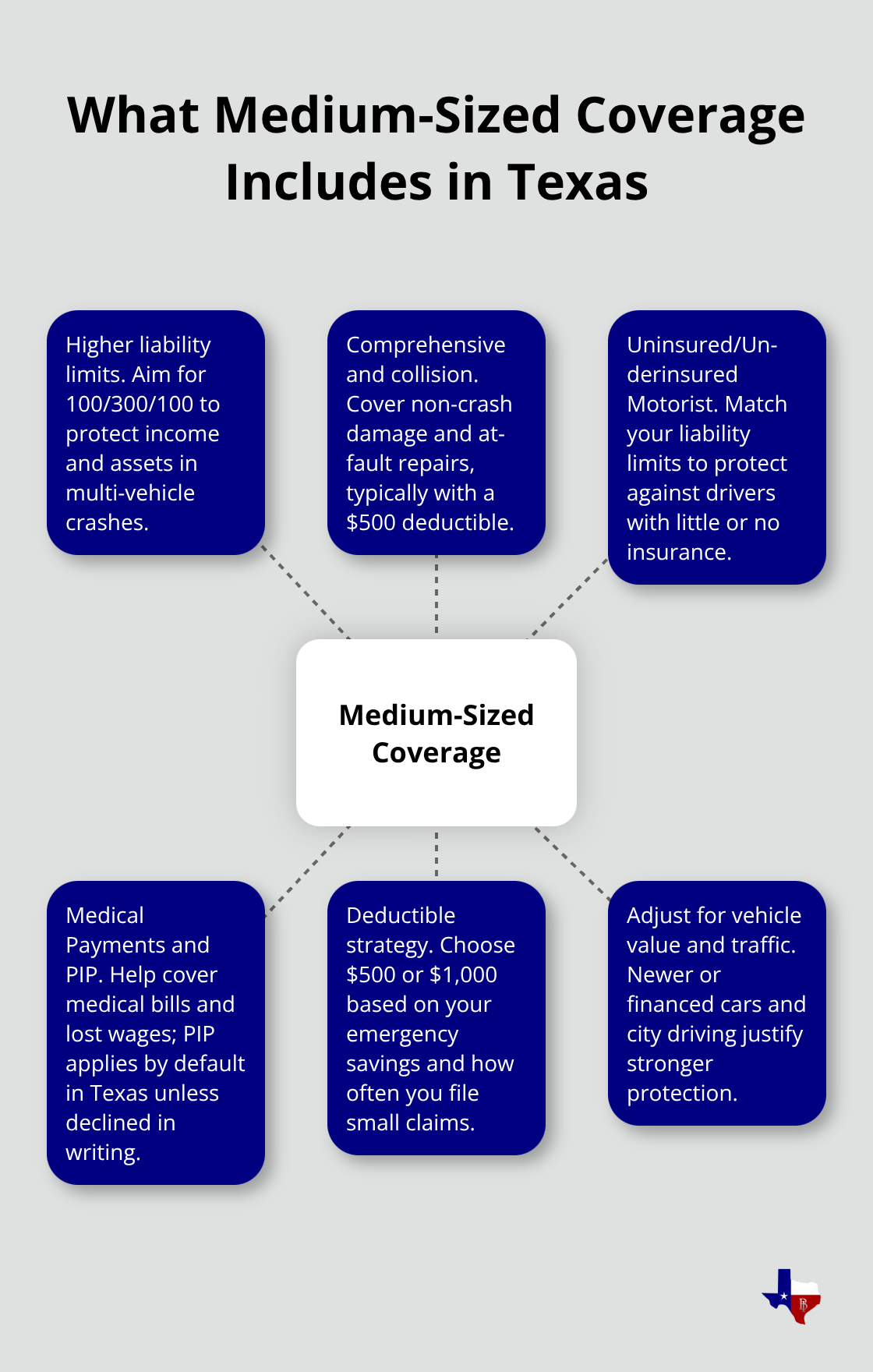
Your deductible choice matters more than most drivers realize. A $500 deductible costs less upfront but means you’ll pay $500 out of pocket after any collision or comprehensive claim. Jump to a $1,000 deductible and you save roughly 15 to 25 percent on collision and comprehensive premiums-a smart move if you have emergency savings and rarely file small claims.
Why Liability Limits Matter in Texas Traffic
Liability coverage pays for the other person’s medical bills and vehicle damage when you cause a crash. The state minimum of 30/60/25 sounds reasonable until you’re in a three-car pileup on I-35 where medical costs hit $150,000 and the other vehicles total $60,000. Your $60,000 bodily injury limit runs out fast, and the injured parties can sue you personally for the rest. Jumping to 100/300/100 costs roughly $15 to $25 more per month but protects your paycheck and home. In high-traffic Texas cities, this upgrade is non-negotiable. Uninsured and underinsured motorist coverage protects you when the other driver has no insurance or insufficient limits. Texas requires insurers to offer this coverage, though you can decline it in writing according to the Texas Department of Insurance. We strongly recommend against declining it. One in eight Texas drivers carries no insurance, and hit-and-run crashes happen daily in Dallas and Houston. This coverage pays your medical bills and vehicle damage when you hit an uninsured driver, making it essential protection that costs $10 to $20 monthly for solid limits.
Collision, Comprehensive, and the Real Cost of Gaps
Collision coverage pays to repair or replace your car after a crash, regardless of who’s at fault. Comprehensive covers non-crash damage: hail, theft, vandalism, and weather. Texas hail damage is common in North Texas, and comprehensive claims typically don’t spike your rates the way at-fault accidents do, making it affordable protection. If you own your car outright, collision and comprehensive are optional. If you owe money on it, your lender mandates both. For owned vehicles worth more than $10,000, skipping these coverages is reckless. A totaled vehicle with no collision coverage means you absorb the full loss-often $15,000 to $30,000 for mid-range cars. Comprehensive premiums average $12 to $18 monthly; collision runs $25 to $40 monthly depending on your vehicle and deductible. Medical payments coverage and personal injury protection add another layer. Medical payments covers your hospital bills after any accident, whether you’re at fault or not. PIP is mandatory in Texas unless you decline it in writing, and it covers lost wages and childcare costs if you’re injured. Together, these run $15 to $25 monthly but prevent medical debt from derailing your finances after a crash.
Choosing the Right Deductible for Your Situation
Your deductible directly affects both your monthly premium and your out-of-pocket costs when a claim occurs. A lower deductible ($250 or $500) means higher monthly payments but less financial strain after an accident. A higher deductible ($1,000 or $1,500) reduces your premium significantly but requires you to have cash available when you need it. The math is simple: if you have three to six months of emergency savings, a higher deductible makes sense and saves you money over time. If you live paycheck to paycheck, a lower deductible protects you from unexpected expenses that could spiral into debt.
Building Your Coverage Strategy
Medium-sized coverage isn’t one-size-fits-all. Your specific needs depend on your vehicle’s value, your financial situation, and your local traffic patterns. Drivers in Dallas and Houston face higher accident rates, making liability upgrades more valuable than they are in rural areas. Drivers with newer vehicles (worth $20,000 or more) should carry full collision and comprehensive coverage. Drivers with older paid-off vehicles can often skip collision but should keep comprehensive for theft and weather protection. The next step is comparing what different insurers charge for the same coverage-rates vary dramatically across carriers for identical policies.
Where Coverage Falls Short in Texas
The Hidden Cost of Minimum Coverage in High-Traffic Areas
Many Texas drivers discover their protection gaps only after a crash. The problem isn’t that they ignored insurance entirely-it’s that they stopped thinking about it after buying the minimum and never adjusted as their situation changed. High-traffic areas like Dallas, Houston, and Austin amplify this risk dramatically. Traffic density in these cities means more multi-vehicle accidents, higher medical costs, and greater property damage claims. When a three-car collision happens on I-35 with $200,000 in combined injuries and damage, a 30/60/25 policy evaporates instantly, leaving you personally liable for everything above those limits. Your wages and assets become fair game for civil lawsuits. Upgrading to 100/300/100 liability costs roughly $180 to $300 annually but shields your financial future-a trade that makes immediate sense for anyone in a metropolitan area.
Uninsured Motorists Create Massive Financial Exposure
The second major gap is skipping uninsured and underinsured motorist coverage entirely. One in eight Texas drivers operates without insurance, according to recent data, and hit-and-run crashes remain common in major cities. When an uninsured driver hits you, your own uninsured motorist coverage pays your medical bills and vehicle damage, protecting you from absorbing losses caused by someone else’s recklessness. Many drivers decline this coverage to save $10 to $20 monthly, then face $15,000 to $40,000 in medical and repair costs after a crash. The math doesn’t work.
Medical Protection Prevents Financial Catastrophe
Medical payments coverage and personal injury protection round out this protection by covering your hospital bills, lost wages, and childcare costs regardless of fault. These coverages cost $15 to $25 monthly combined but prevent a single accident from triggering medical debt that takes years to overcome. Texas mandates PIP by default, though you can decline it in writing-we strongly recommend against it. The difference between adequate coverage and gaps that destroy finances often comes down to $30 to $50 monthly (an amount most drivers spend without thinking on subscriptions or dining out).
Customizing Your Policy to Match Your Actual Risk
The next step is comparing what different insurers charge for the same coverage-rates vary dramatically across carriers for identical policies. Your specific needs depend on your vehicle’s value, your financial situation, and your local traffic patterns. Drivers in Dallas and Houston face higher accident rates, making liability upgrades more valuable than they are in rural areas. Drivers with newer vehicles (worth $20,000 or more) should carry full collision and comprehensive coverage. Drivers with older paid-off vehicles can often skip collision but should keep comprehensive for theft and weather protection.
Building Your Policy to Fit Your Life
Assess Your Real Exposure
The gap between what you buy and what you actually need comes down to honest assessment of your situation, not guesswork. Start by measuring your real exposure. If you drive I-35 or I-45 daily in Dallas or Houston, your accident risk is substantially higher than someone commuting 10 miles on rural roads twice weekly. Urban drivers face 25 to 45 percent higher premiums according to the Texas Department of Insurance, and that premium difference exists because claims happen more often and cost more.
Your vehicle’s value matters equally. A financed 2024 Honda CR-V worth $28,000 demands full collision and comprehensive coverage-skipping it means absorbing a $28,000 loss if totaled. A paid-off 2015 vehicle worth $8,000 might justify dropping collision entirely, though comprehensive stays critical for theft and hail.
Match Your Deductible to Your Financial Reality
Your financial cushion determines deductible strategy. If you have $5,000 in emergency savings, a $1,000 deductible saves you 15 to 25 percent on collision and comprehensive premiums annually. If you live paycheck to paycheck, that $500 deductible prevents a $1,000 surprise bill from becoming a credit card debt spiral.
Texas requires minimum 30/60/25 liability, but in Dallas and Houston this is inadequate. Liability claims in multi-vehicle crashes regularly exceed $100,000 combined. Upgrading to 100/300/100 costs roughly $180 to $300 annually and protects your home and wages from civil judgments.
Protect Against Uninsured Drivers
One in eight Texas drivers carries no insurance according to recent data, making uninsured motorist coverage essential protection at your liability limits. You can add coverage in $5,000 increments, with solid limits costing roughly $10 to $20 monthly to pay your medical bills and vehicle repairs when an uninsured driver hits you.
Shop Multiple Carriers for Real Savings
After you’ve determined what you need, comparison shopping becomes your largest lever for savings. Rates for identical coverage vary dramatically across carriers, sometimes by 200 percent or more for the same driver and vehicle. Get online quotes from at least three different insurers using the same coverage limits and deductibles. Most insurers quote online in minutes and let you customize coverage before committing.
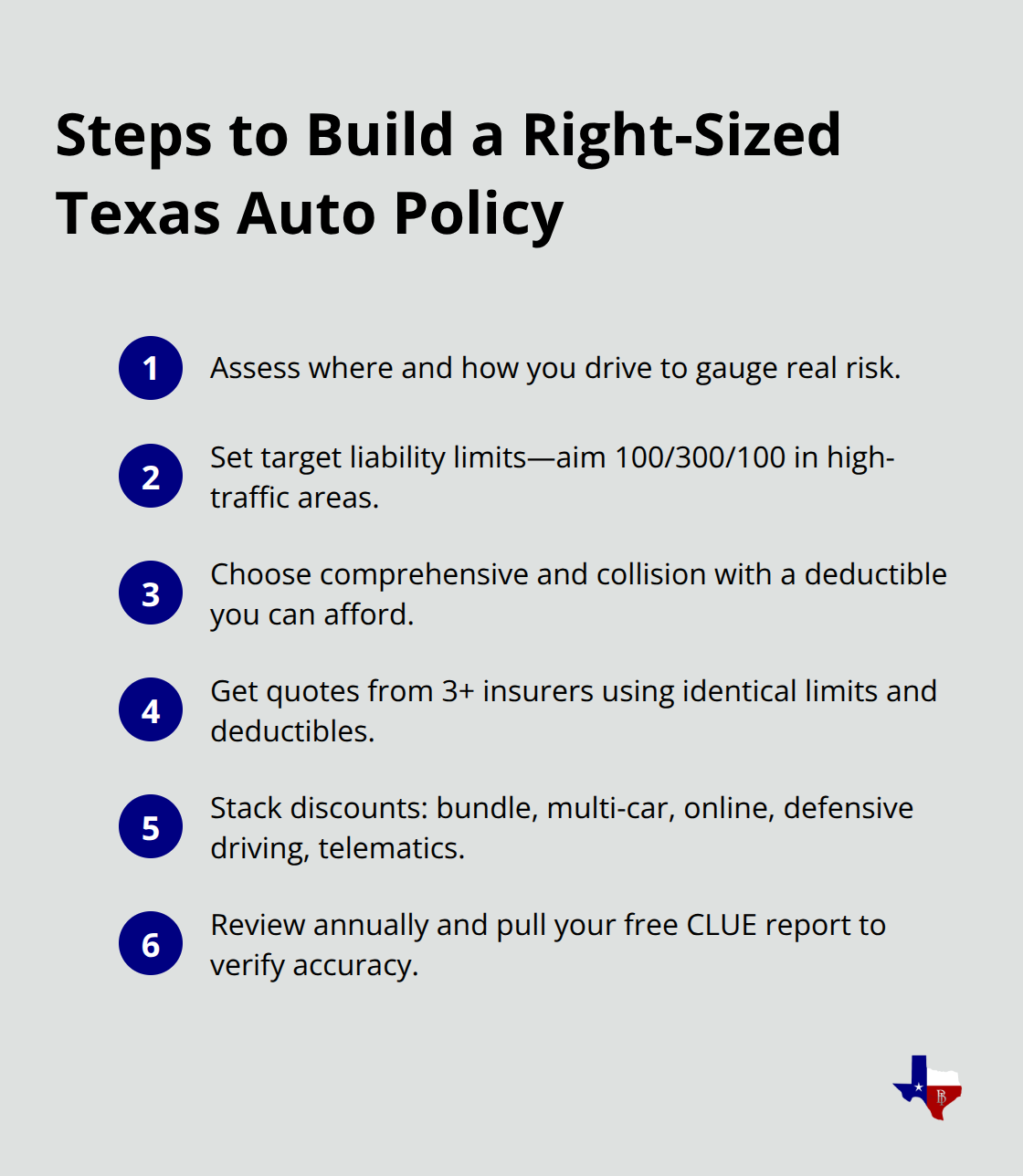
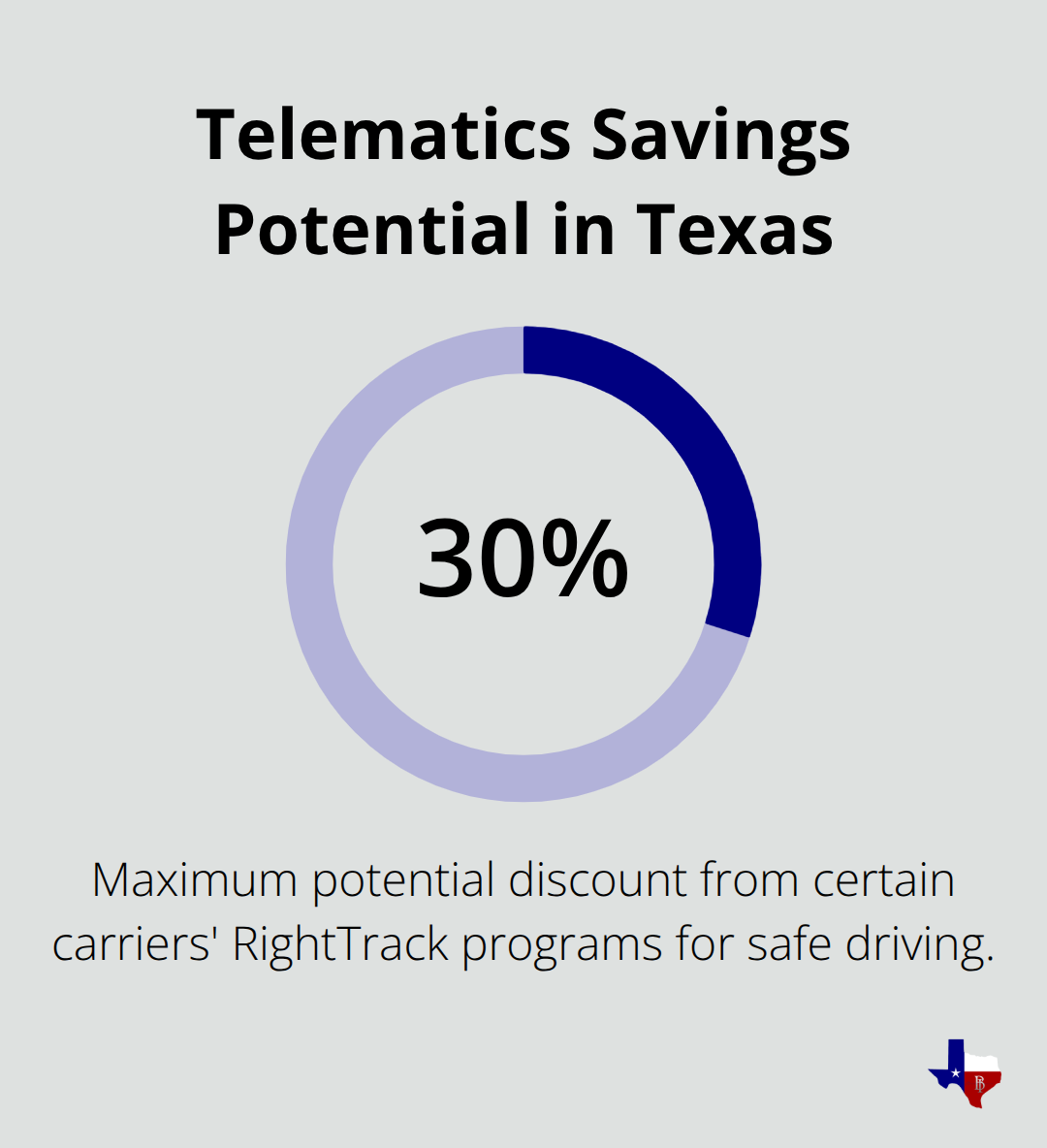
Pay attention to available discounts. Bundling auto with renters or homeowners typically saves 10 to 25 percent. Multi-car discounts apply when you insure two or more vehicles with the same company. Online purchase discounts save an additional 5 to 10 percent. Defensive driving course discounts available under Texas law can reduce premiums further. If your driving record is clean, the RightTrack driving program offered by some carriers rewards safe driving with savings up to 30 percent by monitoring your acceleration, braking, and time of day you drive.
Review Your Coverage Annually
Life changes fast. A new job closer to home reduces your annual mileage, lowering premiums. A teen starting to drive increases rates substantially but adding them to your family policy costs less than insuring them separately. Moving from a rural area into Dallas or Houston bumps your rate up 25 to 45 percent due to traffic density. When you move to a new county or expand your business, local agents adjust your coverage to match your actual exposure rather than leaving you with yesterday’s policy. A claims history is tracked through CLUE reports maintained by LexisNexis, and you can obtain a free annual report to verify accuracy. Schedule an annual review to confirm your coverage matches your current situation and budget, not last year’s assumptions.
Final Thoughts
Medium-sized auto insurance matches your policy to your actual life, your vehicle’s value, and your financial situation-not generic recommendations or minimum requirements. The drivers who feel confident after a crash took time to assess their real exposure before disaster struck, identifying what they need based on where they drive, what they own, and what they can afford to pay out of pocket. Then they compared quotes across multiple carriers to find the best rate for that coverage.
Your assets deserve protection that reflects your actual risk. A driver commuting daily on I-35 in Dallas needs different coverage than someone driving rural roads twice weekly, and a financed vehicle worth $28,000 demands full collision and comprehensive protection while a paid-off car worth $8,000 might justify different choices. The difference between adequate protection and gaps that destroy finances often comes down to $30 to $50 monthly-the cost of upgrading from minimum liability to solid limits, adding uninsured motorist coverage, or choosing the right deductible.
We at Brooks Insurance help Texas drivers build medium-sized auto insurance policies that protect assets without wasting money on unnecessary coverage. Contact Brooks Insurance today to build a policy tailored to your actual exposure and budget.
Disclaimer: The information provided in this blog is for general informational purposes only and does not constitute legal, financial, or insurance advice. Coverage options, terms, and availability may vary. Please consult with a licensed professional for advice specific to your situation