

A single liability claim can cost your Texas business tens of thousands of dollars-or more. Without proper general liability risk management, one accident on your property or a client injury could threaten your entire operation.
We at Brooks Insurance help business owners understand their exposure and take concrete steps to reduce it. This guide walks you through identifying risks, implementing safeguards, and protecting what you’ve built.
What General Liability Actually Covers
General liability insurance protects your Texas business when someone claims you caused them bodily injury or property damage. This coverage pays for their medical bills, legal defense costs, and court judgments if you’re found liable. The scope extends to incidents on your property, injuries caused by your products or services, and advertising-related claims.
Most policies cover bodily injury, property damage, and personal injury claims, though coverage limits and exclusions vary significantly between policies. Texas courts have awarded substantial settlements in liability cases, making this protection essential rather than optional for any business with customer or public interaction.
What Claims Actually Cost Texas Businesses
Property damage claims from slip-and-fall accidents on your premises average between $30,000 and $40,000 in medical expenses alone. Customer injuries during service delivery can reach $50,000 or higher when legal fees are included.
A small restaurant in Austin faced a $120,000 settlement after a customer suffered a severe allergic reaction from undisclosed ingredients. The restaurant’s general liability policy carried a $100,000 limit, leaving them personally responsible for the $20,000 difference. Product liability claims in manufacturing settings frequently exceed $200,000 when multiple customers are affected.
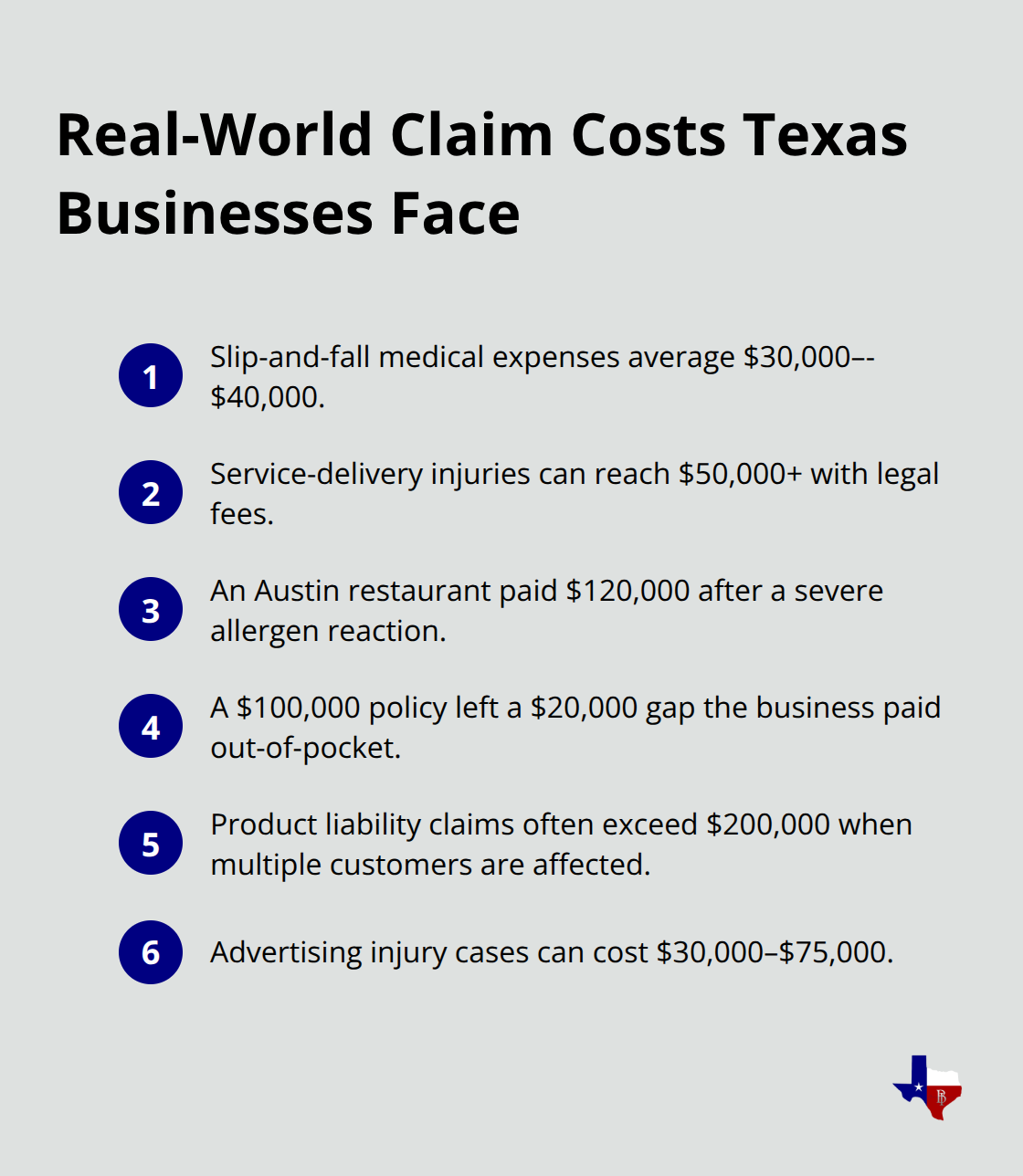
Advertising injury claims, though less common, can cost $30,000 to $75,000 when businesses face accusations of copyright infringement or defamation. Without coverage, these expenses come directly from your operating capital, inventory funds, or personal assets. A single claim can eliminate years of profits in weeks.
Why Uninsured Exposure Threatens Your Business Survival
Texas businesses without general liability insurance face catastrophic financial consequences. Courts can garnish business revenue and personal bank accounts to satisfy judgments. Your business license can be suspended or revoked if you cannot pay court-ordered settlements.
Clients and vendors increasingly require proof of liability coverage before signing contracts, which means uninsured businesses lose competitive opportunities. Banks may refuse to finance equipment or expansion if you lack basic liability protection. Your personal home and savings become vulnerable in lawsuits where the judgment exceeds your business assets.
Moving Forward With Risk Identification
Understanding what general liability covers and what it costs reveals only part of the picture. The real protection comes from identifying which specific risks threaten your operation before a claim happens.
Where Your Biggest Liability Exposures Hide
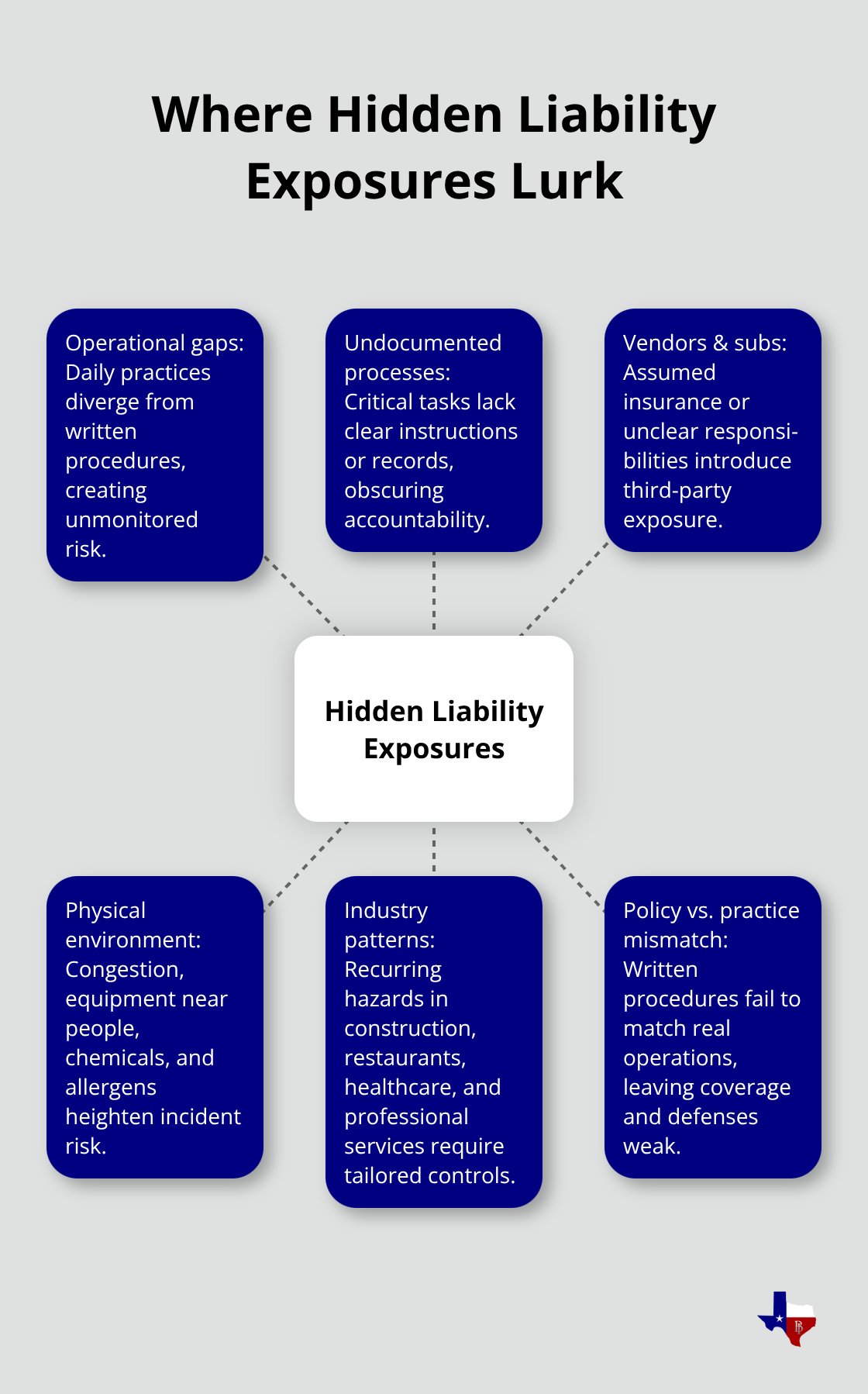
Most Texas business owners think liability risk lives in obvious places-a customer trip on wet floors or a product that malfunctions. The reality is far more complex. Your greatest exposures often hide in operational gaps, undocumented processes, and industry-specific hazards you’ve stopped noticing because they’re part of your daily routine. Identifying these risks requires systematic examination, not guesswork.
Map Every Customer and Operational Touchpoint
Start by mapping every customer interaction, employee task, and service delivery point in your operation. A construction company might overlook that their equipment rental agreements lack clear liability language. A salon owner might not realize their cleaning protocols for tools create infection risks. A contractor might assume their subcontractors carry adequate insurance without verifying it.
Document exactly how work gets done-not how you think it gets done or how it should get done. Walk through your facility at different times. Observe what actually happens when customers arrive, during service delivery, and when they leave. Note where congestion creates fall risks, where equipment operates near people, where chemicals or allergens are present, and where communication breakdowns occur. This ground-level view reveals vulnerabilities that desk-based risk assessment misses entirely.
Recognize Industry-Specific Liability Patterns
Different industries carry distinct liability patterns that demand specific attention. Contractors face exposure from subcontractor negligence, incomplete site safety protocols, and property damage to client structures. Restaurants and food service businesses encounter foodborne illness claims, allergen exposure, and slip-and-fall incidents. Healthcare and wellness providers manage patient injury risks, informed consent documentation gaps, and equipment malfunction scenarios. Professional service firms confront errors-and-omissions exposure that general liability policies often exclude.
Rather than applying generic risk management, focus on the three to five liability scenarios most likely to affect your specific business model. Then verify your documentation and protocols actually address those scenarios. Many businesses discover their written procedures don’t match their actual operations-a dangerous gap.
Close the Gap Between Policy and Practice
Insurance doesn’t cover claims arising from negligence, so your safety protocols must be genuine and enforced, not theoretical policies gathering dust. If you operate multiple locations or employ contractors, inconsistent practices across sites create compounding exposure. Standardize your critical processes and verify compliance regularly.
Once you’ve identified your specific exposures and confirmed your protocols match your actual operations, you’re ready to assess which risks your current coverage addresses and which gaps remain unprotected.
How to Actually Reduce Your Liability Risk
Establish Safety Protocols That Match Your Daily Operations
Safety protocols mean nothing if they exist only on paper. We at Brooks Insurance work with Texas business owners who discovered their documented procedures bore no resemblance to what employees actually did every day. The gap between written policy and floor reality is where liability claims originate. Start by establishing specific, measurable safety standards tied directly to your identified risks.
If slip-and-fall incidents threaten your retail operation, your protocol must specify exact floor-drying intervals, not vague language about keeping floors clean. If food allergies pose risk in your restaurant, your procedure must detail how servers verify allergen information with customers and kitchen staff, with documentation of each conversation. Train employees on these exact procedures during onboarding and quarterly refresher sessions.
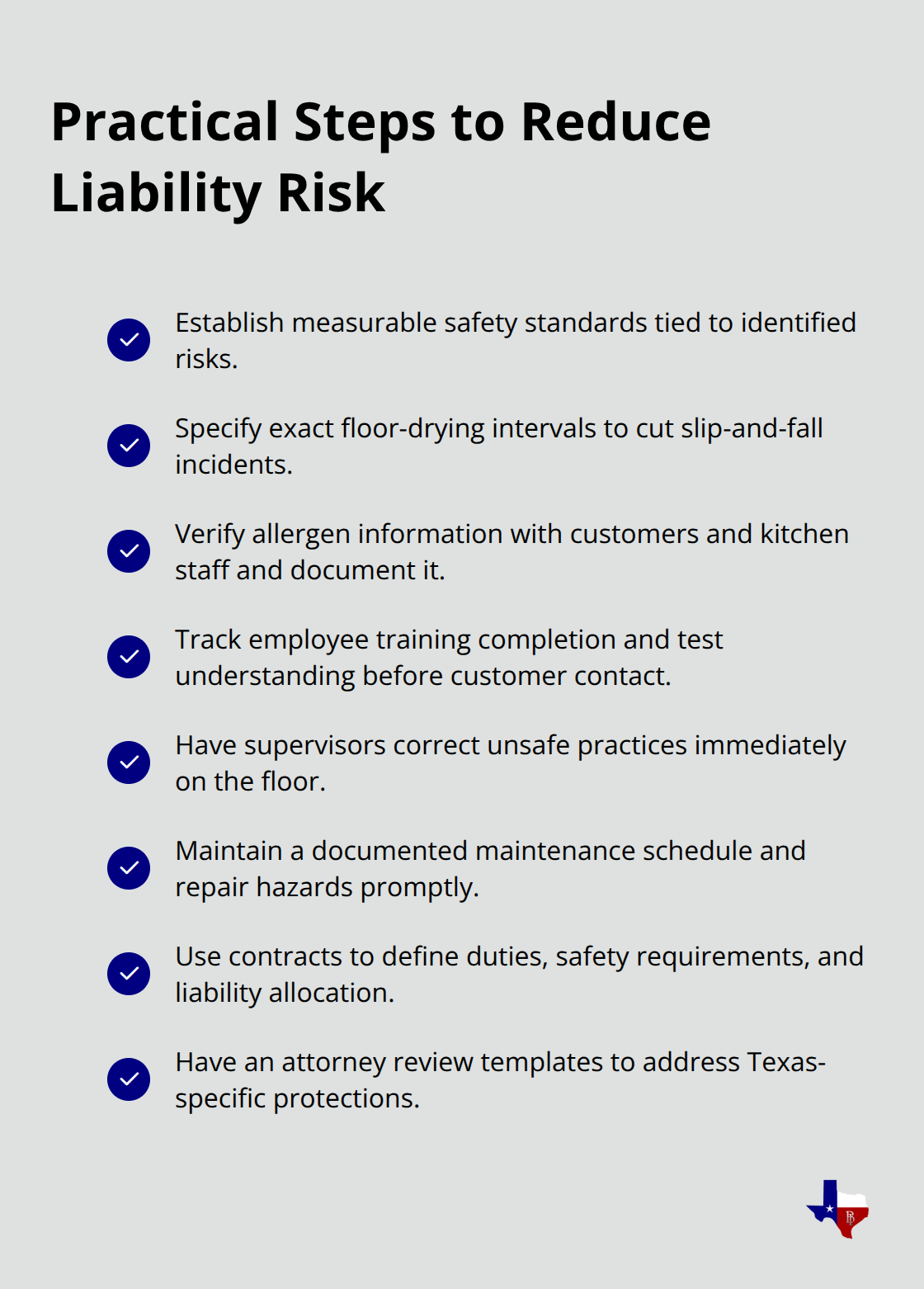
Businesses investing in employee safety training reduce injury claims. Track which employees complete training and test their understanding before they interact with customers. Many Texas businesses treat training as a one-time checkbox rather than ongoing reinforcement, leaving new hires and seasonal workers dangerously underprepared.
Require your supervisors to observe and correct unsafe practices immediately rather than waiting for incident reports. This active enforcement transforms safety from bureaucratic theater into genuine risk reduction.
Maintain Your Property and Equipment on a Documented Schedule
Property deterioration creates liability exposure that compounds over time. Equipment failures, structural damage, and maintenance backlogs all increase the likelihood that something will injure a customer or damage their possessions. Establish a documented maintenance schedule for every significant asset, tool, and facility component that customers encounter.
Inspect electrical systems, HVAC equipment, flooring, stairs, handrails, and outdoor surfaces monthly and document findings with photos. If you identify a hazard, repair it within a specified timeframe or restrict customer access to that area until repairs complete. Many liability claims succeed because businesses knew about hazards but delayed repairs.
Your maintenance documentation proves you took reasonable precautions, which strengthens your defense if a claim arises. Courts view businesses that maintain detailed records far more favorably than those with sporadic or absent documentation (especially when injuries occur in neglected areas).
Use Contracts to Allocate Liability and Prevent Disputes
Contracts and client agreements represent your final defense layer. Before delivering any service, obtain written agreements that clearly define what you will and will not do, what clients must do to use your service safely, and what liability each party accepts.
A contractor must specify in writing which safety equipment clients must wear on job sites. A personal trainer must document that clients disclosed relevant health conditions. A property manager must establish clear protocols for how tenants report maintenance issues. These documents protect you legally and reduce misunderstandings that spawn disputes.
Have an attorney review your standard contracts and agreements to identify gaps in liability allocation. Generic templates from online sources frequently miss industry-specific protections that matter in Texas courts (and they often fail to address state-specific requirements that could leave you exposed).
Final Thoughts
Effective general liability risk management requires three concrete actions: identifying your specific exposures, implementing safety protocols that match your actual operations, and documenting everything. Texas businesses that skip any of these steps leave themselves vulnerable to claims that could exceed their insurance limits and threaten their survival. The work you’ve done mapping your liability risks and establishing documented procedures directly reduces your claim frequency and severity.
Courts and juries view businesses that maintain safety records and clear contracts far more favorably than those operating without documentation. Your general liability insurance policy forms the final protection layer, but only if you’ve chosen coverage limits that match your actual exposure. A $100,000 policy provides false security if your industry regularly faces $200,000 claims, while a $1 million limit wastes premium dollars if your operation carries minimal risk.
Start by reviewing your current general liability policy against the risks you’ve identified in your operation. Check whether your coverage limits align with potential claim costs in your industry and verify that your policy actually covers the scenarios most likely to affect your business. Contact us at brooksinstx.com to discuss your liability exposure and review whether your current coverage protects what you’ve built.
Disclaimer: The information provided in this blog is for general informational purposes only and does not constitute legal, financial, or insurance advice. Coverage options, terms, and availability may vary. Please consult with a licensed professional for advice specific to your situation