
Flooding is the most common natural disaster in Texas, affecting thousands of homeowners every year. Standard homeowners insurance won’t protect your property from flood damage, leaving a dangerous gap in your coverage.
We at Brooks Insurance help Texas homeowners find the best flood insurance that matches their specific needs and budget. This guide walks you through your options so you can make an informed decision.
Why Your Homeowners Policy Leaves You Unprotected
Texas experienced 127 presidentially declared disasters between 1953 and 2023, according to FEMA data, with flooding accounting for a significant portion of these events. In 2017 alone, Hurricane Harvey dumped over 60 inches of rain on parts of Southeast Texas, causing an estimated $125 billion in damage. Yet most homeowners who filed claims discovered a harsh reality: their standard homeowners insurance provided zero coverage for flood damage.
This gap exists because homeowners policies cover sudden, accidental events like fires or theft, not water damage from rising water or heavy precipitation. Insurance companies categorize flooding separately because it’s predictable in high-risk areas and affects large numbers of properties simultaneously, making it an uninsurable risk under traditional homeowner coverage.
The Coverage Gap That Catches Homeowners Off Guard
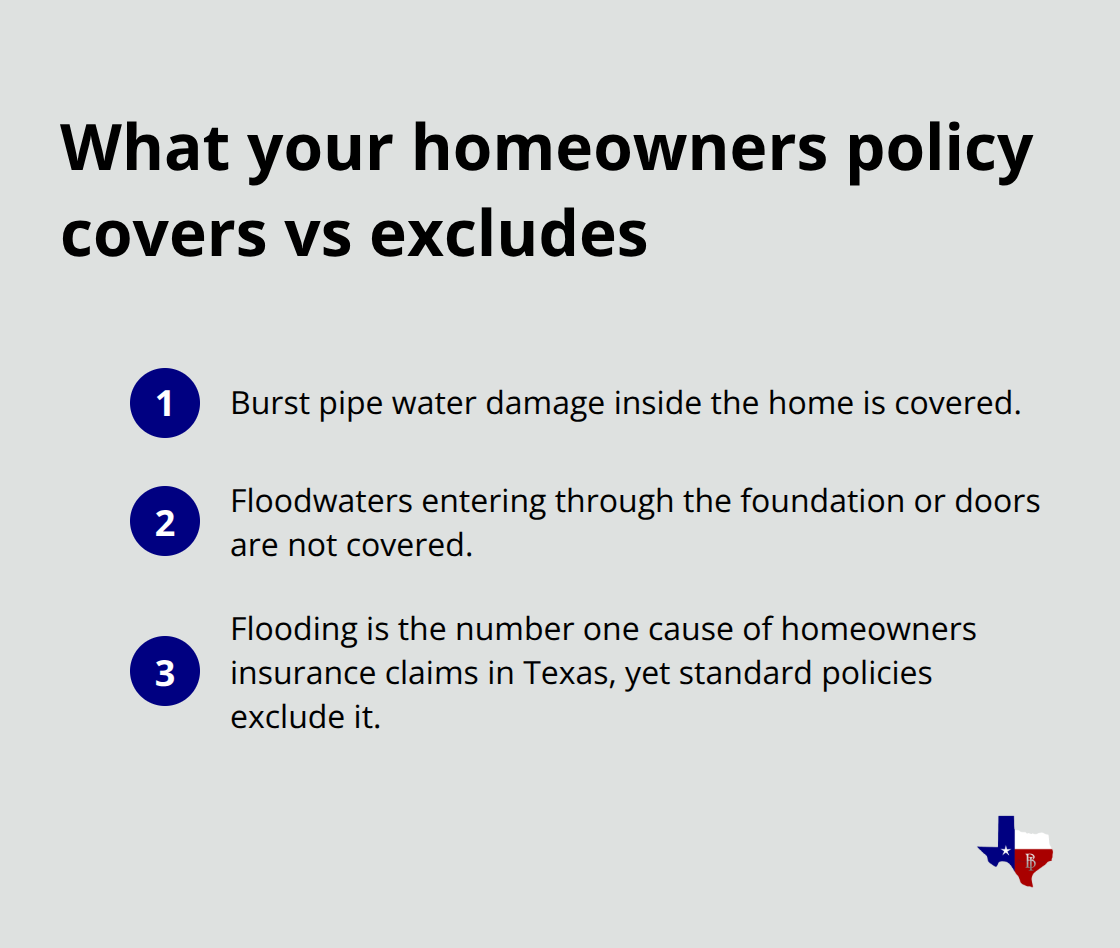
The difference between what homeowners think they’re covered for and what they actually are is staggering. A standard homeowners policy covers water damage from a burst pipe inside your home, but not from floodwaters entering through your foundation or doors. The Texas Department of Insurance reports that flooding is the number one cause of homeowners insurance claims in the state, yet standard policies exclude it entirely.
If floodwaters damage your home’s structure, personal belongings, or foundation, you pay out of pocket unless you have separate flood insurance. Most homeowners don’t realize this gap exists until it’s too late. Every Texas homeowner with any flood risk whatsoever should obtain dedicated flood coverage before disaster strikes.
Why Insurers Won’t Cover Floods
Insurance companies exclude flood coverage from homeowners policies because floods are catastrophic events that damage multiple properties in the same area simultaneously. When Hurricane Harvey hit, thousands of claims arrived at once, which would bankrupt any single insurance company trying to cover everyone. This is why the National Flood Insurance Program exists as a government backstop.
Additionally, flooding is often predictable through flood maps and historical data, which violates basic insurance principles where risk should be uncertain. Homeowners in flood-prone areas would face premiums so high that standard policies would become unaffordable if insurers tried to include flood coverage. This economic reality is why flood insurance exists as a completely separate product that you must purchase independently.
What Happens When You’re Unprotected
Flood damage claims can reach hundreds of thousands of dollars, yet homeowners without flood insurance receive nothing from their standard policy. Your mortgage lender may require flood insurance if your property sits in a high-risk flood zone, but many homeowners in moderate-risk areas skip it and face catastrophic losses. The financial impact extends beyond immediate repairs-it affects your ability to rebuild, maintain your property value, and recover emotionally from the disaster.
Now that you understand why standard homeowners insurance fails to protect you, it’s time to explore the flood insurance options available to Texas homeowners.
Your Flood Insurance Options in Texas
The National Flood Insurance Program: Government-Backed Protection with Limits
The National Flood Insurance Program covers roughly 5.2 million policies nationwide, with Texas accounting for a significant share of that market. NFIP policies carry federal government backing, which means the program won’t deny your claim or cancel your coverage if you file a flood loss. However, NFIP has strict limitations that frustrate many Texas homeowners. National Flood Insurance Program coverage limits max out at $250,000 for your home’s structure and $100,000 for personal belongings. If your home is worth $500,000 or more, NFIP leaves you significantly underinsured.
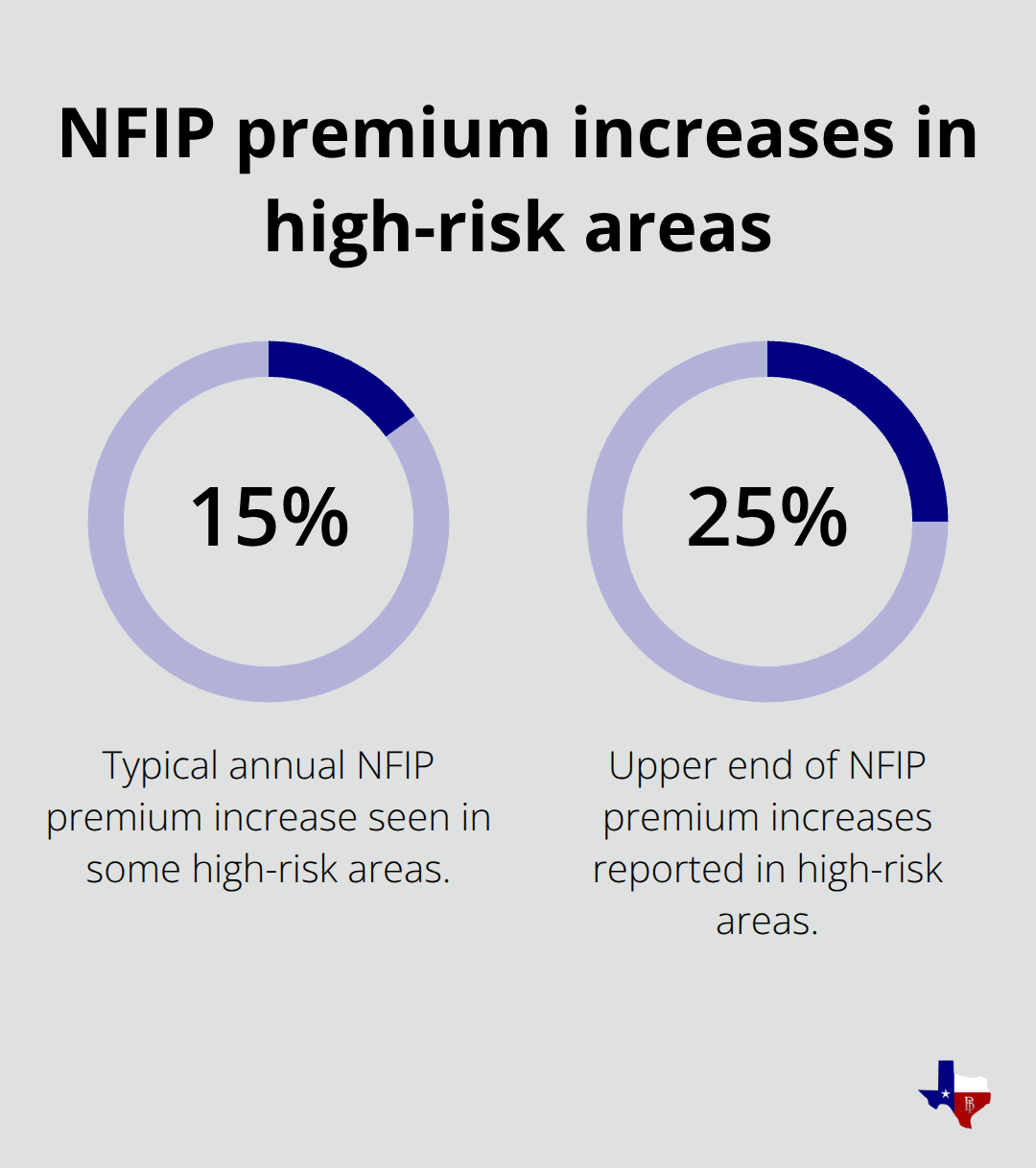
NFIP premiums also tend to increase annually, sometimes by 15-25% per year in high-risk areas, making long-term affordability questionable. Processing times for NFIP claims can stretch 6-12 months, leaving homeowners without funds to begin repairs immediately after a disaster. This delay creates real hardship when you need to act quickly to prevent secondary damage like mold growth or structural deterioration.
Private Flood Insurance: Higher Limits and Faster Claims
Private flood insurance has emerged as a serious alternative to NFIP, particularly for homeowners with higher-value properties or those tired of rising federal premiums. Private insurers can offer coverage limits up to $1 million or higher for your home’s structure, which protects you if you own a property worth significantly more than NFIP’s caps. Private policies often process claims faster than NFIP, sometimes within 2-4 weeks rather than months.
Premiums for private flood insurance can be 10-40% cheaper than NFIP for properties in moderate-risk zones, though this advantage disappears in high-risk areas where federal pricing is subsidized. The tradeoff is that private insurers can adjust rates, modify coverage, or exit the market if losses mount, so your protection isn’t guaranteed indefinitely like NFIP’s government backing.
What to Compare When Evaluating Your Options
When comparing specific policies, focus on three concrete factors: what percentage of your home’s replacement cost the coverage represents, whether the deductible is $1,000 or $10,000 (a massive difference in out-of-pocket costs), and whether the policy covers basement items, foundation repairs, and detached structures like garages or sheds. These details separate adequate protection from policies that leave you exposed when disaster strikes.
As an independent agency, Brooks Insurance represents multiple top-rated insurance companies, which means you can see side-by-side quotes that show exactly what you’re paying for and what gaps remain in your protection. This comparison process helps you identify which option actually fits your home’s value and your financial situation.
How to Pick the Right Flood Insurance for Your Situation
Determine Your Property’s Flood Risk Level
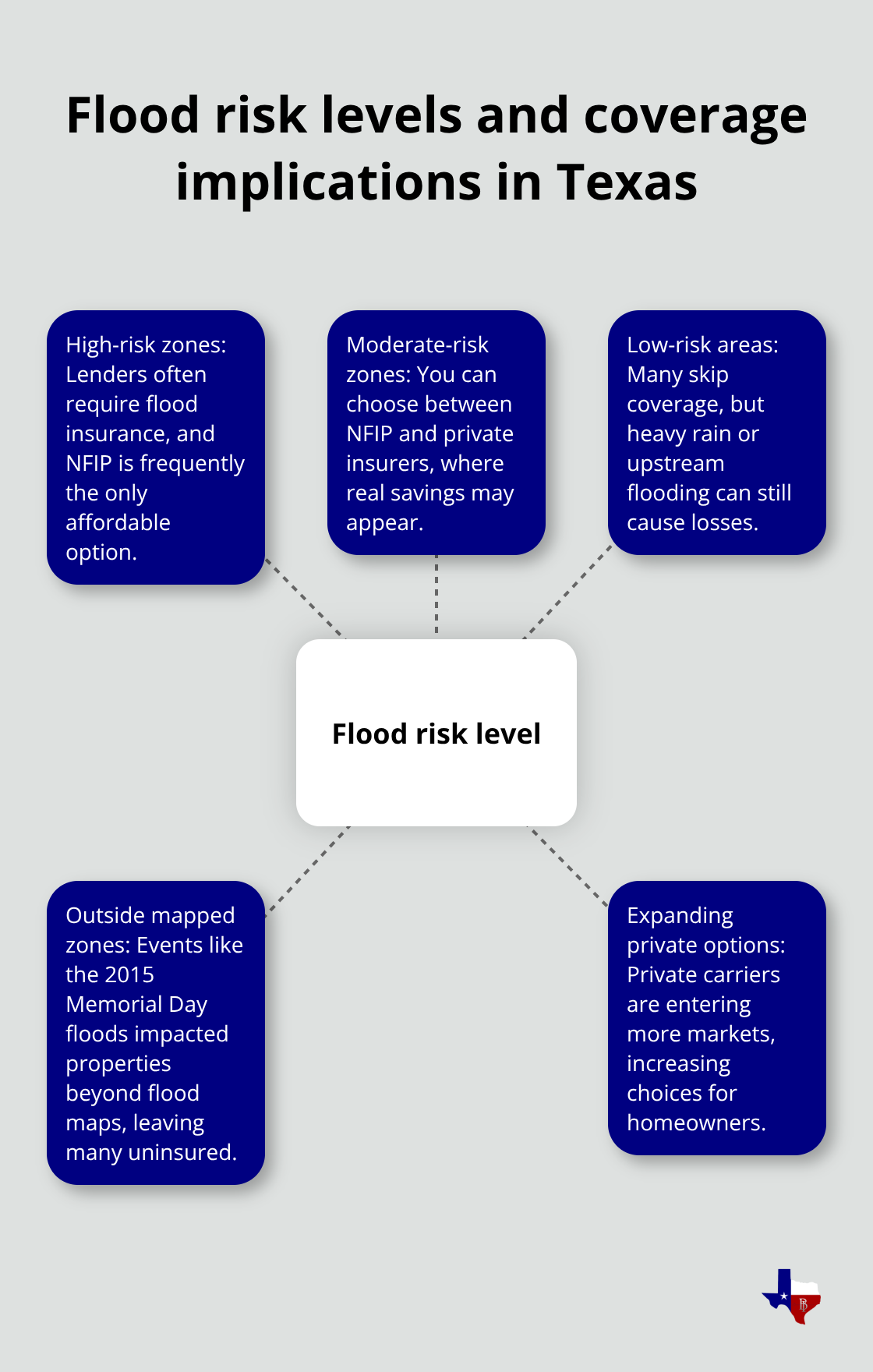
Start with FEMA’s Flood Map Service Center to identify whether your home sits in a high-risk zone (Special Flood Hazard Area), moderate-risk zone, or low-risk area. Your risk level directly impacts pricing and which coverage options make financial sense. If your mortgage lender requires flood insurance, you occupy a high-risk zone and NFIP often represents your only affordable option, though private insurers are expanding into these markets. For moderate-risk properties, you have genuine choices between NFIP and private providers-this is where real savings appear. Homeowners in low-risk zones frequently skip flood insurance entirely, but this decision fails when your area experiences unexpected heavy rain or upstream flooding. The 2015 Memorial Day floods in Central Texas affected properties well outside mapped flood zones, leaving uninsured homeowners with significant repair costs.
Calculate Your Actual Coverage Needs
Once you know your risk level, calculate what flood coverage you actually need based on your home’s replacement cost, not its market value. A $400,000 home costs roughly $250 per square foot to rebuild after total loss, meaning you need coverage matching that replacement figure. NFIP’s $250,000 structure limit covers only homes worth up to about $300,000 in today’s construction costs, leaving expensive properties dangerously underinsured. Private flood insurance fills this gap, offering limits up to $1 million or higher for homes in moderate-risk areas.
Compare Deductible Options Side-by-Side
A $1,000 deductible costs roughly 20-30% more annually than a $10,000 deductible, but saves you thousands when claims occur. For homeowners with emergency savings under $15,000, the lower deductible protects your finances after disaster strikes. This choice matters far more than most homeowners realize when they face actual flood damage and need immediate funds for repairs.
Request Quotes from Multiple Providers
Request quotes from multiple providers rather than accepting the first offer. Private insurers serving Texas include major companies offering competitive rates that undercut NFIP by hundreds of dollars annually for moderate-risk properties. Comparing quotes side-by-side shows you exactly what each policy covers and costs, eliminating guesswork from this important decision. As an independent agency with over 50 years of experience, we represent multiple top-rated insurance companies, which means you can see quotes from different carriers to find the best fit for your home and budget.
Final Thoughts
Finding the best flood insurance in Texas requires you to know your property’s risk level, calculate realistic coverage needs, and compare quotes from multiple providers. The gap between what homeowners think they’re covered for and what they actually are remains the biggest mistake we see at Brooks Insurance. Standard homeowners policies simply won’t protect you when floodwaters damage your home, which is why dedicated flood coverage matters so much in Texas.
Your next step is straightforward: visit FEMA’s Flood Map Service Center to identify your property’s risk zone, then request quotes from both NFIP and private insurers to see which option fits your budget and home value. If your home is worth more than $300,000, private flood insurance likely offers better protection than NFIP’s coverage limits. If you’re in a high-risk zone, NFIP may be your only affordable option, but it’s worth checking private carriers anyway since the market continues to expand.
Working with an independent agent makes this process significantly simpler-we at Brooks Insurance represent multiple top-rated insurance companies, which means you see side-by-side quotes showing exactly what each policy covers and costs. Contact us at brooksinstx.com to get started with best flood insurance Texas quotes today. Don’t wait until storm season arrives to discover your home lacks protection.
Disclaimer: The information provided in this blog is for general informational purposes only and does not constitute legal, financial, or insurance advice. Coverage options, terms, and availability may vary. Please consult with a licensed professional for advice specific to your situation