

Flood insurance rates in Texas vary dramatically based on where your property sits and how it’s built. At Brooks Insurance, we’ve helped countless Texas homeowners understand why their premiums cost what they do-and more importantly, how to reduce them.
The difference between a high-risk flood zone and a moderate one can mean hundreds of dollars annually. This guide breaks down exactly how insurers calculate your flood insurance rate in Texas and shows you concrete steps to lower your costs.
What Determines Your Flood Insurance Premium in Texas
FEMA’s flood zone designation Sets Your Base Rate
Your flood insurance rate starts with FEMA’s flood zone designation, which is the single most important factor insurers use to price your policy. FEMA divides Texas properties into zones ranging from X (minimal risk) to AE and VE (high-risk coastal areas). Properties in high-risk zones pay significantly more because they face genuine flood threats. According to the National Flood Insurance Program, your specific zone appears on your Flood Insurance Rate Map, and you can find yours through FEMA’s map service.
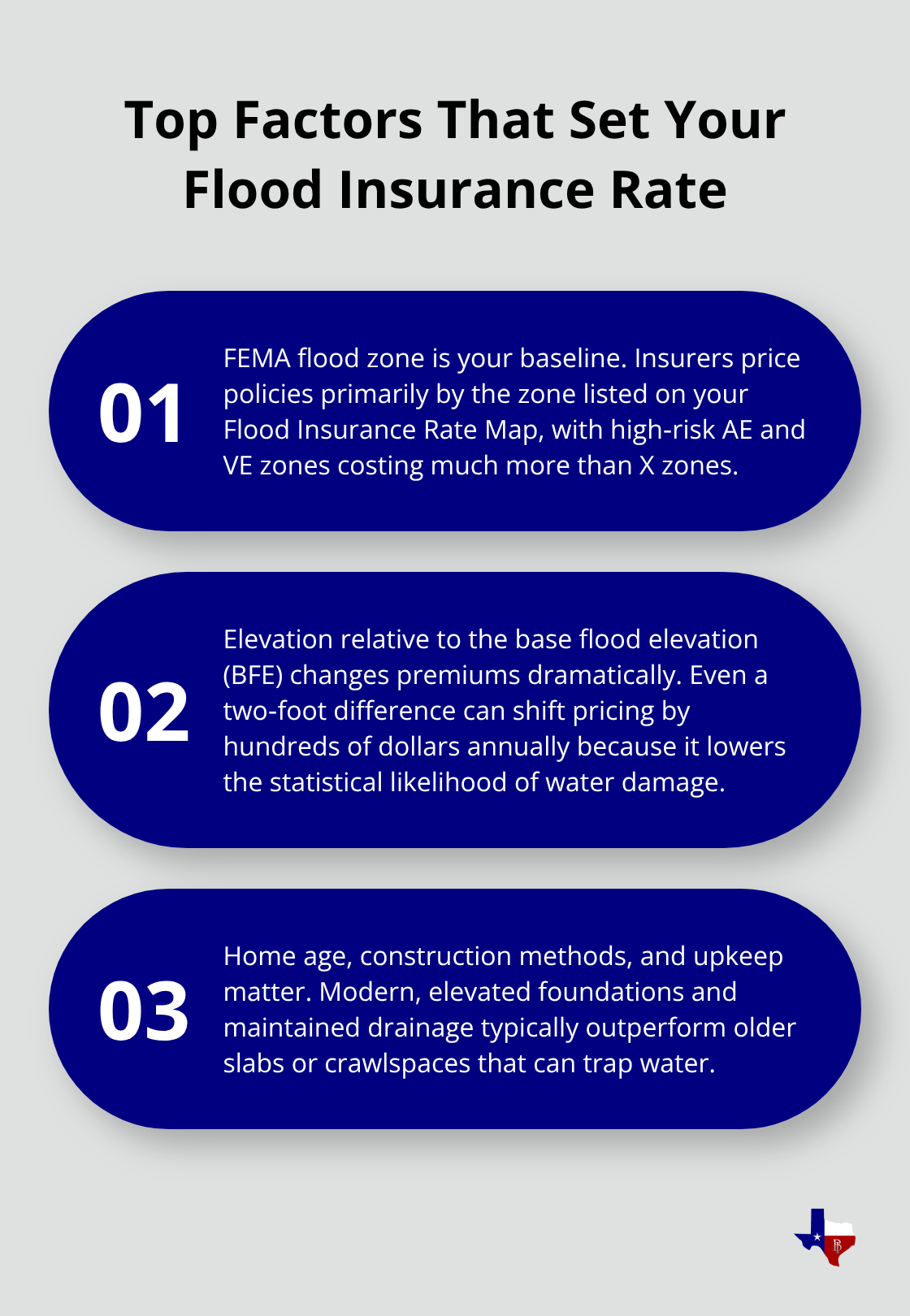
The elevation of your home relative to the base flood elevation matters tremendously-even a two-foot difference can reduce your premium by hundreds of dollars annually because it substantially lowers your statistical risk of experiencing water damage.
Construction Age and Building Methods Impact Your Costs
Insurers examine how your house is actually built and maintained. Older homes with outdated construction methods cost more to insure because they typically lack modern flood-resistant features and deteriorate faster. A home built in 1985 will have a higher premium than an identical 2015 home because construction standards have improved significantly. Your foundation type impacts rates considerably-homes on pilings or elevated foundations receive better rates than those on concrete slabs or crawlspaces, which trap water more easily.
Prior Claims History Increases Your Premium
Claims history shapes your premium substantially. If you filed a flood claim within the past five years, your rates will increase noticeably because you demonstrated actual flood exposure. NFIP data shows that properties with prior claims face premiums 30 to 50 percent higher than comparable properties without loss history.
Coastal Location Drives the Highest Premiums
Texas coastal properties in Galveston, Corpus Christi, and Brownsville face the steepest premiums because hurricane-driven storm surge poses genuine annual threats. The combination of these factors means two Texas homes across the street from each other might have flood insurance premiums that differ by 200 percent or more. Understanding what drives these differences helps you identify which specific factors you can actually control-and that’s where your real savings opportunities emerge.
What Really Drives Your Flood Insurance Costs Higher
Elevation Determines Your Most Controllable Savings
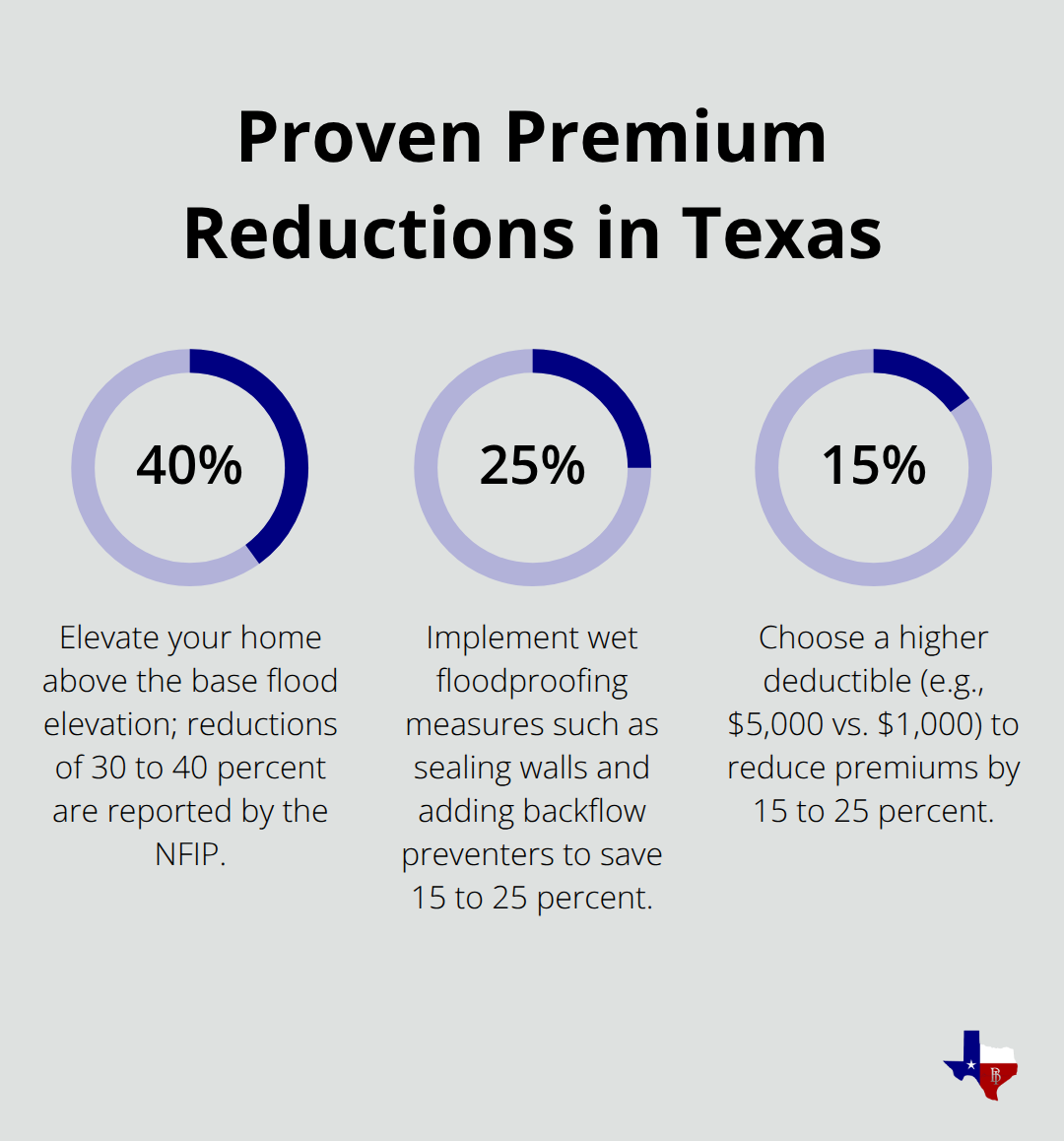
Your elevation relative to the base flood elevation represents the single most controllable factor that insurers scrutinize when calculating your premium. If your home sits only two feet above the base flood elevation, your rate drops substantially compared to a property at ground level in the same flood zone because that small vertical distance significantly reduces your statistical flood risk. The National Flood Insurance Program reports that homes elevated above the base flood elevation can see premium reductions of 30 to 40 percent, making elevation improvements one of the most cost-effective investments you can make. Distance from water bodies matters intensely as well-a property 50 feet from a creek faces different pricing than one 500 feet away, and insurers calculate this distance precisely using survey data and GIS mapping.
Coastal Proximity Multiplies Your Annual Costs
Coastal properties within one mile of the Gulf face substantially steeper rates than inland properties because storm surge risk compounds annually. The combination of elevation and coastal location means two Texas homes across the street from each other might have flood insurance premiums that differ by 200 percent or more.
Building Age and Maintenance Condition Shape Your Rates
Your home’s age and physical condition dramatically shape what you’ll pay. Homes built before 1980 typically carry premiums 20 to 35 percent higher than newer construction because older buildings lack modern flood-resistant materials and drainage systems that reduce water intrusion. A 1970s home with a basement costs considerably more to insure than a 2010 home with elevated mechanical systems, even if they’re in identical flood zones. Deferred maintenance multiplies your costs-cracked foundations, deteriorating drainage systems, and poor grading all signal to insurers that your property will suffer more damage when flooding occurs.
Deductibles and Coverage Limits Control Your Monthly Payment
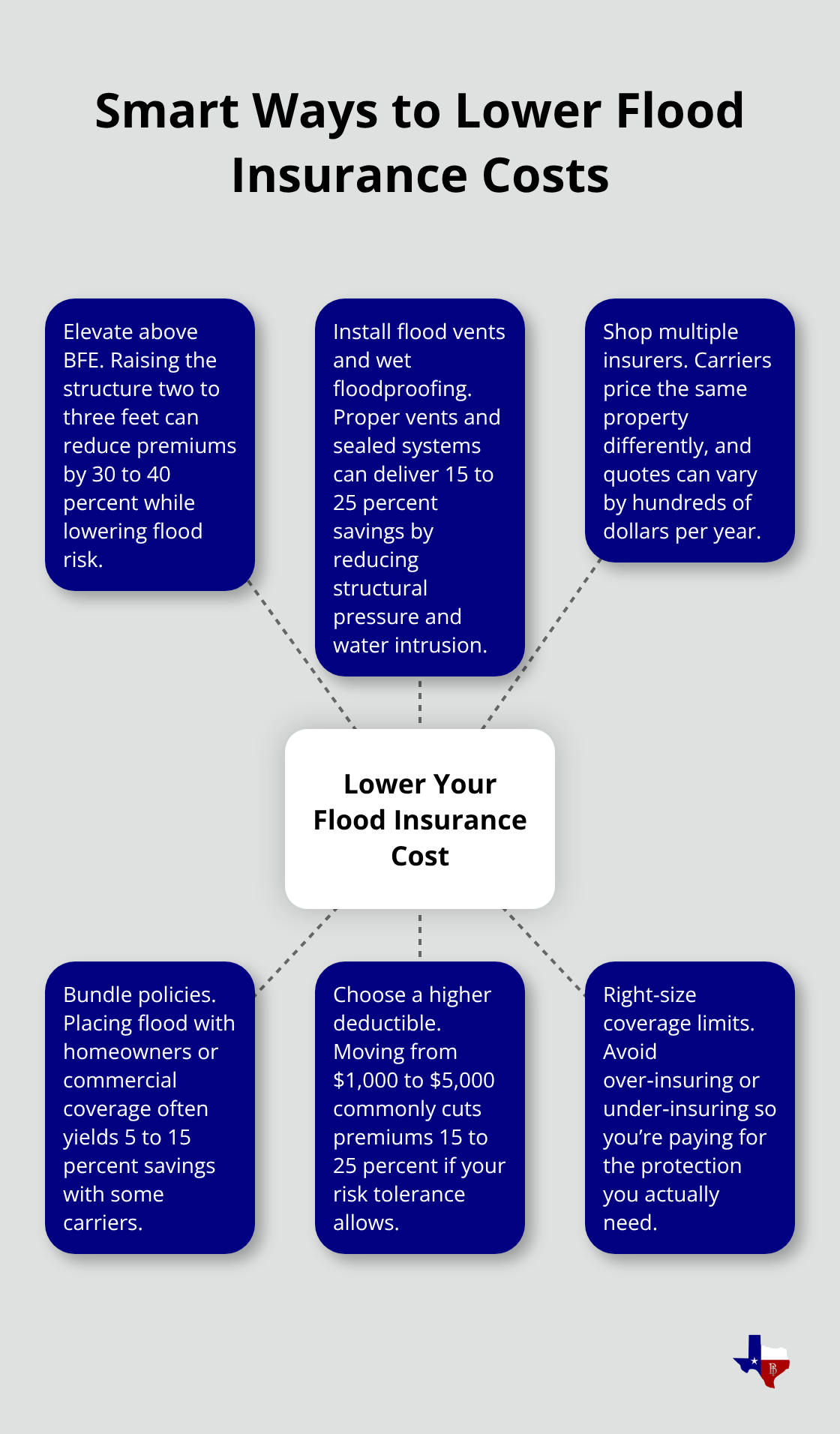
Your coverage limits and deductible choices directly control what you pay each month, though many Texas homeowners miss this obvious lever. Choosing a $5,000 deductible instead of $1,000 typically reduces your annual premium by 15 to 25 percent, depending on your risk zone and property characteristics. The tradeoff is real-you absorb more risk yourself-but for properties outside high-risk zones, this calculation often favors the higher deductible because actual flood claims remain statistically uncommon. Your coverage limit selection matters equally; insuring your home for $200,000 when replacement cost is $350,000 leaves a dangerous gap, but over-insuring by $100,000 wastes premium dollars on protection you’ll never use. Once you understand which factors you control and which ones you don’t, you can focus your efforts on the specific improvements that actually reduce your costs.
How to Actually Lower Your Flood Insurance Premiums
Physical Improvements Reduce Your Premium Substantially
Elevation improvements deliver the most dramatic savings available to Texas homeowners, and the numbers prove it. Raising your home even two to three feet above the base flood elevation reduces your premium by 30 to 40 percent according to the National Flood Insurance Program, making this a genuine investment rather than an expense. The cost of elevation typically ranges from $20,000 to $80,000 depending on your home’s size and foundation type, but if your annual premium is $2,500, that improvement pays for itself in roughly ten to fifteen years while simultaneously protecting your actual home from water damage.
Flood vents installed in foundation walls cost between $1,000 and $3,000 and allow floodwater to flow through your foundation rather than building up pressure that causes structural failure. Wet floodproofing, which involves sealing walls with special coatings and installing backflow preventers on plumbing lines, costs $3,000 to $8,000 and can reduce your premium by 15 to 25 percent. These physical improvements work because insurers calculate premiums based on actual risk reduction, not wishful thinking.
A property owner who installs proper drainage systems, seals foundation cracks, and elevates mechanical systems signals to insurers that they’ve genuinely reduced flood exposure.
Shopping Multiple Insurers Reveals Significant Price Differences
Shopping your policy across multiple insurers reveals shocking premium differences that most Texas homeowners never discover because they assume flood insurance is commoditized and identical everywhere. The National Flood Insurance Program sets standard rates, but private flood insurance companies and some NFIP agents apply different surcharges and discounts based on their own risk models, meaning your specific property might cost $1,800 with one insurer and $2,400 with another.
Many Texas homeowners stick with their first quote without understanding that obtaining three to five competing quotes takes roughly two hours and frequently saves $400 to $800 annually. The effort compounds over time, and if you remain in your home for ten years, that difference totals $4,000 to $8,000 in pure savings from a few hours of comparison shopping.
Bundling Policies Unlocks Additional Savings
Bundling your flood policy with homeowners or commercial insurance through the same agency typically reduces your combined costs by 5 to 15 percent because insurers reward customer loyalty and simplified underwriting. An independent agency can access multiple carriers and apply your specific property improvements, building age, and elevation data across different rating systems to identify where you’ll pay the least.
Final Thoughts
Your flood insurance rate in Texas reflects factors you control and factors you cannot. FEMA’s flood zone designation, your home’s elevation, construction age, and claims history form the foundation of what insurers charge. The encouraging reality is that elevation improvements, physical flood mitigation, and strategic deductible choices produce measurable premium reductions-a two-foot elevation increase cuts your rate by 30 to 40 percent, while installing flood vents or wet floodproofing systems saves 15 to 25 percent annually.
Shopping multiple insurers matters far more than most homeowners realize. Identical properties in the same flood zone frequently carry premiums that differ by $400 to $800 annually simply because different carriers apply their own risk models and surcharges. Spending two hours obtaining competing quotes pays dividends that compound over years of homeownership, and an independent agent accesses different rating systems and carrier-specific discounts that individual homeowners never find alone.
We at Brooks Insurance represent multiple top-rated insurance companies, which means we understand Texas flood risk patterns, local elevation data, and which physical improvements actually reduce your specific premium. Our licensed agents can bundle your flood policy with homeowners or commercial coverage to unlock additional savings and handle the complexity that comes with navigating flood insurance options. Contact us to review your current coverage and explore concrete ways to lower your costs.
Disclaimer: The information provided in this blog is for general informational purposes only and does not constitute legal, financial, or insurance advice. Coverage options, terms, and availability may vary. Please consult with a licensed professional for advice specific to your situation