
General liability coverage in Texas protects your business from the financial fallout of accidents, injuries, and damage claims. Whether you operate a small service business or manage a larger operation, this insurance shields you from lawsuits and medical expenses that could otherwise drain your resources.
At Brooks Insurance, we’ve helped countless Texas business owners understand exactly what their general liability policies cover and where gaps might exist. This guide walks you through the protection you need.
What Your General Liability Policy Actually Covers
The Three Core Protection Categories
General liability coverage protects you against three main categories of claims, and understanding each one matters because they address different situations your business might face. Bodily injury protection covers medical expenses and legal fees when someone gets hurt because of your business operations or on your premises. If a customer slips in your office and breaks their arm, or a contractor working on your property suffers an injury related to your work, this coverage pays their medical bills and any resulting lawsuit costs. Property damage coverage handles situations where your business damages someone else’s property. This might mean your delivery vehicle hits a client’s fence, your equipment damages a rental space you occupy, or your work causes structural damage to a building. Personal and advertising injury protection rounds out the core coverages by addressing claims related to your business communications and reputation.
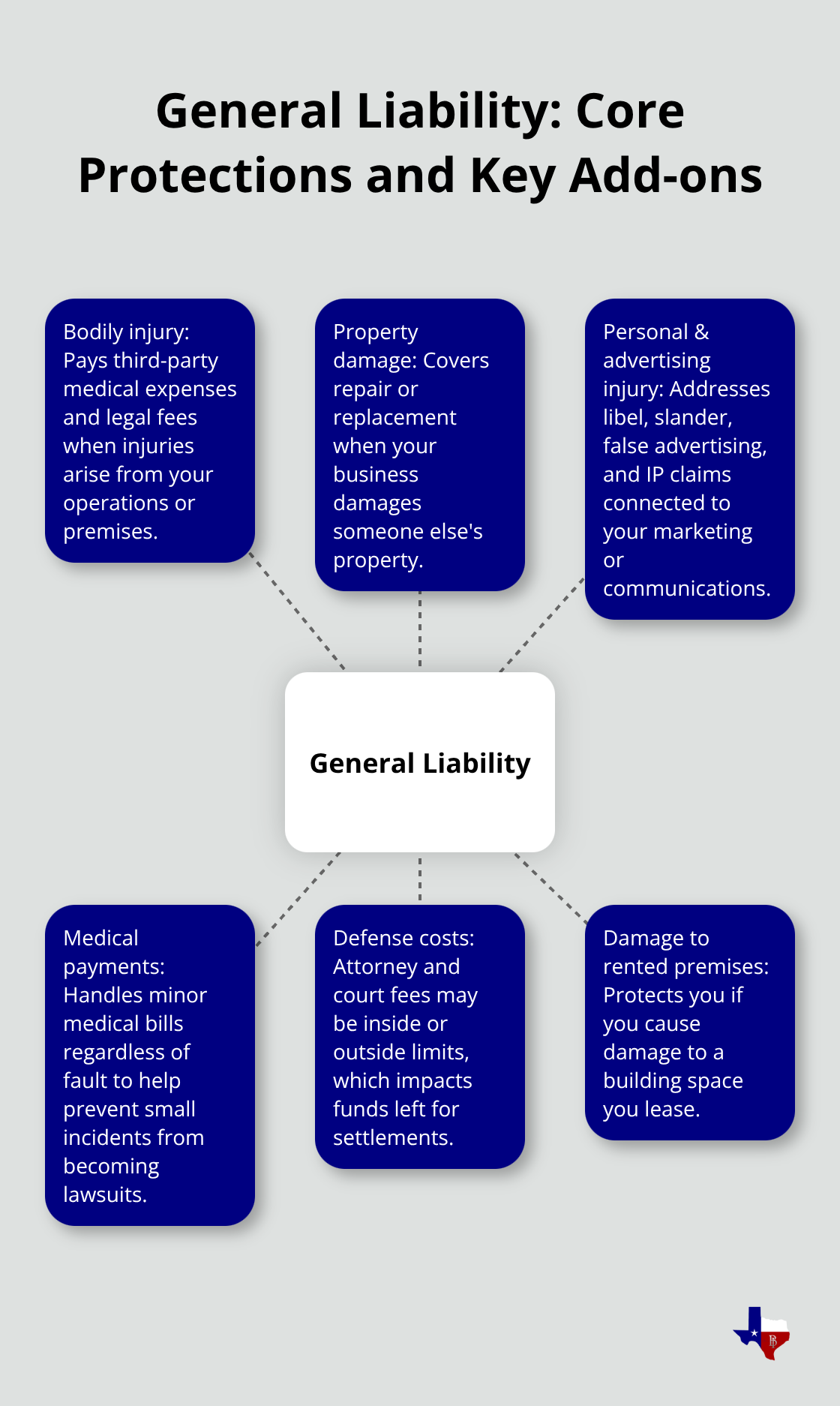
This covers situations like libel or slander allegations, false advertising claims, or intellectual property infringement in your marketing materials.
Why These Coverages Matter in Texas
Many Texas business owners overlook personal and advertising injury coverage, but it becomes critical if a competitor alleges your advertising is deceptive or if a customer claims you damaged their reputation through false statements. Medical payments coverage, which often comes bundled with general liability, pays minor medical expenses regardless of fault, which can prevent small injuries from turning into lawsuits.
Understanding Policy Limits and Defense Costs
Defense costs typically get paid up to your policy limits, which means a $1 million per occurrence policy covers both the settlement or judgment and the attorney fees within that total amount. This matters because legal defense can consume significant resources quickly, leaving less available for actual damages. Texas businesses commonly carry $1 million per occurrence and $2 million aggregate limits as a starting point, though contractors and manufacturers often need higher limits. If you operate from leased space, damage to rented premises coverage within your policy protects you from liability for damage you cause to the building itself.
What General Liability Does Not Cover
General liability explicitly excludes professional service errors, which means a consultant or accountant needs separate professional liability insurance. It excludes employee injuries, which is why workers’ compensation exists. It does not protect your own property or equipment. These gaps matter significantly because they leave your business exposed if you operate in these areas without additional coverage.
Taking Action on Your Coverage
A practical step for any Texas business is to verify whether your current policy limits match your actual exposure. Underbuy now and you face serious financial risk later if a major claim arrives. Your specific industry, location, and business size all influence what limits make sense for your operation.
Real Claims That General Liability Covers
How Bodily Injury Claims Play Out
General liability insurance protects you against the specific incidents that happen in actual business operations, not theoretical scenarios. A customer at your retail location slips on a wet floor and fractures their wrist, requiring surgery and three months of physical therapy. Their medical bills total $18,000, and they hire an attorney to pursue additional damages for lost wages. Your general liability policy covers the medical expenses, the attorney fees for your defense, and the settlement if one is reached within your policy limits. This happens regularly in Texas businesses, and without coverage, you would pay these costs directly from your operating account.
Property Damage Claims in Real Operations
Property damage claims follow similar patterns across Texas industries. A contractor accidentally punctures a client’s water line during excavation work, causing $35,000 in foundation damage to the building. An HVAC technician’s equipment damages hardwood flooring in a client’s office during an installation. A delivery driver for your business strikes a parked vehicle in a parking lot. These incidents occur constantly, and general liability covers the repair costs, the rental property owner’s lost income, and any legal expenses that arise. The difference between having coverage and not having it determines whether your business survives the financial impact or closes its doors.
The Hidden Cost of Legal Defense
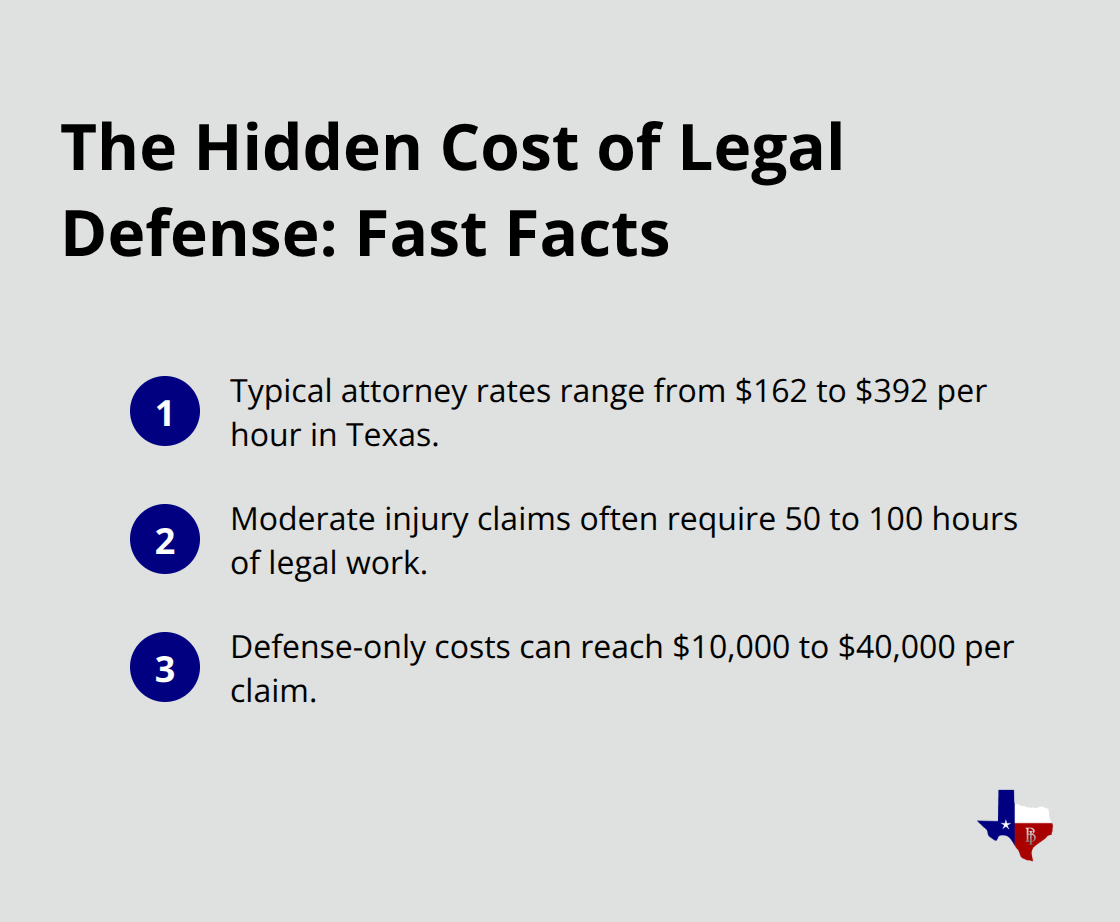
Legal defense costs create the most underestimated financial exposure for Texas business owners. When someone files a claim against your business, your insurance company assigns an attorney to defend you, and that attorney’s hourly rate typically falls between $162 and $392. A slip-and-fall case with moderate injuries requires 50 to 100 hours of legal work before resolution, meaning defense costs alone reach $10,000 to $40,000 regardless of whether you win or lose.
If your policy includes defense costs within your policy limits, a significant portion of your $1 million coverage gets consumed by legal fees before any settlement payment occurs. This is why understanding how your specific policy treats defense costs matters. Many Texas businesses discover too late that their policy structure leaves them underprotected after legal costs mount.
Taking Control of Your Policy Details
Contact your current insurer or agent and request a written explanation of exactly how defense costs are handled in your policy. Ask whether defense costs are paid within the limits or outside the limits. This single clarification prevents nasty surprises when a claim arrives. Your agent can walk you through the specific language in your policy and explain what happens when a third party files a claim against your business. Understanding these mechanics now positions you to make informed decisions about whether your current coverage adequately protects your operation or whether you need to adjust your limits and policy structure.
Why General Liability Insurance Protects Your Bottom Line
Legal Requirements and Market Expectations
General liability insurance isn’t optional for most Texas businesses operating in construction, contracting, or service industries. Texas law doesn’t mandate general liability across the board, but if you hold any government contracts, you face specific requirements that make coverage non-negotiable. More importantly, clients and property owners in Texas routinely require proof of general liability before hiring your business or allowing you on their premises. A contractor without general liability documentation simply won’t get jobs. When you approach a potential client with a certificate of insurance, you signal professionalism and financial stability. Without one, you signal risk, and clients move to competitors who carry coverage. This isn’t theoretical-it’s how Texas business relationships actually work. The Texas Department of Insurance Help Line at 800-252-3439 can clarify specific legal requirements for your industry, but the practical reality is that general liability acts as your entry ticket to most commercial work in the state.
The Real Cost of Uninsured Claims
The financial exposure from a single claim justifies coverage regardless of legal requirements. A property damage claim or a medical bill from a customer injury creates genuine hardship for most Texas business owners. Without general liability, you pay these costs directly from operating funds, depleting cash reserves that your business needs for payroll, inventory, and growth. According to the U.S. Small Business Administration, Texas has approximately 3.5 million small businesses, and most operate with limited financial cushion. One significant claim forces a business into debt or closure.
Affordable Protection for Your Operation
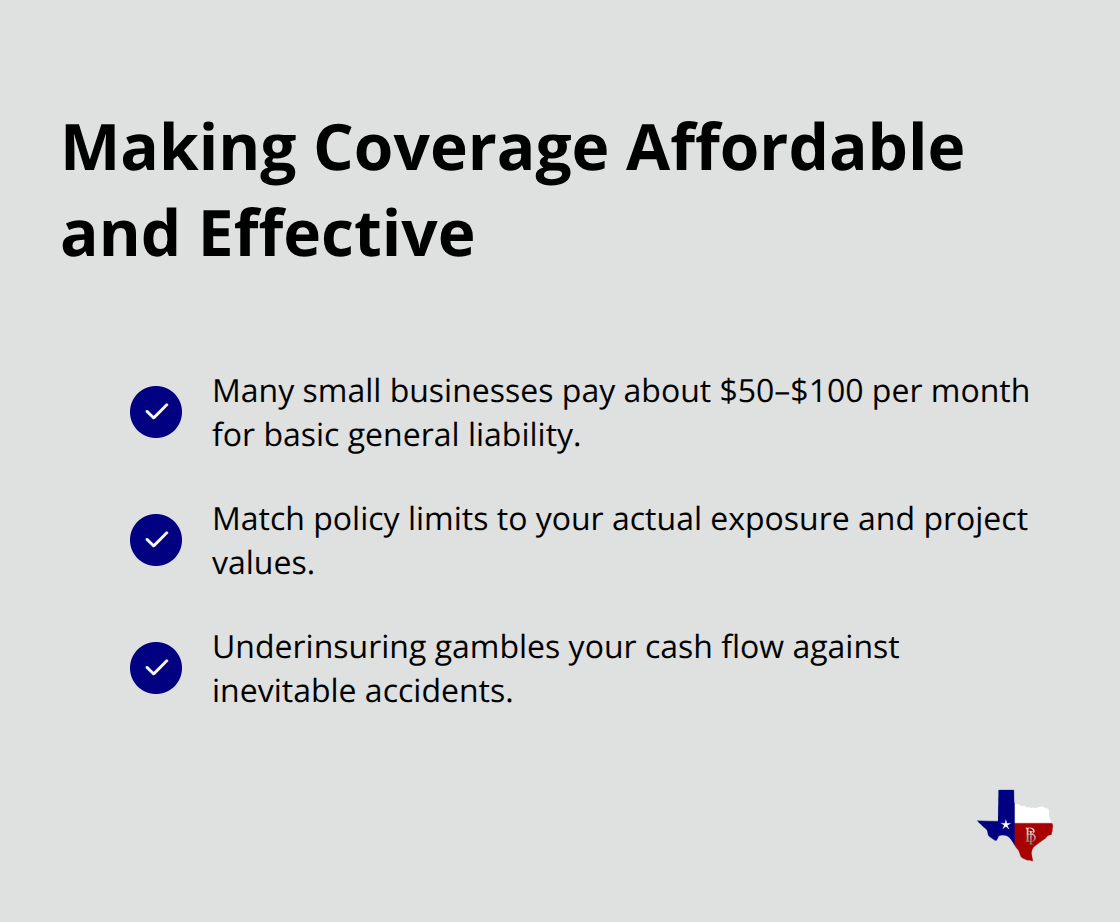
General liability premiums for Texas small businesses typically range from $50 to $100 monthly for basic coverage, making the cost remarkably affordable compared to the financial devastation of an uninsured claim. Your policy limits should align with your actual exposure-a contractor working on high-value residential projects needs higher limits than a freelance consultant. When you operate without adequate coverage, you bet your business on the assumption that no accidents will occur, which is a losing bet over time.
Final Thoughts
General liability coverage in Texas protects your business from the financial devastation that follows accidents, injuries, and property damage claims. The three core protections-bodily injury, property damage, and personal and advertising injury-address the real situations that happen in actual business operations every day. Understanding what your policy covers and where gaps exist separates businesses that survive claims from those that don’t.
Texas businesses face constant exposure to third-party claims, and the legal defense costs alone can consume tens of thousands of dollars before any settlement occurs. A $1 million per occurrence policy with $2 million aggregate limits provides solid baseline protection for most small to medium-sized operations, though contractors and manufacturers typically need higher limits based on their specific exposure. Start by requesting a written explanation from your current insurer about how defense costs are handled in your existing policy-ask whether defense costs are paid within your limits or outside them.
Contact Brooks Insurance today for a quote on general liability coverage Texas businesses depend on. Our licensed agents can walk you through your specific exposure, explain policy details in plain language, and help you determine whether your current limits adequately protect your business. We’re just a phone call or email away if you have questions about your coverage.
Disclaimer: The information provided in this blog is for general informational purposes only and does not constitute legal, financial, or insurance advice. Coverage options, terms, and availability may vary. Please consult with a licensed professional for advice specific to your situation