
Choosing an independent insurer in Texas gives you access to options that big insurance companies simply don’t offer. You get personalized attention from agents who know your local market and can find coverage that actually fits your needs.
At Brooks Insurance, we’ve spent years helping Texas families and businesses navigate their insurance decisions. The right independent agent makes all the difference in getting quality coverage at a fair price.
Why Independent Agents Give You Real Advantages
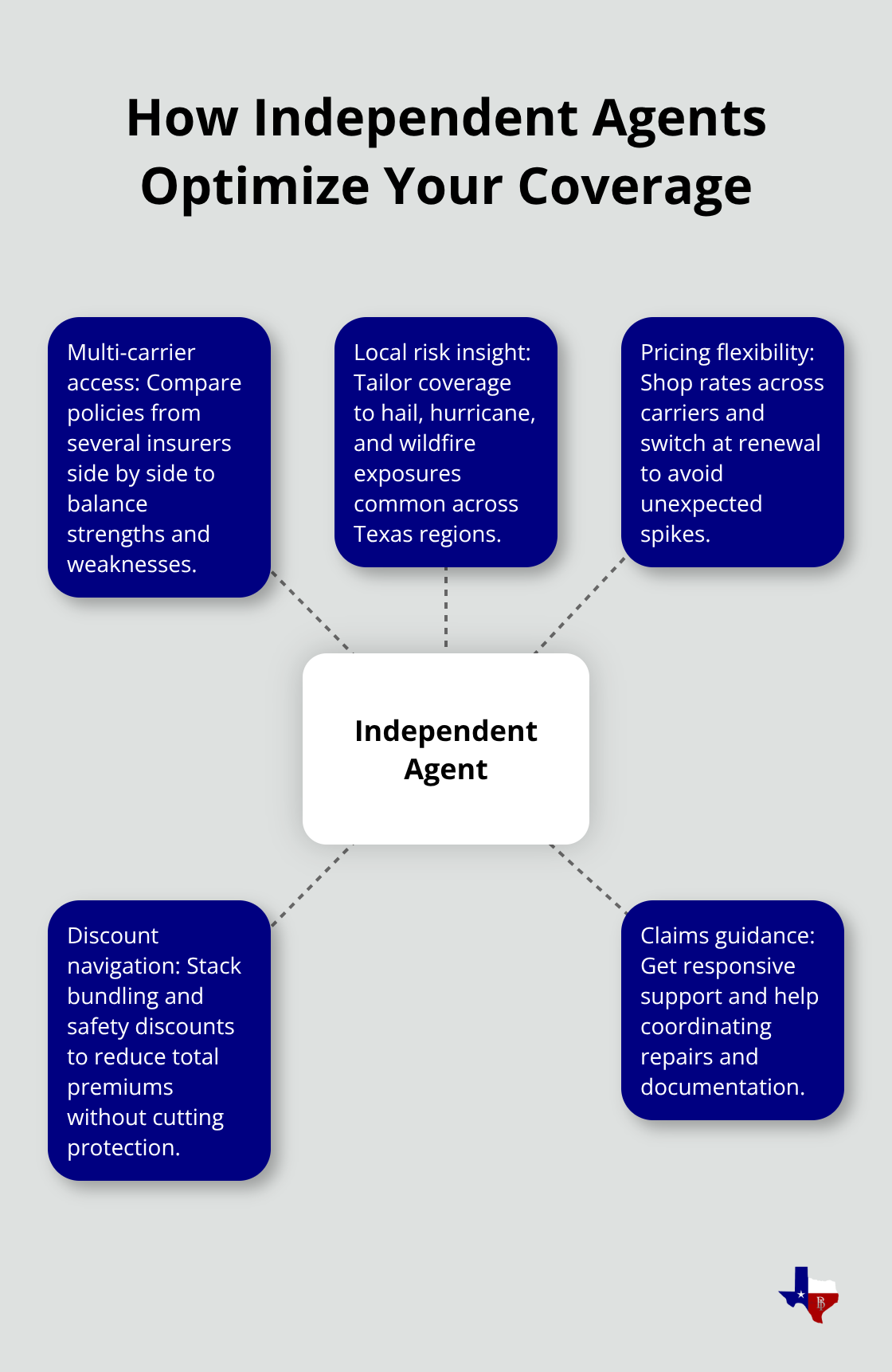
Independent insurance agents in Texas work with multiple carriers instead of just one, which fundamentally changes what you can access. When you work with a captive agent tied to a single insurer, you see only that company’s products. An independent agent can show you policies from five, ten, or even more carriers side by side. This multi-carrier approach means you are not forced to accept whatever a single company offers. You get genuine choice.
Multiple Carriers Mean Real Options
When you work with an independent agent, you compare coverage from different insurers at the same time. A captive agent cannot do this-they represent one company only. This matters most when you need something specific. If you live in a flood-prone area near Houston, you need flood coverage that actually works for your property. One carrier might offer excellent flood protection but poor wind coverage. Another might be strong on wind but weak on water damage. An independent agent compares these trade-offs and finds the combination that protects what matters to you.
Local Knowledge Makes a Real Difference
Texas weather creates specific insurance challenges that national agents do not fully grasp. Hail damage in the Dallas area, hurricane risk on the Gulf Coast, and wildfire exposure in West Texas all demand different coverage strategies. An independent agent working in your region understands these risks because they see claims from them regularly. They know which carriers handle roof replacement claims fairly, which ones pay quickly for hail damage, and which ones have strong relationships with local contractors.
This local expertise also applies to property values and construction costs. A Texas agent knows that replacement costs in Austin differ significantly from those in rural areas, and they adjust coverage limits accordingly. You avoid the trap of being underinsured because your agent actually understands your market. When you call with questions about your coverage, you reach someone who knows Texas insurance, not a national call center working from a script.
Pricing Flexibility That Actually Saves Money
Independent agents can negotiate better pricing because they bring volume to multiple carriers. When a carrier knows an agent sends them consistent business, they offer better rates and more flexibility on terms. This access to competitive markets gives you pricing options that direct consumers cannot reach.
You also get access to discounts that may not appear online. Bundling home and auto insurance typically reduces premiums significantly. Installing security systems, adding protective devices, or maintaining a clean driving record all unlock savings. An independent agent knows which carriers offer which discounts and structures your policies to maximize them. A direct online quote might seem cheaper initially, but an agent often finds better overall pricing once all available discounts are applied. More importantly, the agent can adjust your coverage at renewal if rates spike unexpectedly, switching you to a different carrier rather than accepting whatever increase your current insurer imposes.
The real advantage emerges when you need to make changes. Life happens-you renovate your home, add a vehicle, or move to a new neighborhood. Your independent agent reassesses your coverage and finds the best rates at that moment, not just the rates you locked in years ago.
What Credentials and Track Record Actually Matter
Verify Licensing and Professional Standing
The Texas Department of Insurance maintains a searchable database where you can confirm licensing status and review any disciplinary history. Call the TDI Help Line at 800-252-3439 to check whether an agent holds a valid license and whether complaints or enforcement actions exist on their record. This step takes ten minutes and protects you from unlicensed operators who may not pay claims or could leave you underserved when you need them most.
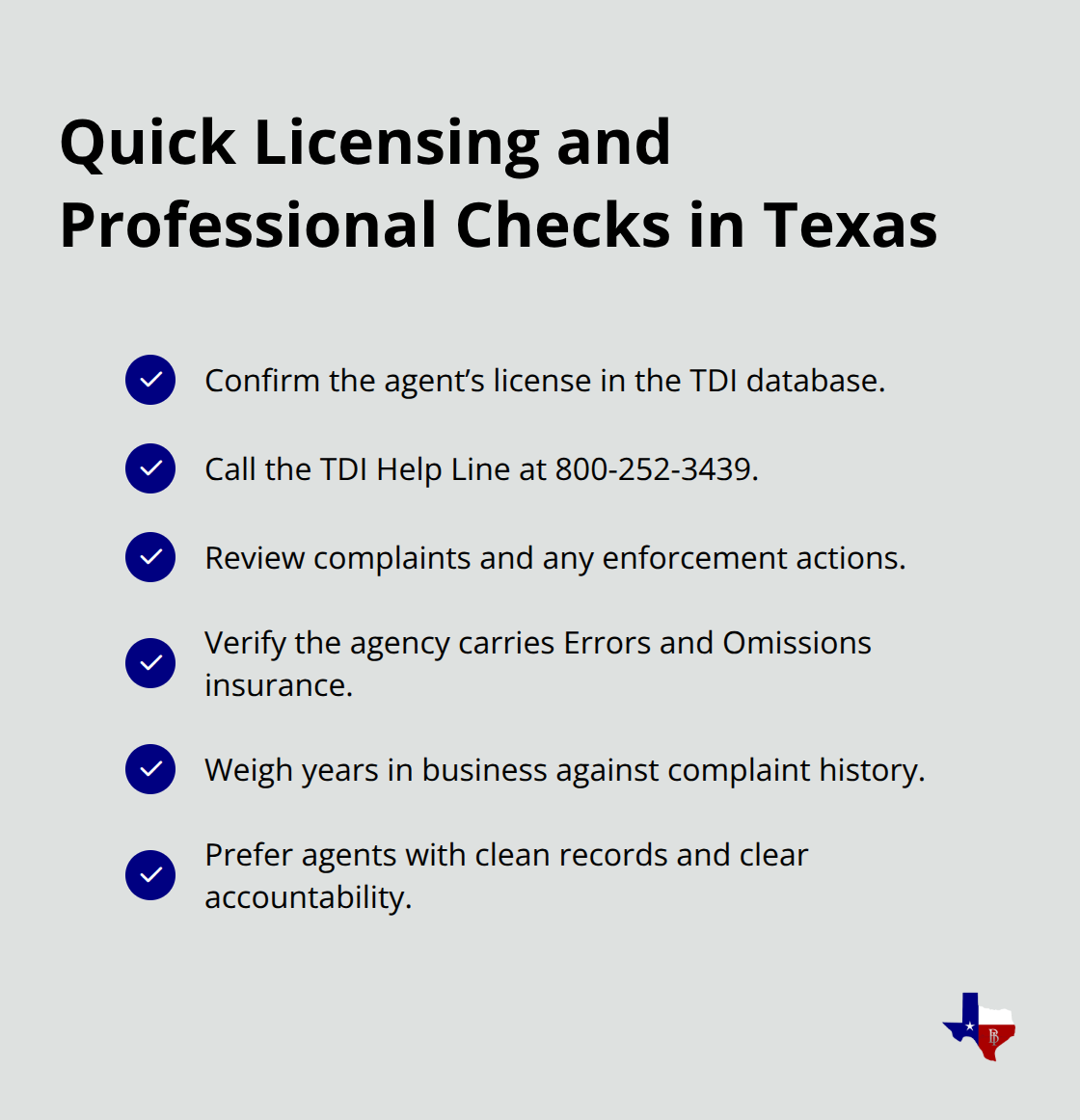
Years in business matter, but only when paired with a clean regulatory record. An agent with twenty years of experience and multiple complaints is worse than one with five years and zero issues. Look specifically for agents who carry Errors and Omissions insurance, which protects you if the agent makes a mistake in your coverage. This coverage signals that the agent takes professional responsibility seriously.
Match Experience to Your Specific Needs
Experience in your specific insurance needs separates competent agents from great ones. If you need commercial coverage for a small business, ask how many business clients the agent currently serves and request references from similar companies. If you own property in a flood zone, an agent should explain NFIP policies and private flood insurance options without hesitation. An agent working with three mediocre carriers is less valuable than one with access to one top-rated carrier and two solid backups.
Ask about the agency’s selection criteria for which carriers they represent, and expect them to explain why they chose their partners. This tells you whether they prioritize your interests or simply sign up with whoever offers the highest commissions.
Assess Responsiveness and Claims Support
Responsiveness matters more than you might think. When you email a question, does the agent respond within 24 hours or do you wait a week? During claims, availability becomes critical. Confirm whether the agency offers 24/7 claims support and online claims tracking before you sign up. Ask directly: if I have a water damage claim at 2 a.m. on Sunday, who do I call and how quickly will someone respond? Reputable agencies answer this question clearly and confidently.
Evaluate Carrier Partnerships and Performance
Check online reviews on Google, the Better Business Bureau, and industry-specific sites, but focus on reviews that mention claims handling speed and customer service quality rather than vague praise. The J.D. Power Customer Satisfaction Index ranks insurers on claims handling, and you can use those rankings to assess whether an agent’s carrier partnerships include strong performers. An agent’s choice of partners directly affects your experience when you file a claim or need support.
Once you understand what separates a qualified agent from an average one, the next step is learning how to compare multiple agencies side by side to find the best fit for your situation.
Comparing Texas Independent Agencies Side by Side
Request Identical Quotes to Reveal Real Price Differences
Contact at least three independent agencies and provide identical information about your coverage needs, property details, and current situation. Request apples-to-apples quotes by specifying the same deductibles, coverage limits, and endorsements across all quotes. One agency might quote you at $1,200 annually while another charges $1,450 for identical coverage, revealing real pricing differences rather than comparing different policies.
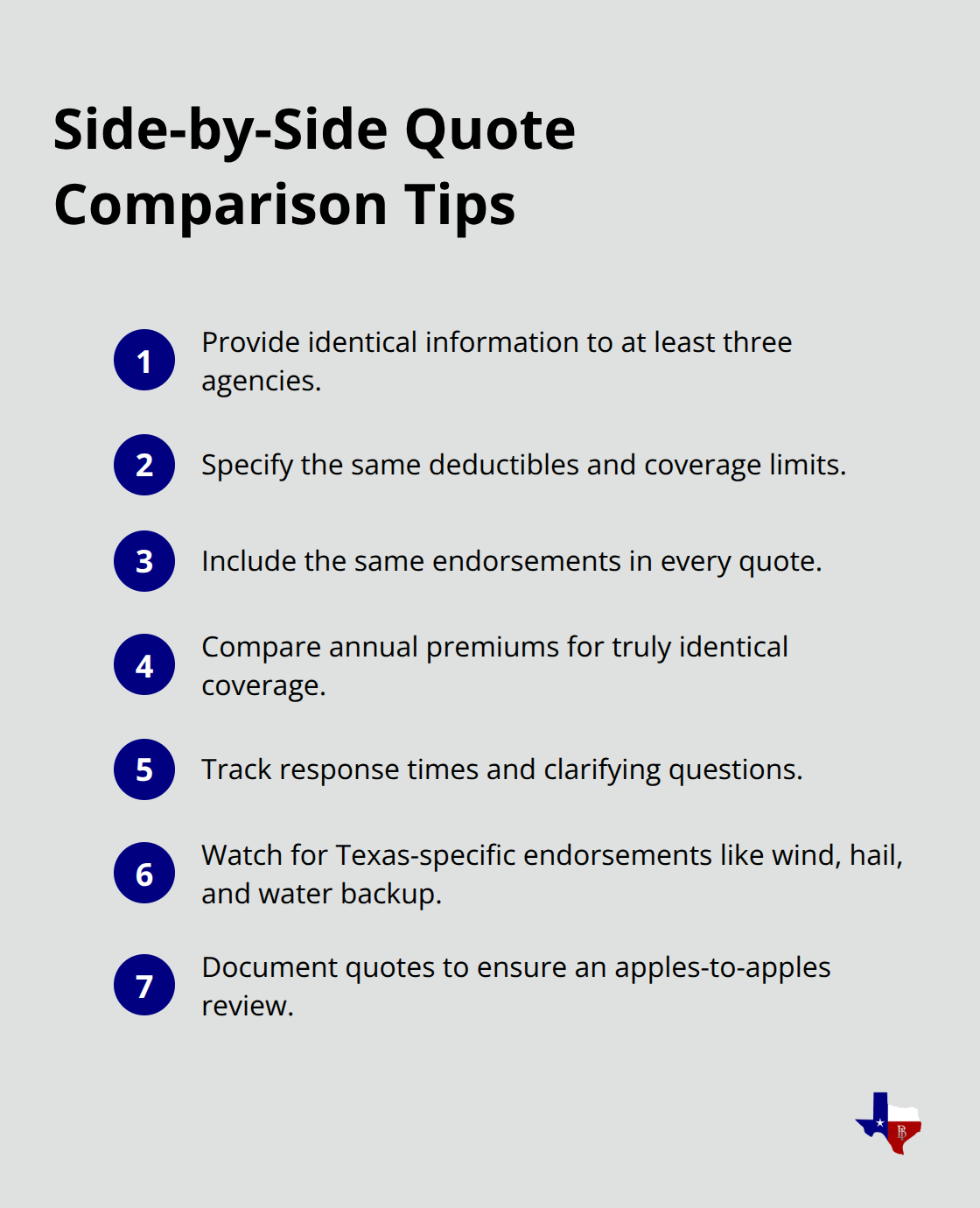
Pay attention to how quickly each agency responds and whether they ask clarifying questions about your specific situation. An agency that returns a quote within 24 hours demonstrates operational efficiency, while one that takes a week signals slower processes that could affect claims handling later.
Evaluate How Agencies Approach Your Specific Needs
During quote conversations, notice whether agents explain why they selected certain carriers for your needs or simply present the cheapest option. The cheapest quote often masks weaker coverage or higher deductibles that create problems when you file a claim. Texas weather brings specific risks that demand tailored endorsements like wind and hail coverage, roof replacement riders, and water backup protection.
An agency quoting you on basic coverage without mentioning these Texas-specific endorsements is either inexperienced or cutting corners to hit a price point. Strong agencies proactively address regional risks because they understand what actually protects Texas homeowners and businesses.
Read Online Reviews for Claims Performance Patterns
Search Google Reviews, the Better Business Bureau, and industry sites like Trustpilot, but read beyond star ratings to find patterns in what customers say. Focus specifically on mentions of claims speed, agent responsiveness, and how the agency handled disputes or problems. A five-star review praising friendly service tells you nothing about whether claims get paid quickly. A three-star review stating the agent responded to a claim within two hours on a Sunday tells you everything.
Check complaint ratios through the National Association of Insurance Commissioners, which tracks how many complaints insurers receive relative to their market share. Lower complaint ratios indicate better service quality and claims handling.
Verify Carrier Financial Strength and Agency References
Verify that each agency’s carrier partners maintain strong financial ratings with A.M. Best, preferring ratings of A-minus or higher to confirm they can actually pay claims if disaster strikes. An agency representing mostly B-rated carriers is gambling with your protection. Ask each agency directly for client references from customers with similar coverage needs and contact at least two references before deciding.
Legitimate agencies provide references confidently because satisfied customers validate their work. An agency that hesitates or claims confidentiality concerns is hiding something. When you speak with references, ask specifically whether the agency helped during the claims process and whether they would recommend the agency to family members. That question cuts through politeness and reveals real satisfaction.
Final Thoughts
Choosing an independent insurer in Texas requires you to verify credentials, compare quotes across multiple agencies, and confirm that carrier partnerships include financially strong performers. An established Texas agency understands regional risks because they handle claims from them regularly, negotiate better rates with carriers through consistent volume, and know which endorsements actually protect Texas homeowners. They stay available when problems arise, not just when selling policies.
At Brooks Insurance, we have spent over 50 years building relationships with top-rated insurance companies and serving Texas families and businesses. As an independent agency, we represent multiple carriers, which means you access a larger selection of coverage options and pricing than you would with a captive agent. Our licensed agents work with you to understand your specific situation and find protection that fits your needs and budget.
Contact Brooks Insurance and request quotes for your specific coverage needs. Provide identical information to at least three agencies so you can compare pricing and service quality directly. Ask about carrier partnerships, experience with claims in your area, and availability for ongoing support-we will answer these questions clearly and help you understand exactly what protection you are getting and why it matters for your situation.
Disclaimer: The information provided in this blog is for general informational purposes only and does not constitute legal, financial, or insurance advice. Coverage options, terms, and availability may vary. Please consult with a licensed professional for advice specific to your situation