
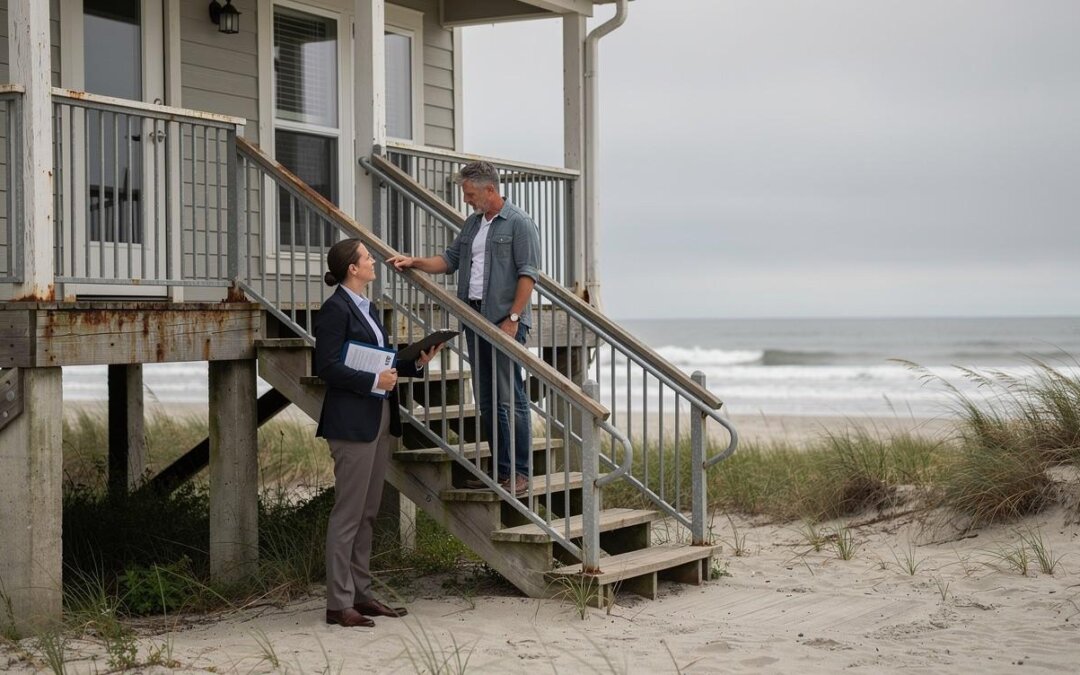
Texas coastal homeowners face real threats from hurricanes, storm surge, and flooding. Standard homeowners policies often leave significant gaps in protection, leaving your seaside property vulnerable.
At Brooks Insurance, we help Texas coastal property owners understand what coverage they actually need. This guide walks you through coastal homeowners insurance in Texas, from identifying your risks to selecting the right policy.
Understanding Coastal Property Risks in Texas
Texas coastal properties sit in one of the most hurricane-prone regions in the country. Between 1851 and 2024, Texas experienced 67 direct hurricane hits, according to the National Hurricane Center, with the most destructive occurring in recent decades. Your seaside home faces three distinct threats that standard policies simply don’t address adequately.
Hurricane-Force Winds and Flying Debris
Hurricane-force winds exceed 74 mph and strip roofing, shatter windows, and collapse walls. Flying debris from unsecured objects, vegetation, and building materials becomes deadly projectiles in sustained winds. Wind-driven rain penetrates through small openings and damages interiors, electrical systems, and structural components.
Storm Surge and Water Damage
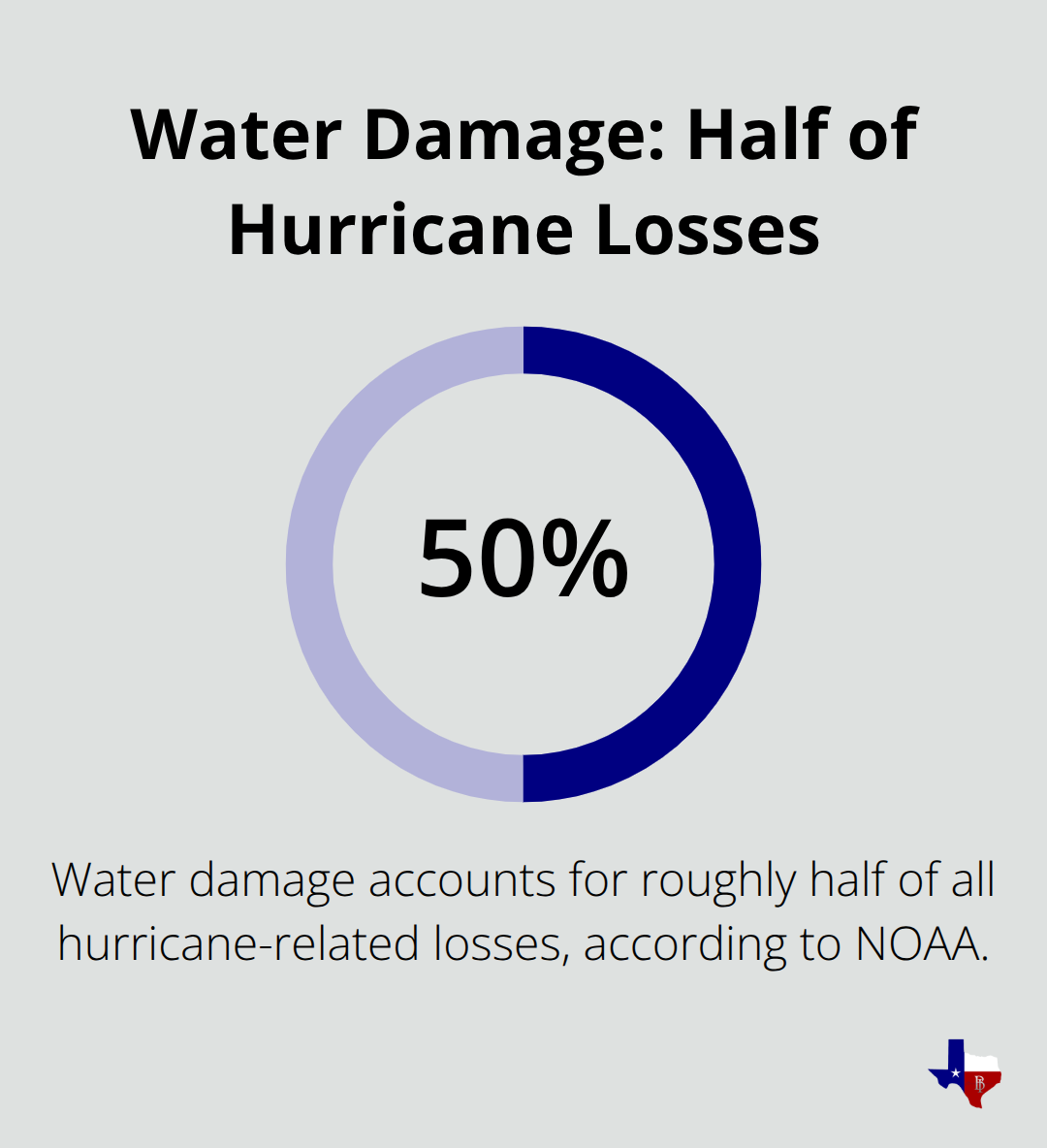
Storm surge pushes ocean water inland, with some storms raising water levels 12 feet or higher above normal tides. Flooding from both surge and rainfall causes the majority of hurricane damage-according to the National Oceanic and Atmospheric Administration, water damage accounts for roughly 50 percent of all hurricane-related losses. The combination creates a compounding problem: a single storm event triggers damage from wind, surge, and flooding simultaneously, overwhelming standard homeowners coverage that typically excludes flood damage entirely.
How Your Location Determines Risk
Coastal properties in Texas fall into different risk zones based on proximity to the Gulf, elevation, and local geography. Properties within the storm surge zone-generally within 5 to 10 miles of the coast depending on local topography-face the highest surge risk. Elevation matters significantly; homes built below or near base flood elevation require flood insurance and face substantially higher premiums.
Construction quality affects vulnerability too. Homes built before modern wind-resistance codes are more susceptible to damage. Older properties with hip roofs, single-pane windows, and wood-frame construction experience greater losses in high-wind events. Properties in areas with poor drainage or near bayous and waterways face compounded flooding risks beyond typical storm surge.
Understanding your specific risk factors determines what coverage limits you actually need. Standard insurance recommendations often miss the mark for coastal Texas properties, which is why the next section examines what your current homeowners policy actually covers-and where the gaps exist.
What Your Coastal Homeowners Policy Actually Covers
The Wind and Flood Coverage Gap
Standard homeowners insurance policies exclude the two biggest threats to coastal Texas properties: wind damage and flood damage. Most policies sold in Texas include wind coverage, but carriers impose separate wind deductibles ranging from 2 percent to 5 percent of your home’s insured value. On a $400,000 home, a 5 percent wind deductible means you pay $20,000 out of pocket before coverage kicks in.
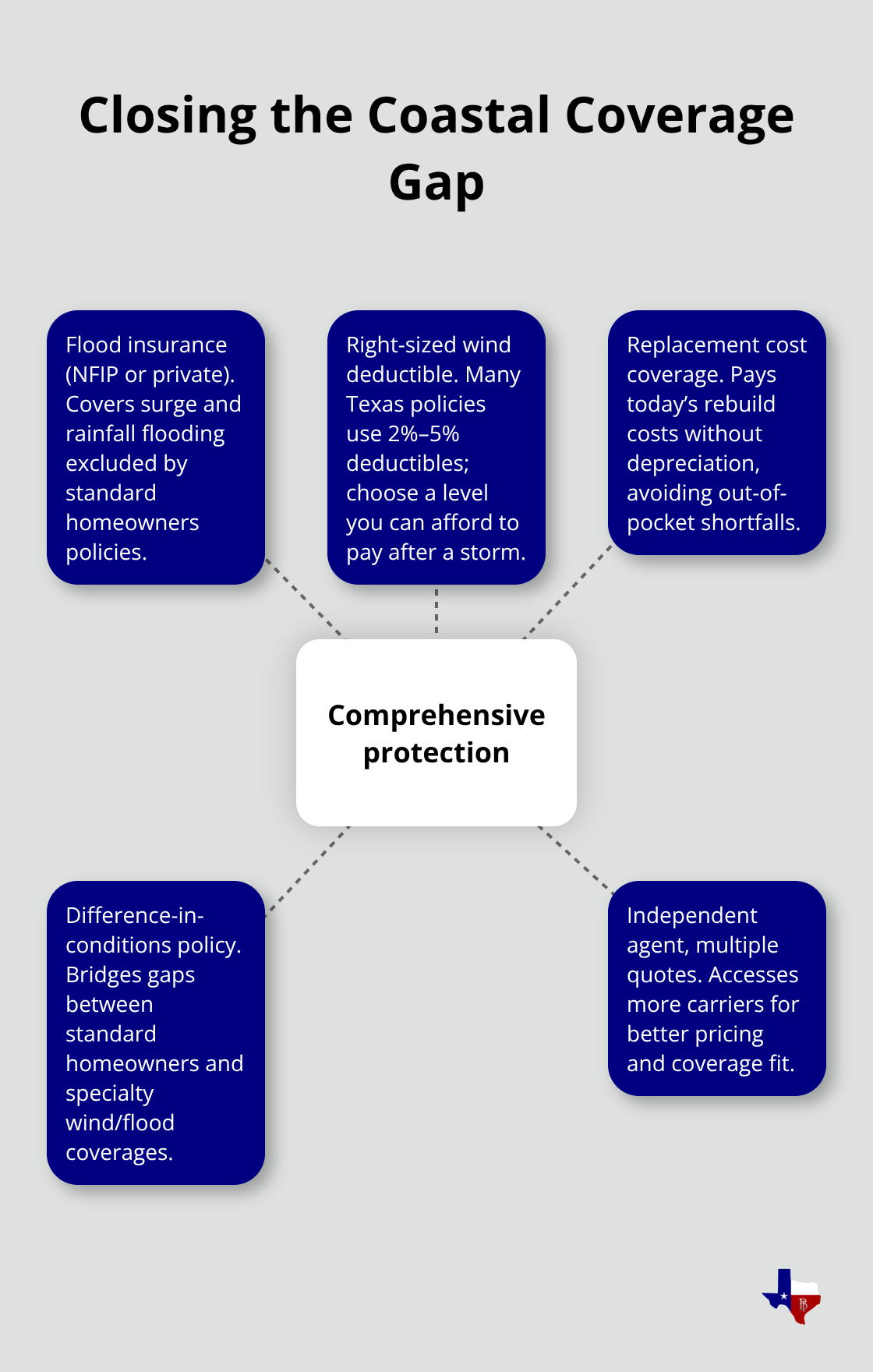
Flood damage receives no coverage under any standard homeowners policy. Standard homeowners policies deny water-damage claims because water damage falls outside their scope.
This creates a dangerous gap: when a hurricane dumps rain on your property or storm surge floods your first floor, you pay for repairs entirely from your own pocket. Coastal homeowners often discover this gap only after a storm hits, which is far too late to address.
Mandatory Flood Insurance Requirements
Coastal properties need separate flood insurance through the National Flood Insurance Program or a private flood carrier. If your home sits in a high-risk flood zone and you have a mortgage, flood insurance is mandatory. Private flood insurance has grown significantly in Texas over the past five years, with carriers now offering competitive rates and coverage limits up to $2.5 million in some cases.
The National Flood Insurance Program remains the primary option for many Texas coastal homeowners, though private carriers now provide viable alternatives with faster claims processing and higher coverage limits.
Replacement Cost versus Actual Cash Value
Replacement cost coverage, rather than actual cash value, is essential for coastal homes because repair costs spike dramatically after a hurricane. If your policy pays only actual cash value, the insurance company deducts depreciation before paying your claim, leaving you thousands of dollars short for rebuilding. Replacement cost coverage pays what it actually costs to rebuild today, without depreciation deductions.
For a 30-year-old coastal home with $400,000 in replacement value, the difference between replacement cost and actual cash value could exceed $80,000 after a major loss. This difference becomes the deciding factor between recovering fully and facing significant out-of-pocket expenses.
Bridging Coverage Gaps with Specialty Policies
Coastal properties in Texas also qualify for difference-in-conditions coverage, which bridges gaps between your standard policy and specialty flood or wind policies. This approach creates comprehensive protection that addresses the specific threats your location faces. Understanding what coverage options exist is only half the battle-selecting the right limits and deductibles for your specific property requires careful assessment of your actual risk factors.
How to Choose the Right Coastal Insurance Coverage
Determine Your Flood Zone and Elevation
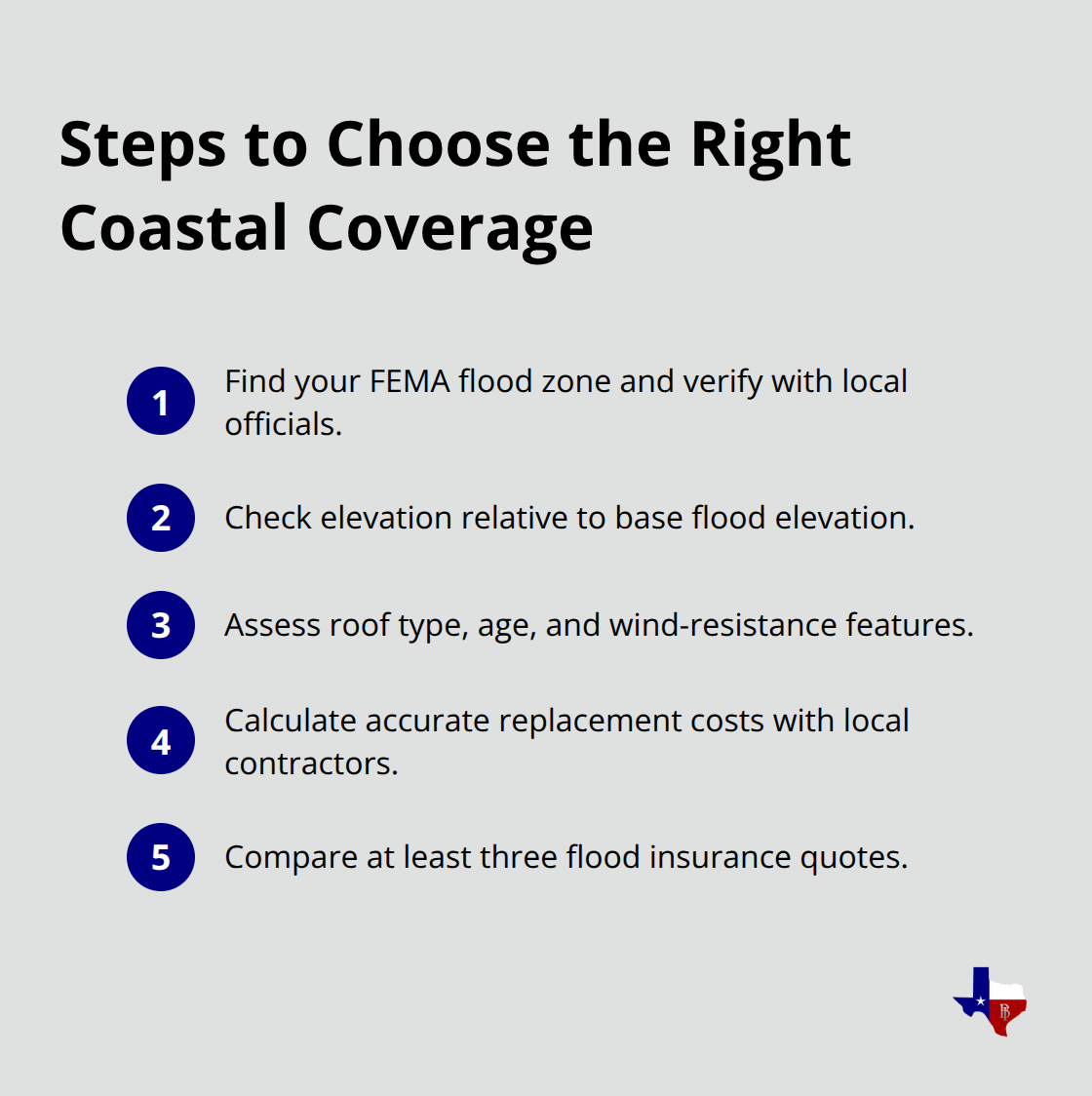
Your property’s flood zone designation directly determines your insurance costs and mandatory coverage requirements. Contact your local flood plain management office or use the FEMA Flood Map Service Center to find your precise flood zone. Properties in high-risk zones (designated as A or AE on flood maps) must carry flood insurance if financed with a mortgage, while moderate-risk zones (X with shading) face significantly lower premiums. Your elevation relative to base flood elevation matters more than distance from the coast. Flood insurance rates vary based on elevation, according to National Flood Insurance Program data. This single measurement should drive your coverage decisions because it quantifies your actual financial exposure.
Assess Your Roof’s Wind Vulnerability
Examine your roof’s construction type and age to assess wind risk accurately. Homes with hip roofs, continuous strapping, and impact-resistant windows experience 20 to 40 percent lower wind damage claims than homes with gable roofs and standard windows, based on Insurance Institute for Business and Home Safety research. If your coastal home was built before 2001, your roof likely fails to meet current wind-resistance standards, which means your wind deductible should reflect that vulnerability. A $20,000 wind deductible on a $400,000 home feels manageable until a hurricane hits and that deductible applies to roof damage alone.
Calculate Replacement Costs Accurately
Your coverage limits must reflect replacement costs, not purchase price. Coastal construction costs run 15 to 25 percent higher than inland properties due to stricter building codes and specialized labor. Request detailed replacement cost estimates from local contractors rather than relying on generic calculators. For flood coverage, select limits that cover your home’s replacement cost plus contents and living expenses, which typically means $500,000 to $750,000 for most coastal Texas homes. Private flood insurance carriers now offer higher limits than the National Flood Insurance Program, with some providing coverage up to $2.5 million.
Compare Multiple Flood Insurance Quotes
Compare quotes from at least three carriers because private flood premiums vary by 30 to 50 percent for identical properties. Work with an independent agent who represents multiple carriers rather than captive agents who represent single companies. Independent agents access the full market, meaning you’ll see competitive options the captive agent simply cannot offer. Your agent should calculate your actual replacement costs, verify your flood zone designation independently, and recommend deductible levels based on your financial capacity, not arbitrary percentages.
Final Thoughts
Coastal homeowners insurance in Texas requires more than a standard policy and hope. The three-part approach we’ve outlined-understanding your specific risks, knowing what your coverage actually includes, and selecting limits based on real replacement costs-forms the foundation of adequate protection. Your flood zone, roof condition, and elevation determine your actual financial exposure, and those factors should drive every coverage decision you make.
The gap between what coastal homeowners think they’re covered for and what their policies actually pay is substantial. Wind deductibles of $20,000 or more, complete exclusion of flood damage, and underinsured replacement costs leave thousands of Texas coastal property owners vulnerable. Closing these gaps requires flood insurance, appropriate wind deductibles, and replacement cost coverage rather than actual cash value.
Your next step is straightforward: gather your current policy documents, contact your local flood plain management office for your precise flood zone, and request replacement cost estimates from local contractors. We at Brooks Insurance work with Texas coastal homeowners to build comprehensive protection that actually covers what matters, and our licensed agents understand coastal risks in ways that national carriers often miss. Contact us to discuss your specific property and get quotes from multiple carriers.
Disclaimer: The information provided in this blog is for general informational purposes only and does not constitute legal, financial, or insurance advice. Coverage options, terms, and availability may vary. Please consult with a licensed professional for advice specific to your situation