
Coastal windstorm insurance in Texas isn’t optional if you own a home near the Gulf-it’s a financial necessity. Standard homeowners policies typically exclude wind damage, leaving you exposed to thousands in potential losses.
At Brooks Insurance, we help Texas coastal homeowners understand their protection options and find coverage that actually fits their needs. This guide walks you through what you need to know to safeguard your property.
What Damage Do Coastal Windstorms Actually Cause?
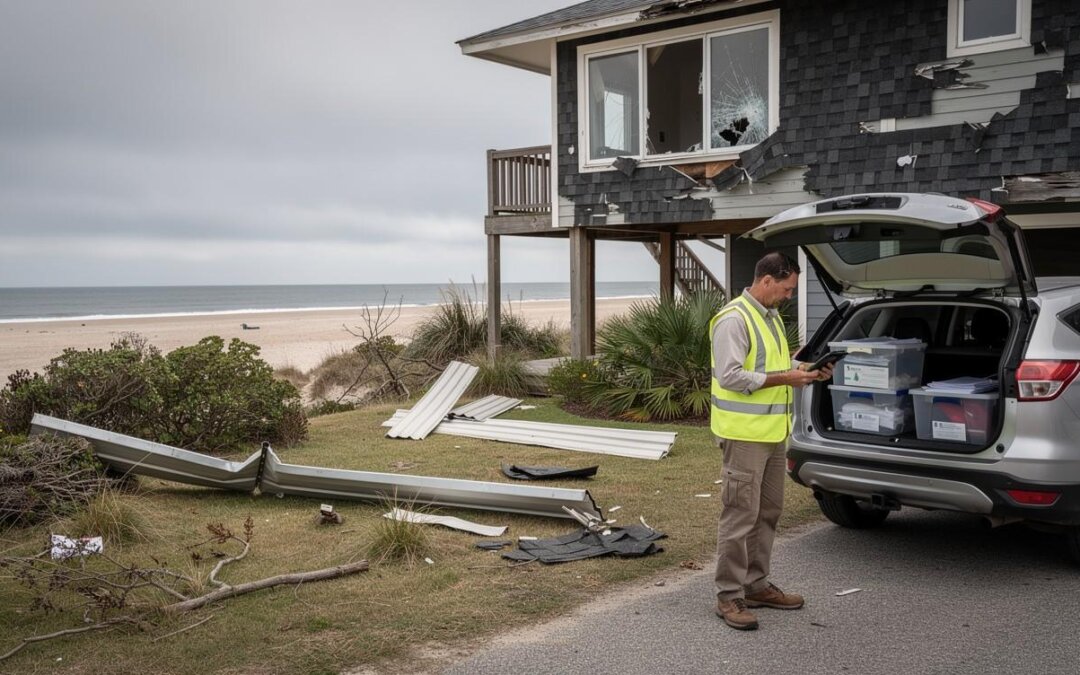
Windstorms in coastal Texas inflict three primary types of damage that standard homeowners policies won’t cover. Wind-driven rain penetrates walls and roofs, soaking insulation and drywall and creating conditions for mold that spreads for months after a storm passes. Flying debris from neighboring properties smashes windows, siding, and doors, which creates openings that allow water infiltration and structural compromise. Roof damage ranges from missing shingles to complete structural failure, and since your roof serves as your first defense against water damage, this matters enormously.
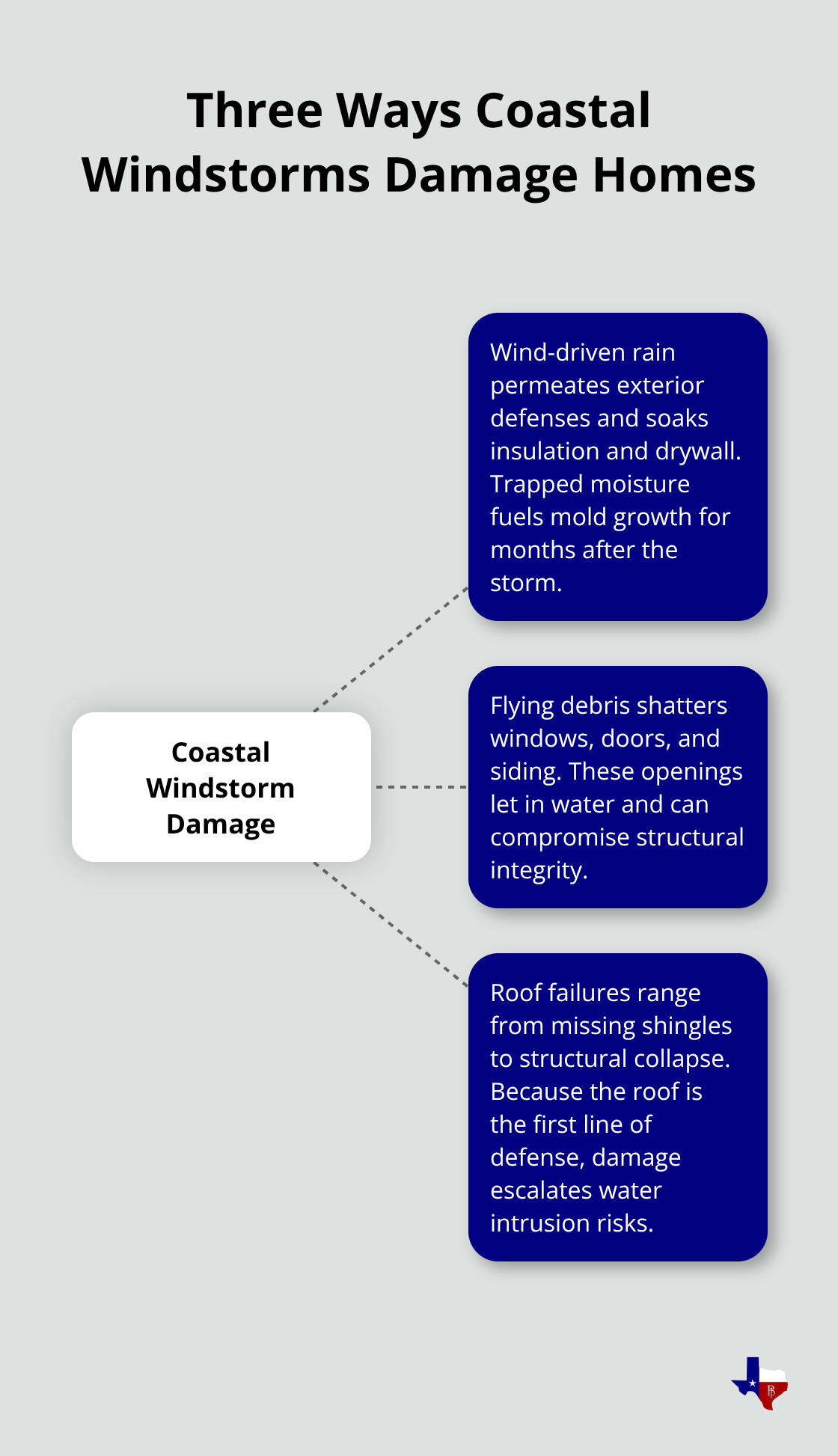
The Texas Department of Insurance tracks these patterns closely, and data shows that roof damage accounts for the largest portion of windstorm claims in coastal counties.
Where Coastal Texas Faces the Highest Risk
TWIA currently backs more than 237,000 policies across 14 Gulf Coast counties plus parts of Harris County east of Highway 146, and this footprint reflects where windstorm risk concentrates most heavily. Galveston County, Brazoria County, and Nueces County experience the most frequent storm activity because they sit directly in the path of Atlantic and Gulf hurricane systems. Properties within one mile of the coastline face significantly higher wind speeds during storms compared to inland areas, which means insurance rates and coverage availability differ dramatically based on your exact location. If your home sits in Aransas, Chambers, or Jefferson County, you occupy zones where private insurers have largely abandoned the market, making windstorm coverage either unavailable or prohibitively expensive outside of TWIA. Storm surge and wind intensity increase substantially for homes on barrier islands and in low-lying coastal communities, which underwriters factor into every rating decision.
Claims Data Shows the Real Financial Impact
Between 2017 and 2022, Texas coastal counties filed over 180,000 windstorm-related insurance claims, with an average claim value exceeding $8,500 per incident according to TWIA records. Hurricane Harvey alone generated more than 50,000 windstorm claims in the Texas coastal region, with total losses exceeding $2 billion.
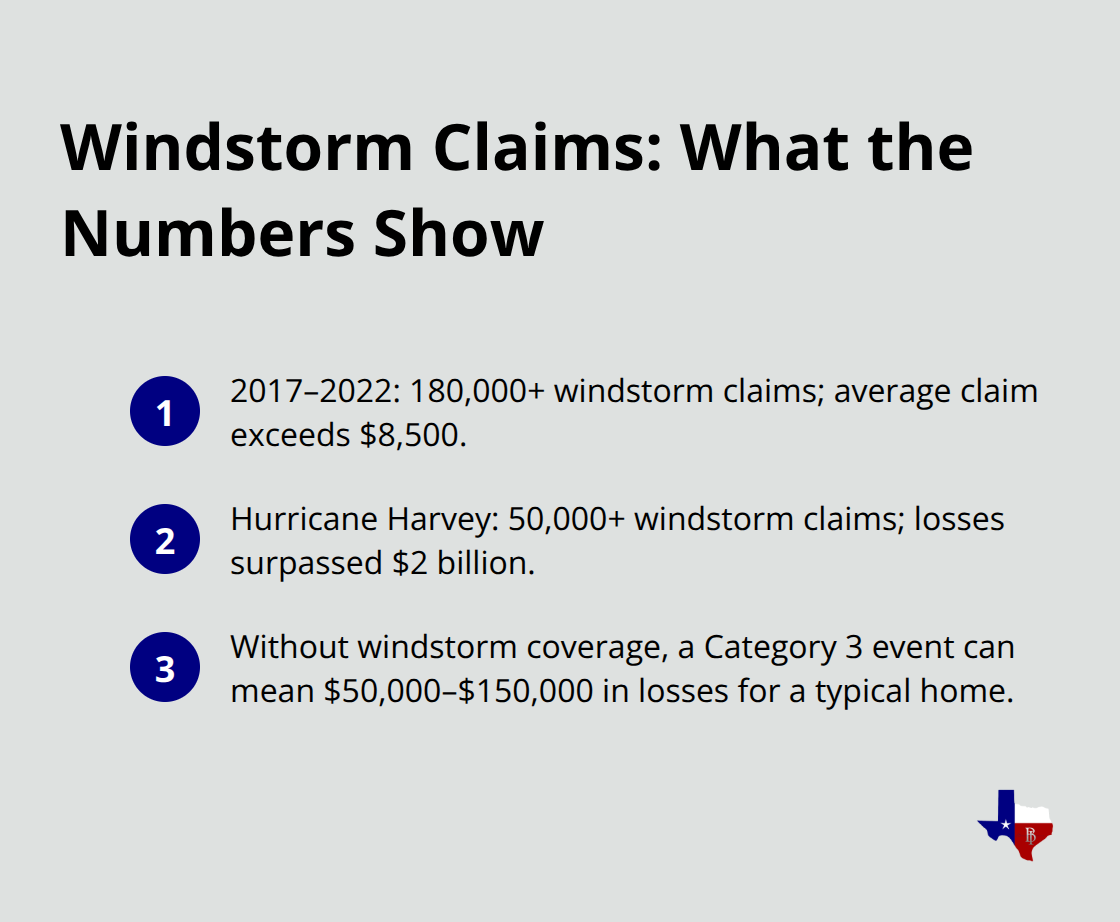
A single severe storm can leave your home uninsurable for months while repairs proceed, during which time you remain responsible for all additional damage. Properties without windstorm coverage face complete financial exposure for these damages, meaning a Category 3 hurricane could result in $50,000 to $150,000 in uninsured losses for a typical coastal home.
Understanding Your Coverage Gap
Standard homeowners insurance policies exclude wind and hail damage in coastal Texas, which leaves most property owners completely unprotected against the most common and destructive peril in the region. This coverage gap exists because private insurers view coastal windstorm risk as too volatile and unpredictable to underwrite profitably. Your mortgage lender likely requires windstorm coverage as a condition of your loan, yet many homeowners remain unaware that their standard policy provides zero protection. This disconnect between lender requirements and actual coverage creates significant financial and legal exposure for coastal homeowners who haven’t verified their windstorm protection separately.
Understanding what damage actually occurs during coastal windstorms and where that damage concentrates most heavily sets the foundation for evaluating your coverage options. The next section examines what standard homeowners policies cover and exclude, and introduces the specialized windstorm products that fill the protection gap.
Coverage Options for Windstorm Protection
Your standard homeowners policy contains a wind exclusion that strips away protection for the most destructive peril in coastal Texas. Private insurers cannot absorb the concentrated risk of coastal windstorms profitably, so they simply refuse to cover wind and hail damage in designated coastal counties. When you read your policy’s declarations page, you’ll find language stating that wind damage is excluded from coverage, which means a $40,000 roof replacement after a hurricane falls entirely on you. Mortgage lenders require windstorm coverage separately, which creates a mandatory second policy that most homeowners must carry alongside their standard homeowners insurance.
How TWIA Fills Your Protection Gap
TWIA, the Texas Windstorm Insurance Association, operates as the insurer of last resort for coastal properties and currently backs more than 237,000 policies across 14 Gulf Coast counties plus parts of Harris County. TWIA provides wind and hail coverage only-it does not cover fire, theft, liability, or other perils that your homeowners policy handles. This means you need both policies working together to achieve comprehensive protection. To qualify for TWIA coverage, your property must be located in a designated coastal zone, must have been denied coverage by at least one private insurer, and must be certified as meeting windstorm building code requirements in your area. Properties built or substantially altered after September 1, 2009 in certain flood zones must also carry NFIP flood insurance to qualify for TWIA windstorm coverage.
Determining Your Property’s Location and Risk Level
Your coverage assessment starts with your property’s exact location within the coastal zone, because distance from the Gulf directly affects both availability and cost. Homes within one mile of the coastline face substantially higher wind speeds during storms, which means TWIA rates and underwriting standards differ significantly from inland coastal properties. Check your property deed or county records to determine your distance from the shoreline, then contact a Texas-licensed insurance agent to discuss TWIA eligibility and available coverage limits. TWIA offers residential coverage for dwellings and personal property, as well as commercial policies for business buildings and business personal property, so your policy type depends on your property’s use and structure.
Selecting the Right Coverage Limits
Coverage limits should reflect your home’s replacement cost, not its market value-a $300,000 home in coastal Texas often costs $350,000 to $400,000 to rebuild after major windstorm damage due to specialized labor and materials. Request a replacement cost estimate from a local contractor before selecting coverage limits, because underinsurance leaves you responsible for the gap. TWIA conducts regular property inspections using on-site visits or high-quality aerial imagery to verify that information matches actual conditions and that your home remains in insurable condition with no unrepaired damage or hazardous conditions. Once you understand your location, eligibility status, and replacement costs, you can work with a licensed agent to finalize your TWIA application and move toward active coverage.
Strengthening Your Home Against Windstorm Damage
Reducing windstorm risk at your coastal property directly lowers your TWIA premiums and dramatically improves your odds of avoiding catastrophic damage when storms arrive. TWIA underwriters evaluate specific physical characteristics of your home during inspections, and properties that meet elevated building standards qualify for better rates and faster claim processing. The Texas Department of Insurance requires wind-resistant building code compliance through WPI-8, WPI-8E, or WPI-8C certification before TWIA will issue a policy, which means your home’s structural integrity determines both your eligibility and your cost. Properties built after 2009 already meet these standards, but older coastal homes often need targeted improvements to pass inspection and reduce vulnerability.
Invest in Roof Reinforcement First
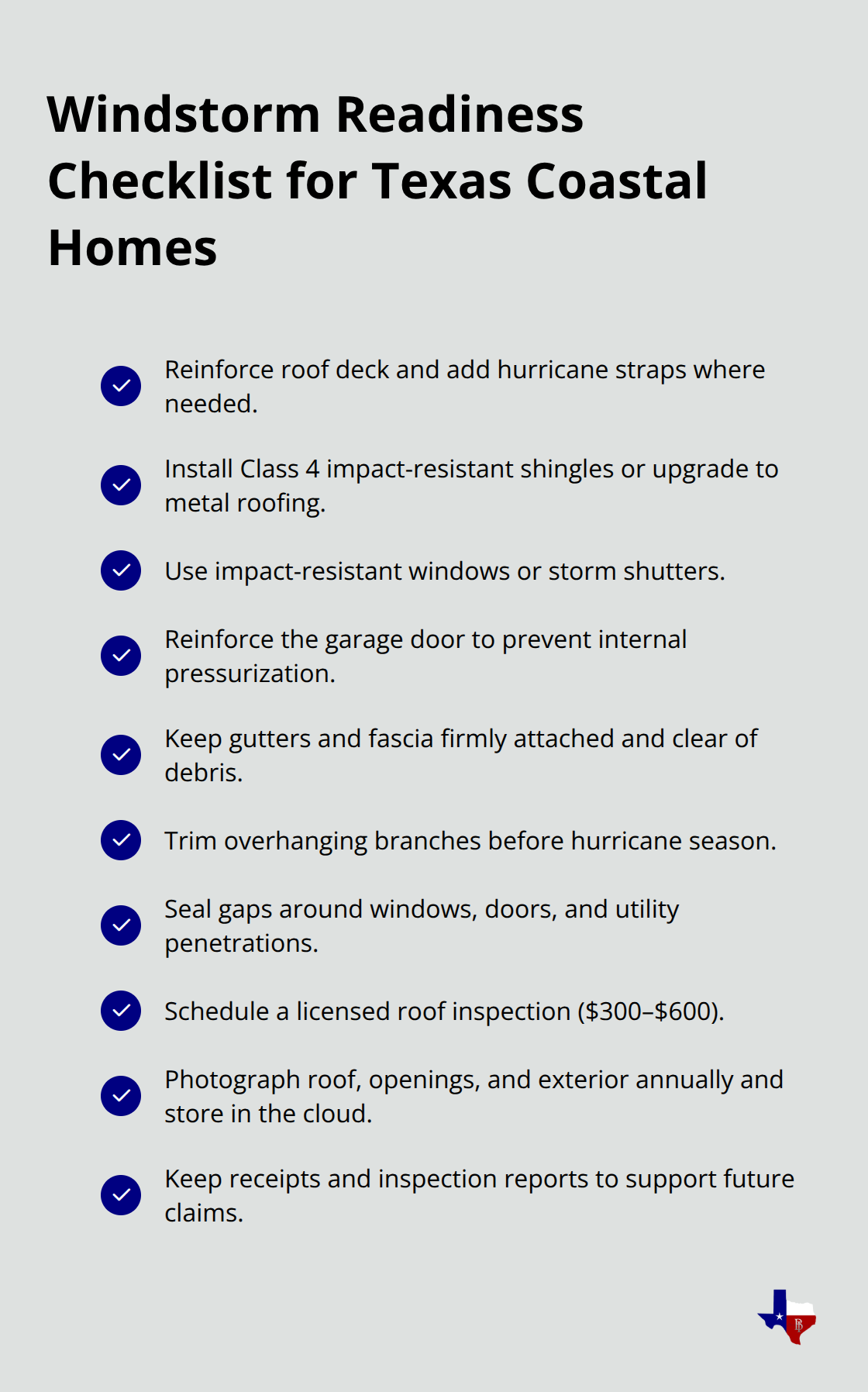
Roof reinforcement stands as your single most effective investment for windstorm protection and premium reduction. Some Class 4 rated shingles can withstand winds up to 130 mph, which is the equivalent of a Category 4 Hurricane on the Saffir-Simpson Hurricane Wind Scale, and impact-resistant shingles specifically designed for hail reduce damage claims substantially. Metal roofing outperforms asphalt in coastal zones because metal withstands higher wind pressures and resists hail damage more effectively than traditional materials. Your roof deck attachment matters equally-older homes often have roofs nailed to decking with inadequate fastener spacing, while current building codes require closer fastener patterns and hurricane straps that bind roof trusses to walls. A licensed contractor can inspect your roof for $300 to $600 and reveal exactly which improvements matter most for your specific structure.
Protect Windows, Doors, and Structural Openings
Window and door reinforcement prevents wind-driven rain from entering your home, which stops the interior water damage that spreads mold and destroys insulation for months after storms pass. Impact-resistant windows and storm shutters reduce penetration risk, and reinforced garage doors prevent the structural failure that occurs when wind pressure builds inside your home. Gutter systems and fascia boards that remain firmly attached to your structure prevent debris accumulation that channels water into walls during heavy rain.
Maintain Your Property Throughout the Year
Annual maintenance tasks protect your coverage eligibility and prevent claim denials based on pre-existing damage. Clear gutters and downspouts before hurricane season so water drains properly from your roof instead of pooling and penetrating compromised shingles. Trim tree branches hanging over your roof to eliminate debris that impacts your structure during windstorms and removes obstacles that impede proper water drainage. Seal gaps around windows, doors, and utility penetrations to prevent water infiltration that creates mold conditions and voids your coverage eligibility. TWIA explicitly requires properties to remain in insurable condition with no unrepaired damage or hazardous conditions, meaning a cracked window or missing shingles can trigger policy cancellation or claim denial.
Document Everything for Claims Protection
Documentation proves your maintenance efforts and protects you during the claims process when TWIA inspectors verify that damage resulted from the storm rather than pre-existing neglect. Photograph your roof, gutters, windows, and exterior condition annually and store images in cloud storage accessible from any location since your home may be inaccessible immediately after a major storm. Keep receipts for all repairs and maintenance work performed, including gutter cleaning, roof inspections, and any structural improvements you complete. Request a written inspection report from TWIA during your underwriting process and again annually, because these official documents establish baseline conditions that support your claims if damage occurs. When you submit a claim after a storm, provide TWIA with your maintenance records and before-storm photographs to establish that damage resulted directly from windstorm activity rather than poor maintenance. Properties that demonstrate consistent upkeep and recent improvements receive faster claim approvals and face fewer coverage disputes because the documentation eliminates questions about causation.
Final Thoughts
Coastal windstorm insurance in Texas protects your home from the financial devastation that standard homeowners policies explicitly exclude. You now understand that wind and hail damage represents the most destructive peril in coastal counties, that TWIA provides the coverage gap that private insurers refuse to fill, and that your property’s location and building condition directly determine both your eligibility and your cost. Verify your current coverage through your homeowners policy declarations page and confirm whether windstorm protection exists as a separate policy, then contact your mortgage lender to verify their windstorm coverage requirements.
Assess your property’s windstorm risk through your exact location within the designated coastal zone and understand how distance from the Gulf affects your rates and underwriting standards. Request a replacement cost estimate from a local contractor so you know what coverage limits actually protect your home rather than leaving you underinsured. Home hardening improvements like roof reinforcement and impact-resistant windows reduce both your vulnerability and your premiums, making these investments financially sensible beyond their protective value.
Work with a licensed Texas insurance agent to evaluate your TWIA eligibility, confirm your building code certification status, and finalize your application if you need coverage. Annual maintenance and documentation protect your claims eligibility and accelerate claim processing when storms arrive. Contact us to discuss your coastal windstorm insurance Texas needs and move toward the protection your coastal home requires.
Disclaimer: The information provided in this blog is for general informational purposes only and does not constitute legal, financial, or insurance advice. Coverage options, terms, and availability may vary. Please consult with a licensed professional for advice specific to your situation