
Fleet owners in Texas face real financial risk when their commercial auto coverage falls short. At Brooks Insurance, we’ve seen too many businesses discover costly gaps in their policies only after an accident happens.
The right commercial auto coverage Texas protects your vehicles, your drivers, and your bottom line. This guide walks you through what you actually need and how to avoid the mistakes that leave fleets exposed.
What Your Commercial Auto Policy Actually Covers
Understanding Texas Liability Minimums and Why They Fall Short
Texas law requires a minimum of 30/60/25 liability coverage-that’s $30,000 per person, $60,000 per accident for bodily injury, and $25,000 for property damage. These minimums are dangerously low for any business operating vehicles in high-traffic areas like Houston, Dallas, or Austin. A single serious accident can easily exceed these limits, leaving your company personally liable for medical bills, lost wages, and legal fees that can cripple your business.
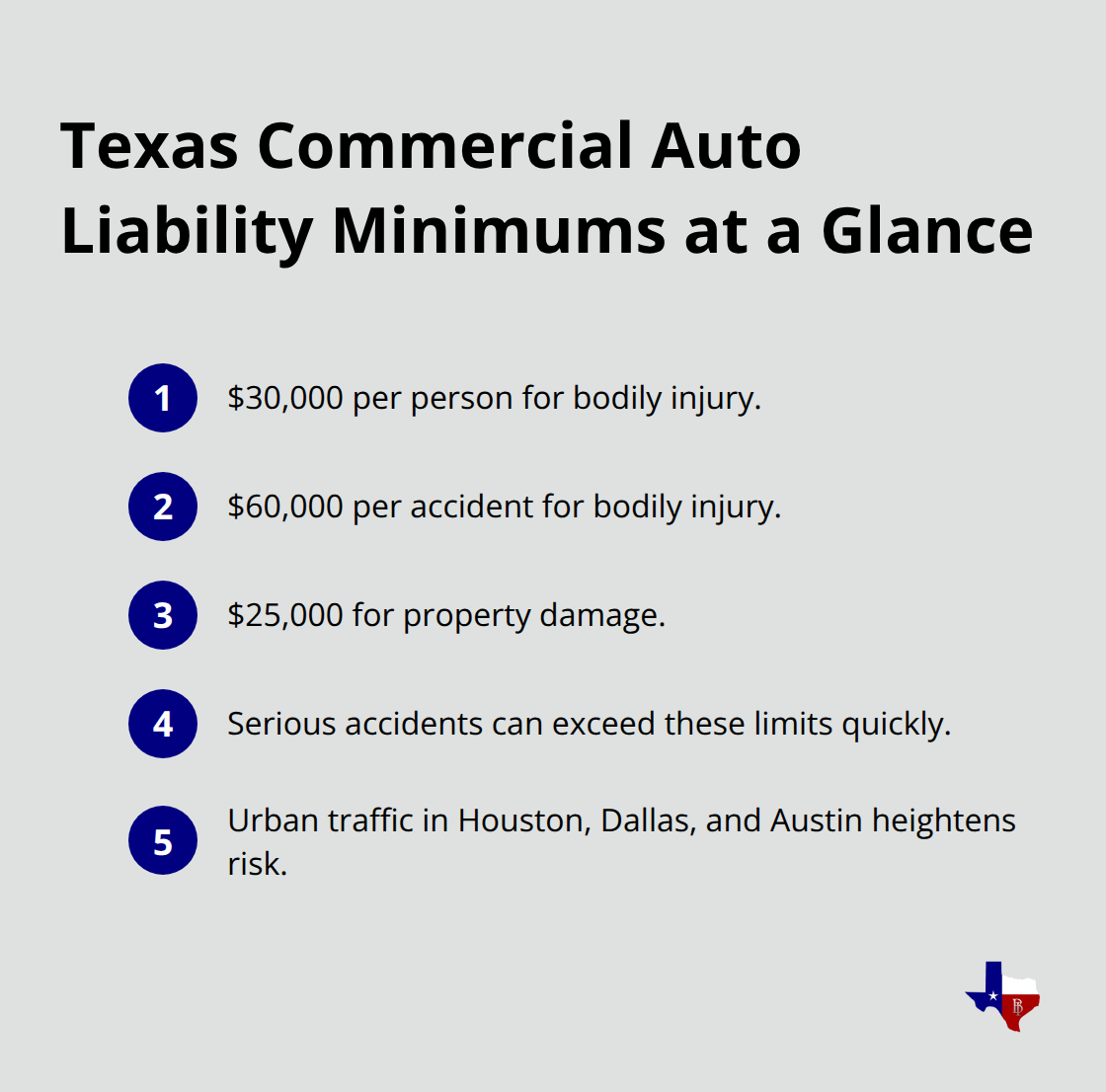
You should evaluate whether your actual exposure justifies higher limits based on your vehicle types, routes, and cargo value.
Physical Damage Protection: Collision and Comprehensive Coverage
Collision coverage pays for damage to your own vehicles from crashes regardless of who’s at fault, which protects your fleet’s repair and replacement costs. Comprehensive coverage handles non-collision damage like theft, vandalism, hail, and weather events-particularly important in Texas where hail damage claims are common and costly. Together, these two coverages shield your vehicles from the most frequent and expensive loss scenarios your fleet faces.
Protecting Your Drivers and Passengers
Uninsured and underinsured motorist coverage fills a critical gap by protecting your drivers and passengers when they’re hit by someone carrying little or no insurance, a scenario that happens frequently on Texas roads. Medical payments coverage works alongside uninsured motorist protection to shield your team from out-of-pocket expenses after an accident. These coverages address a real vulnerability: other drivers on Texas roads may carry inadequate or no insurance at all.
Coverage for Non-Owned and Employee Vehicles
If your business uses vehicles for work-whether box trucks, vans, pickup trucks, or passenger vehicles-your standard personal auto policy excludes work-related incidents entirely, which means you’re uninsured during business use. Hired and non-owned auto coverage extends protection when employees use personal, rented, or leased vehicles for work purposes, though this coverage doesn’t pay for damage to those personal vehicles themselves. This distinction matters significantly when your operations rely on vehicles you don’t own outright.
Matching Coverage to Your Actual Operations
The real mistake fleet owners make is treating commercial auto as a checkbox item rather than examining whether their coverage limits and options match their actual operations. If you haul high-value cargo, operate in congested urban areas, or run multiple vehicles, your risk profile demands more than minimum coverage. You should obtain quotes from multiple carriers to compare not just price but the breadth of coverage options available, since some insurers offer add-ons like mechanical protection and roadside assistance that others don’t include. Understanding what gaps exist in your current policy sets the stage for identifying the coverage shortfalls that leave most Texas fleets exposed.
Coverage Gaps That Drain Fleet Budgets
Liability Limits That Leave You Exposed
Most Texas fleet owners operate with liability limits that match the state minimum of 30/60/25, a decision that becomes catastrophic the moment a serious accident happens. A commercial vehicle accident involving multiple injuries in Houston or Dallas routinely produces medical bills, lost wages, and legal settlements exceeding $100,000-yet the minimum coverage leaves your company personally liable for everything beyond $60,000 in bodily injury claims. If your fleet hauls high-value cargo or operates in congested metro areas, you’re gambling with your entire business when you stick to legal minimums.
The Texas Department of Insurance recommends evaluating your actual exposure, and most underwriters suggest higher liability limits for any fleet operating vehicles regularly in urban areas. You need to calculate what a worst-case accident would cost your business, then compare that number to your current coverage limits. Many fleet owners pay tens of thousands out of pocket following an accident because they never performed this calculation beforehand.
The Employee Vehicle Coverage Problem
Non-owned vehicle coverage represents another massive blind spot that catches fleet operators off guard. If your employees use personal vehicles for work deliveries, client visits, or job site transportation, your commercial auto policy typically doesn’t cover accidents that occur during those work-related trips-your employee’s personal auto insurance won’t cover it either since most personal policies exclude business use.
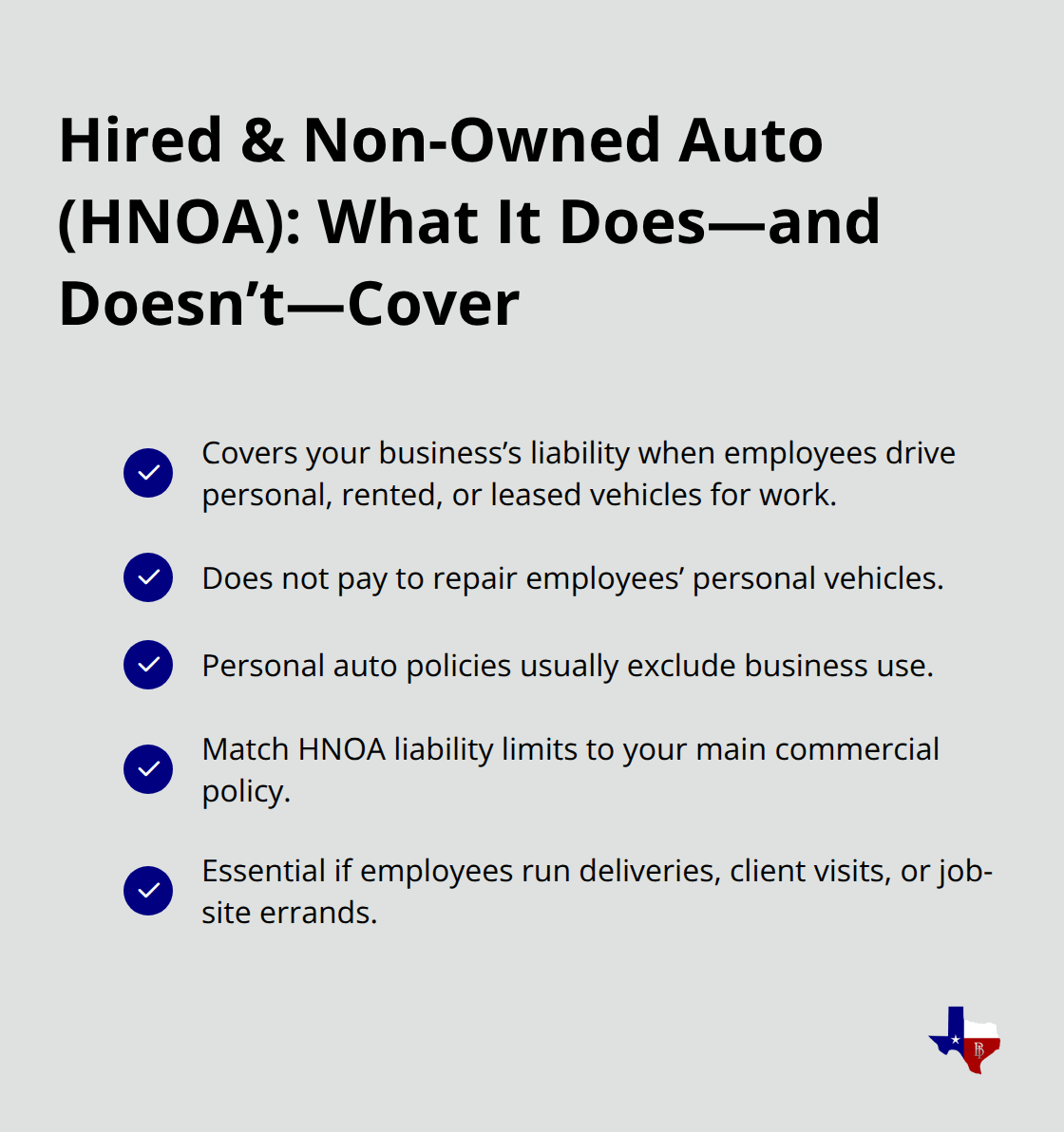
Hired and non-owned auto coverage fills this gap by providing liability protection when employees drive their own vehicles for business, but it doesn’t pay for damage to those personal vehicles themselves. This creates a real problem: your employee gets into an accident during a work errand, their personal vehicle is damaged, and neither your policy nor theirs covers the repair bill. Any Texas fleet relying on employee-owned vehicles for work purposes should carry hired and non-owned auto coverage at the same liability limits as your main commercial policy.
Unlisted Vehicles and Coverage Denials
Box trucks, vans, and specialized equipment vehicles you own outright also need separate evaluation-if your policy lists specific vehicles and an employee drives an unlisted company truck, you could face coverage denial. This scenario plays out regularly when fleet operations expand faster than policy updates occur. You must maintain an accurate vehicle inventory with your insurer and add hired and non-owned auto coverage if employee personal vehicles are part of your operations.
These coverage gaps expose your fleet to financial risk that extends far beyond repair costs. The next section examines how to select a commercial auto policy that actually matches your Texas fleet’s real operational needs.
Selecting the Right Policy for Your Fleet’s Actual Risk
Map Your Fleet and Document Operations
Start with every vehicle your business operates, including owned trucks, leased vans, and any employee-owned vehicles used for work. Most Texas fleet owners underestimate their vehicle count because seasonal equipment, contractor vehicles, or part-time delivery cars slip through the cracks. Write down each vehicle’s make, model, year, and primary use-this inventory becomes your foundation for accurate quotes. Next, calculate your annual mileage across all vehicles and identify your geographic operating area. A plumbing contractor working within a 20-mile radius of Austin faces different risks than a delivery service running routes across multiple metro areas. The Texas Department of Insurance recommends documenting your highest-value routes and cargo types because these directly influence your liability exposure.
Evaluate Your Liability Exposure and Coverage Limits
If you haul construction equipment, HVAC systems, or high-value merchandise, your liability limits need to reflect potential damage claims that could easily exceed $100,000. A single accident involving a commercial vehicle and multiple passenger vehicles in a Dallas intersection generates medical bills that dwarf the state minimum of 30/60/25. Many underwriters recommend liability limits of at least 100/300/100 for any fleet operating regularly in Houston, Dallas, or Austin-that’s $100,000 per person, $300,000 per accident, and $100,000 property damage. Your industry matters too: construction contractors typically need higher limits and additional coverage like inland marine for tools and equipment inside vehicles, while delivery services need hired and non-owned auto coverage at robust limits if employees drive personal vehicles.
Request Quotes from Multiple Carriers
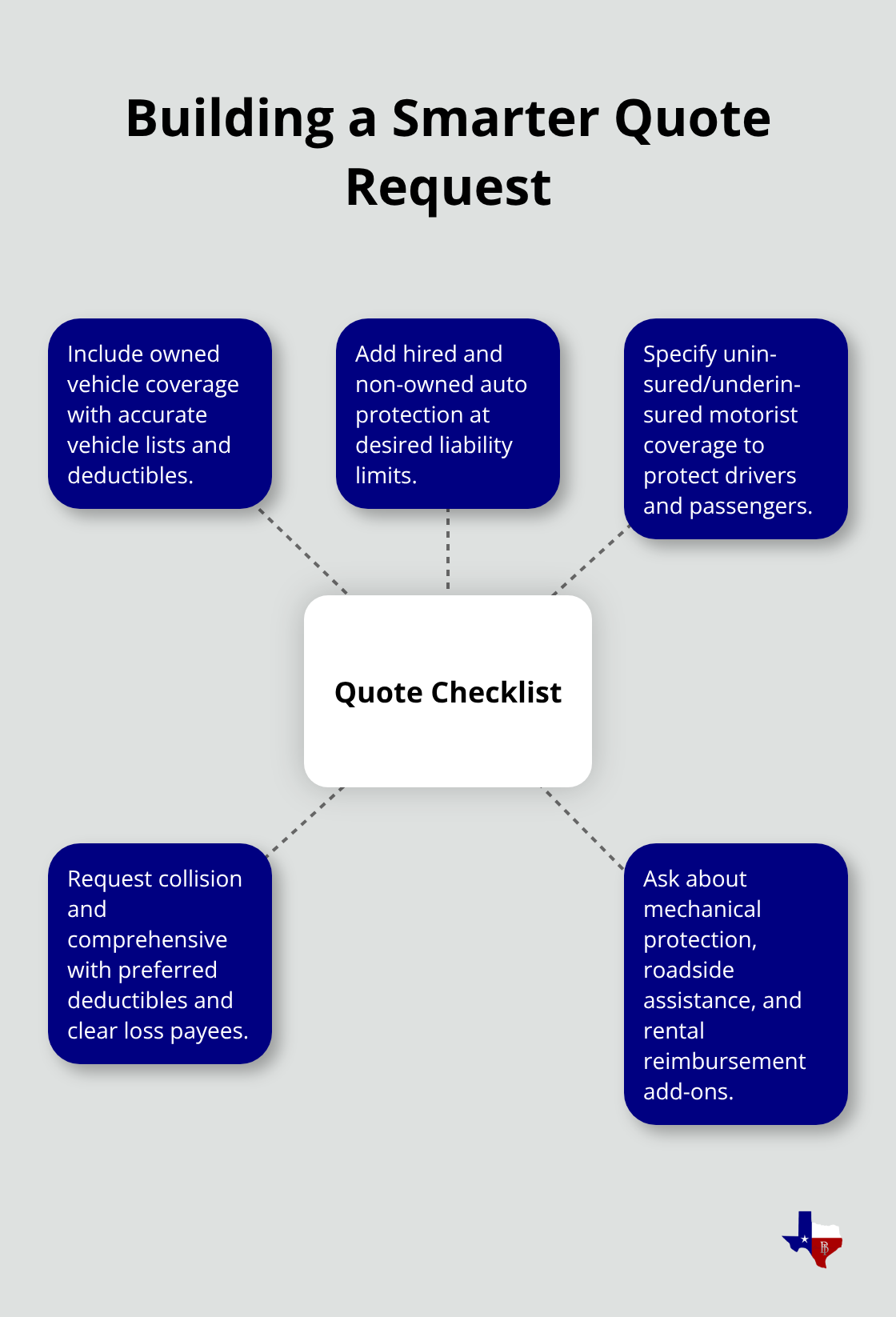
Obtain quotes from at least three different insurers because pricing varies dramatically based on how each carrier evaluates your risk profile. Some insurers specialize in construction fleets and offer better rates for contractors; others focus on delivery operations and price more competitively for service businesses. Request quotes that include owned vehicle coverage, hired and non-owned auto protection, uninsured motorist coverage at your desired limits, and collision and comprehensive with your preferred deductible. Ask each insurer whether they offer mechanical protection, roadside assistance, and rental reimbursement because these add-ons cost relatively little but save substantial money when breakdowns occur during business operations.
Compare Coverage Breadth, Not Just Price
Compare not just the premium but the coverage breadth each carrier provides-a $50 monthly difference means nothing if one policy excludes hired vehicle coverage and the other includes it. As an independent agency, we work with multiple top-rated carriers, which means you have access to a larger selection of coverage options and pricing than you’d get from a single company. Request a certificate of insurance from your preferred carrier before finalizing your decision, since many clients and government contracts require proof of coverage before you can begin work.
Final Thoughts
Your fleet’s protection hinges on decisions you make today, not after an accident forces your hand. The gap between Texas minimum liability coverage and what your business actually needs represents the difference between manageable losses and financial devastation. Most fleet owners operate with inadequate liability limits, missing hired vehicle protection, or unlisted equipment that creates coverage denials when accidents happen.
Document every vehicle your business operates, including owned trucks, leased equipment, and employee-owned vehicles used for work. Calculate your actual liability exposure based on your routes, cargo value, and operating areas-then compare that number to your current coverage limits. Obtain quotes from multiple carriers that include hired and non-owned auto protection, uninsured motorist coverage at appropriate limits, and collision and comprehensive with your preferred deductible.
At Brooks Insurance, we represent multiple top-rated carriers, which means you access a larger selection of coverage options and pricing than you’d get from a single company. Our licensed agents evaluate your specific fleet operations and recommend commercial auto coverage Texas that matches your actual risk profile rather than pushing you toward minimum limits. Contact us to review your current policy and identify the protection your fleet actually needs.
Disclaimer: The information provided in this blog is for general informational purposes only and does not constitute legal, financial, or insurance advice. Coverage options, terms, and availability may vary. Please consult with a licensed professional for advice specific to your situation