
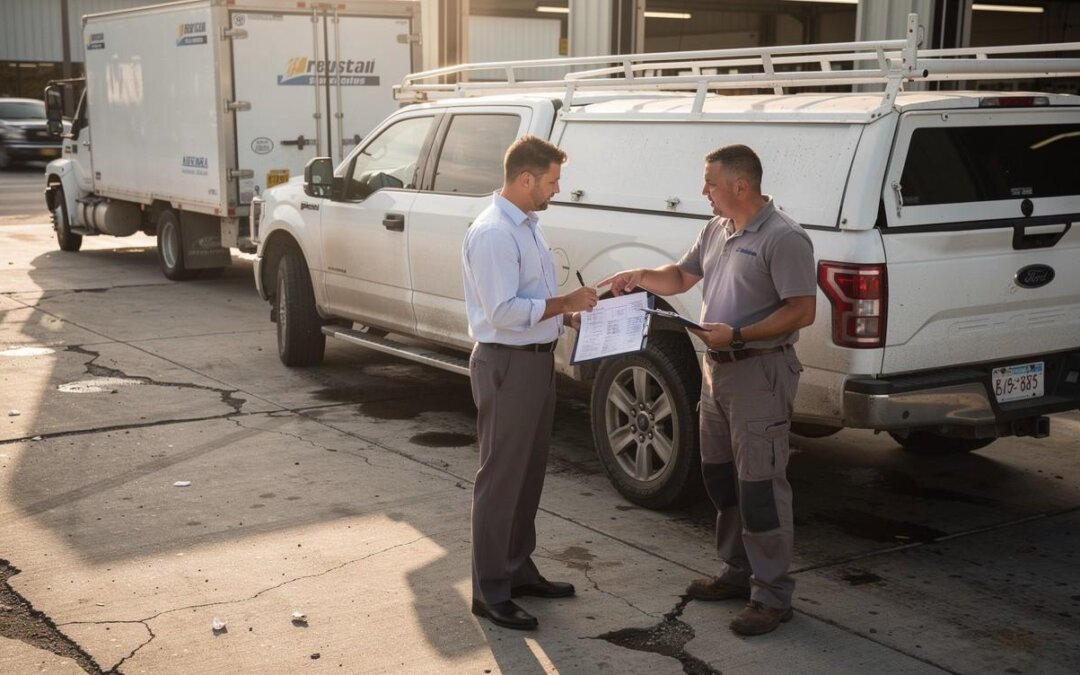
Running a business in Texas means protecting your fleet with the right commercial auto policy. Without proper coverage, a single accident could drain your business finances and expose you to serious liability.
We at Brooks Insurance help Texas business owners navigate the coverage options that actually matter for their operations. This guide walks you through the essential decisions you need to make.
Understanding Commercial Auto Insurance Requirements in Texas
Texas mandates that commercial vehicle operators carry liability coverage with minimum limits of 30/60/25-$30,000 per person and $60,000 per accident for bodily injury, plus $25,000 for property damage. These state minimums fall short for most operations, however. A single serious accident involving multiple vehicles can easily exceed $60,000 in medical costs alone.
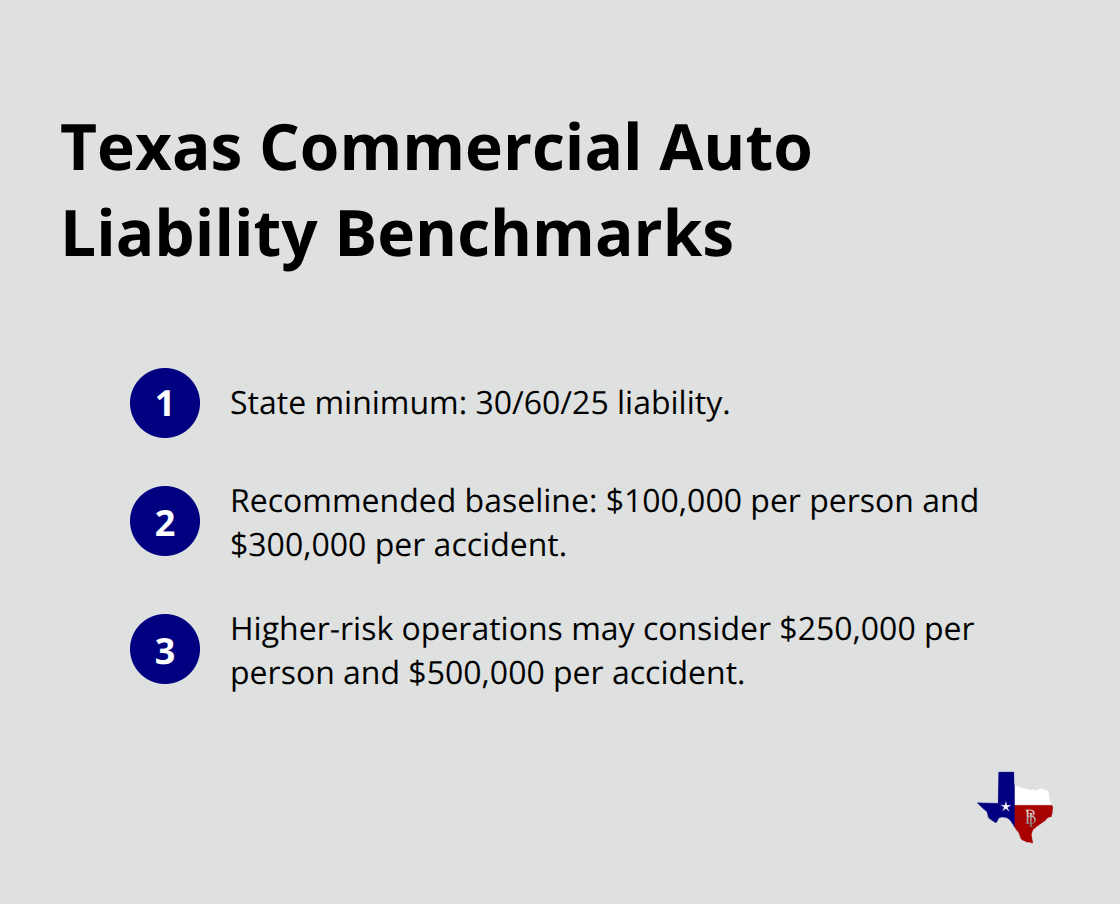
We recommend commercial operators carry at least $100,000 per person and $300,000 per accident in liability coverage, particularly if your fleet operates on high-traffic corridors or makes frequent deliveries.
Coverage That Goes Beyond Legal Minimums
Most Texas businesses need additional protection that the state does not mandate. Collision coverage pays for damage to your vehicles from accidents, while comprehensive coverage handles theft, weather, and vandalism. Uninsured and underinsured motorist protection matters significantly in Texas, where the Insurance Research Council reports that roughly one in five drivers carries no insurance. Physical damage coverage for commercial vehicles typically costs 15–25% more than liability alone, but it prevents the difference between a minor inconvenience and a business shutdown. Your industry shapes your coverage needs too-construction companies with heavy equipment require different protection than delivery services. Personal auto policies reject commercial use outright, so mixing business and personal vehicles on a personal policy voids your coverage when an accident occurs.
How Commercial Policies Differ from Personal Coverage
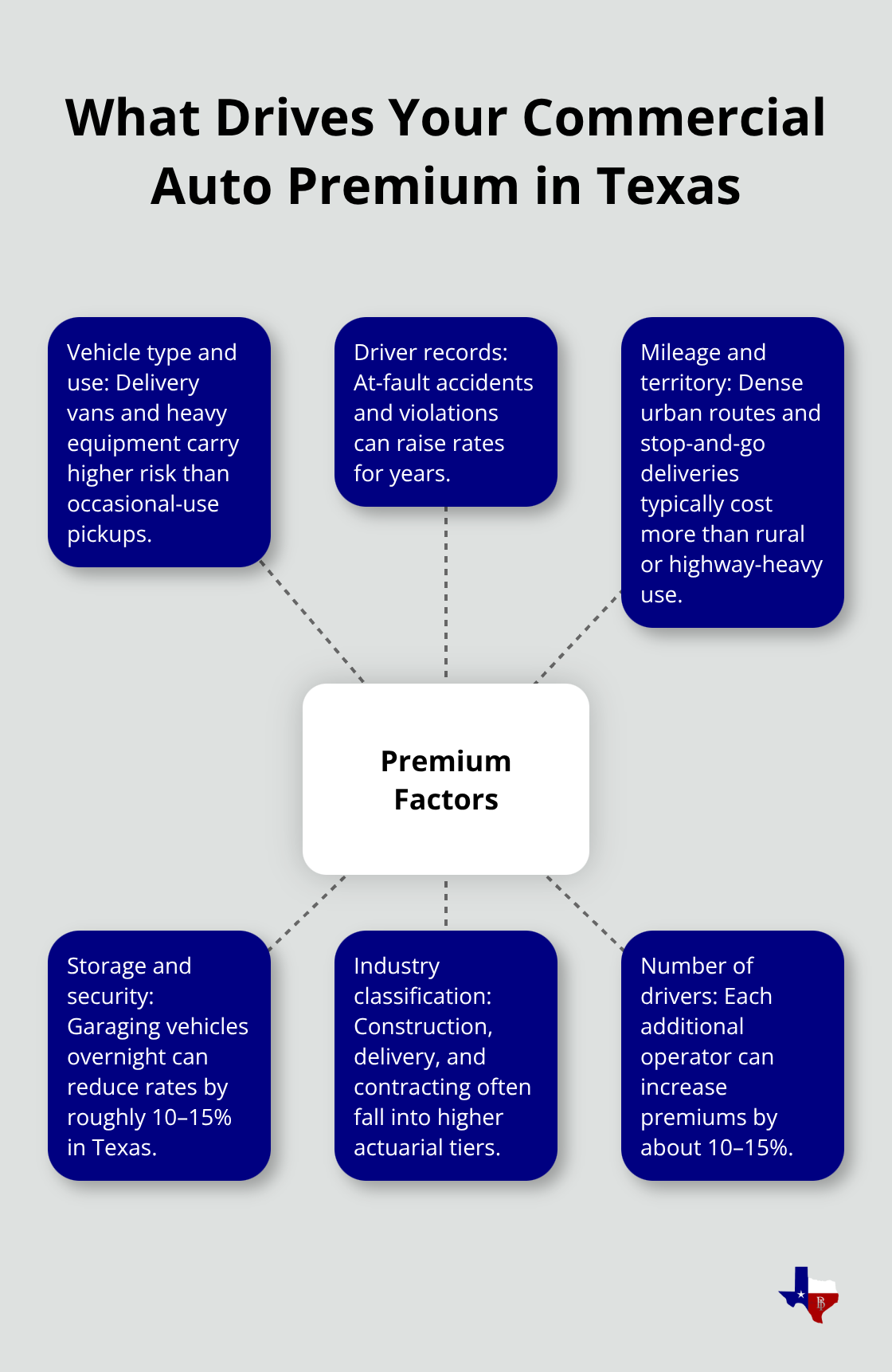
Commercial auto policies account for higher mileage, multiple drivers, and business-related liability that personal policies exclude. Insurance companies view commercial vehicles as higher risk because they operate more frequently and often carry cargo or equipment. Texas insurers also factor in whether your vehicles sit garaged overnight and how many drivers operate them, with each additional operator increasing premiums by roughly 10–15%. Personal policies cover occasional business use but fail when your vehicle becomes your business asset. The operational complexity of your fleet-whether you run a single-vehicle service business or a larger operation-shapes which coverage options make sense for your situation.
Types of Commercial Auto Coverage to Consider
Liability Coverage: Your First Line of Defense
Liability coverage forms the foundation of any commercial auto policy, and Texas law requires it. The state minimum of 30/60/25 sounds adequate until you face a multi-vehicle accident on I-35 where medical bills and vehicle damage quickly climb to $150,000 or more. Liability covers bodily injury and property damage you cause to others, meaning it protects your business assets when you’re found at fault.
We recommend Texas business owners carry at least $100,000 per person and $300,000 per accident. A construction company with heavy equipment or a delivery service operating throughout Dallas-Fort Worth should strongly consider $250,000 per person and $500,000 per accident limits. The additional premium for higher limits typically runs only 5–10% more annually than minimum coverage, which makes the math straightforward for protecting your business.
Collision and Comprehensive Coverage for Your Vehicles
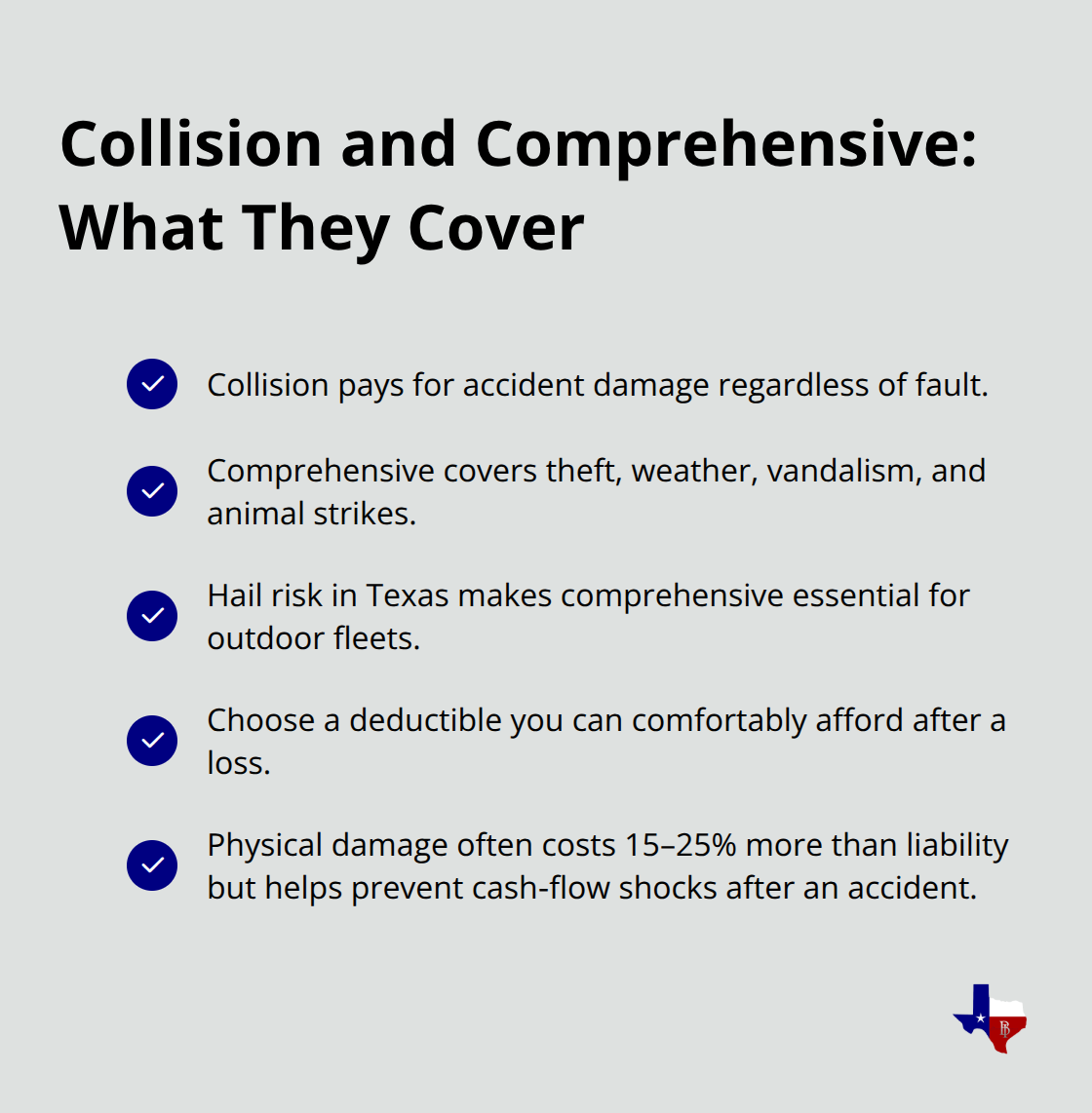
Collision and comprehensive coverage handle the damage to your own vehicles, and this is where most business owners make costly mistakes. Collision pays for accident damage regardless of fault, while comprehensive covers theft, weather, vandalism, and animal strikes. Texas experiences significant hail damage, particularly in spring months, and comprehensive coverage becomes essential if your fleet parks outdoors or operates in areas prone to severe weather.
Physical damage deductibles typically range from $250 to $1,000, with higher deductibles reducing premiums by 15–20%. However, choosing a deductible that forces you to absorb major repair costs defeats the purpose of insurance. Commercial physical damage coverage costs 15–25% more than liability alone, but it prevents the scenario where a single accident forces you to choose between vehicle repairs and payroll.
Uninsured and Underinsured Motorist Protection
Uninsured and underinsured motorist protection fills a critical gap in your coverage. The Insurance Research Council found that roughly one in five Texas drivers carries no insurance, and many carry limits far below what serious accidents require. This coverage pays your medical bills and vehicle damage when an uninsured or underinsured driver causes the accident, protecting your business from absorbing costs that another driver should cover.
Your fleet faces real exposure on Texas roads, where uninsured drivers create financial risk that liability coverage alone cannot address. This protection becomes especially important for businesses that operate delivery routes or maintain regular highway exposure. The next section examines how your specific business operations and risk profile shape which coverage limits actually make sense for your situation.
Factors That Affect Your Commercial Auto Premium
Your commercial auto premium reflects factors that Texas insurers measure with precision, and understanding these variables helps you control costs without sacrificing protection.
Vehicle Type and Usage Patterns
Vehicle type matters significantly because a delivery van operating daily throughout Houston faces different risk than a construction truck parked at job sites. Insurers assess your specific vehicle’s repair costs, safety ratings, and theft likelihood, with newer vehicles often qualifying for discounts that offset higher replacement values. A pickup truck used for occasional business errands costs far less to insure than the same truck operating as your primary service vehicle, because mileage and operational patterns directly correlate with accident frequency.
Usage patterns shape your premium substantially-a plumbing service that makes thirty stops daily across Dallas faces higher rates than a business that uses vehicles primarily for weekly supply runs. Texas insurers also factor in whether your fleet sits in a secured garage overnight or remains exposed in parking lots, with secured storage reducing rates by roughly 10–15% because theft and weather damage risk decline.
Driver History and Safety Records
Driver history and safety records control a significant portion of your premium, and Texas insurers examine each operator’s driving record before calculating rates. A single at-fault accident increases premiums by 20–40% for three years, while moving violations like speeding or reckless driving add 15–30% annually. Multiple drivers multiply your exposure, which is why many insurers increase premiums by 10–15% for each additional operator on your policy.
Annual Mileage and Territory of Operation
Annual mileage and territory of operation create measurable risk differences that directly impact your rates-a business operating exclusively in rural areas outside Austin pays substantially less than an identical operation running routes through downtown traffic corridors. Vehicles operating primarily on highways face different risk profiles than those making frequent stop-and-go deliveries in congested urban areas. A contractor transporting heavy equipment and materials faces significantly higher rates than a consulting firm using vehicles for client meetings, because payload weight and cargo type increase accident severity and repair costs.
Business Industry and Risk Assessment
Your industry classification determines risk assessment categories that insurers apply across the board, with construction companies, delivery services, and contractors each occupying distinct premium tiers based on actuarial data. Texas insurers pull these factors together into underwriting models that generate your specific rate, which is why two seemingly identical businesses can face substantially different premiums based on how they operate their fleets and manage driver safety records.
Final Thoughts
Selecting the right commercial auto policy in Texas requires balancing state minimums against your actual business exposure. The $30,000 per person and $60,000 per accident liability limits satisfy legal requirements but leave most operations dangerously underprotected. Moving to $100,000 per person and $300,000 per accident costs only slightly more annually while preventing financial catastrophe when serious accidents occur.
Collision and comprehensive coverage protect your vehicles from the weather damage and theft that Texas businesses face regularly, and uninsured motorist protection addresses the one-in-five uninsured drivers on Texas roads. Your premium ultimately reflects your specific operation, driver records, mileage patterns, and industry classification. A construction company operating heavy equipment across multiple counties faces different coverage needs than a delivery service running daily routes through a single city.
We at Brooks Insurance represent multiple top-rated insurance companies, which means you access different coverage options and pricing rather than accepting a single insurer’s approach. Our licensed agents understand Texas commercial operations and can review your fleet, drivers, and operations to build a policy that works for your business. Contact us at brooksinstx.com to speak with an agent about your commercial auto policy Texas needs.
Disclaimer: The information provided in this blog is for general informational purposes only and does not constitute legal, financial, or insurance advice. Coverage options, terms, and availability may vary. Please consult with a licensed professional for advice specific to your situation