

Finding the right insurance policy in Texas means working with an agent who understands your specific needs. When you compare independent agents in Texas, you gain access to options that big-name companies simply can’t match.
At Brooks Insurance, we believe independent agents offer something different: real choice, local knowledge, and policies built around what matters to you. This guide walks you through evaluating agents and policies so you can make a confident decision.
Why Independent Agents Give You Real Market Power
Independent insurance agents in Texas operate differently from captive agents who work for a single insurance company. We at Brooks Insurance work with multiple carriers, which means we’re not locked into pushing one company’s products. This fundamental difference shapes everything about how we serve you. When you work with an independent agent, you’re working with someone whose paycheck doesn’t depend on steering you toward a specific insurer. Instead, we make money by finding you the right coverage at the right price, which means our success depends entirely on your satisfaction.
More Carriers Mean Better Rates for You
The insurance market in Texas is competitive, and independent agents leverage that competition to your advantage. Instead of contacting five different insurance companies yourself, your agent handles the shopping. We represent multiple top-rated insurance companies, which gives you access to a larger selection of coverage, pricing, and payment options than you’d find working directly with a single company. Independent agents work with multiple carriers, compared to captive agents who represent only one company. This access matters because premium quotes for identical coverage can vary by hundreds of dollars between insurers. For example, a 35-year-old driver in Texas might pay $1,200 annually with one carrier and $950 with another for the same liability and collision coverage.
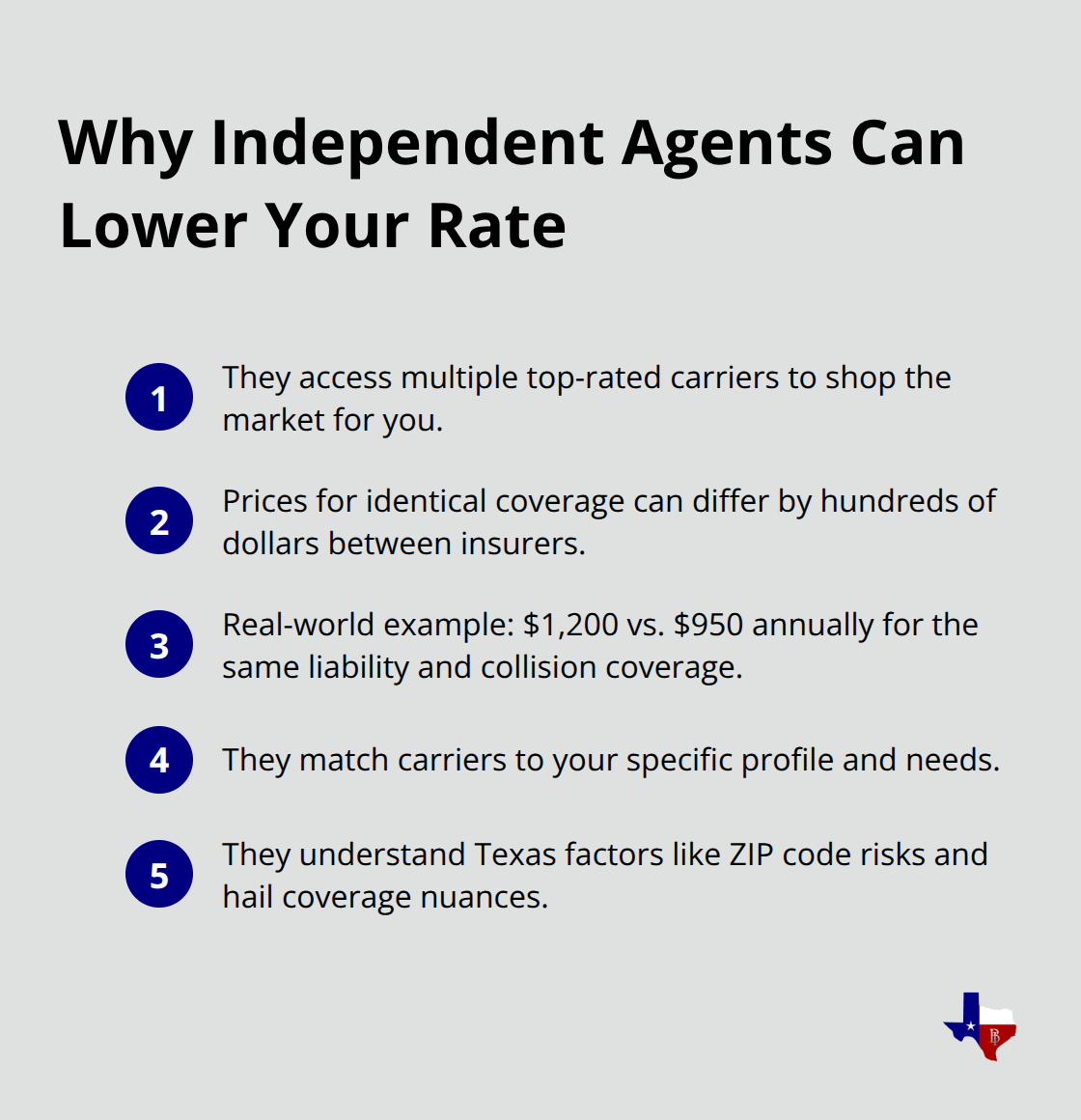
Independent agents know which companies offer the best rates for your specific profile, whether you’re a young driver, a business owner, or someone with a complex insurance need. We also understand Texas-specific factors like how your zip code affects premiums or which carriers offer the best coverage for hail damage (a significant concern across much of the state).
Local Knowledge Shapes Better Coverage Decisions
Texas presents unique insurance challenges that national companies don’t always understand. Flood risk varies dramatically across the state, from coastal areas facing hurricane exposure to inland regions with flash flood concerns. Hail damage claims in West Texas and the Dallas area rank among the highest in the nation. Independent agents based in Texas live with these realities and understand how they affect your coverage needs. We know which carriers respond quickly to claims in your area and which ones have strong networks of repair shops nearby. This local expertise means we recommend coverage limits and deductibles that actually fit Texas conditions, not generic recommendations from a national office. Our licensed agents and staff are always just a phone call or email away if you have questions about your coverage, which matters when you’re dealing with weather events or claims situations that demand quick answers. We also understand the Texas business environment, whether you operate a small retail shop, run a construction company, or manage a larger commercial operation. Each industry faces different liability exposures, and independent agents know how to structure coverage that protects your specific operations without forcing you to pay for protection you don’t need.
What Sets Independent Agents Apart in Texas
When you compare independent agents in Texas, you’ll notice they invest time in understanding your situation rather than rushing through a standard application. This approach takes longer upfront but saves you money and headaches later. Independent agents ask detailed questions about your lifestyle, business operations, and risk tolerance (not just the basics). They then match you with carriers that align with your needs, rather than fitting you into whatever products their single employer offers. This personalized approach means you avoid overpaying for coverage you don’t need or underinsuring areas where you face real risk. The next step in finding your ideal agent involves evaluating their credentials and track record in your community.
Vetting Independent Agents in Texas
Not all independent agents operate with the same standards or expertise. Texas doesn’t require independent agents to specialize in specific lines of insurance, which means someone licensed to sell homeowners policies might also sell commercial coverage without deep knowledge in either area.
Verify Licensing and Credentials
Start by checking the agent’s license through the Texas Department of Insurance website, which maintains a searchable database of all licensed producers. Verify the agent holds the appropriate license type for what you need-a property and casualty license for auto and home insurance, a life and health license for health coverage, or both if you want comprehensive protection through one agency.
Ask how long the agent has operated in your specific area and whether they focus on particular industries or customer types. An agent specializing in contractors’ insurance for 15 years brings different value than a generalist handling every line of business. This specialization matters because it shapes how well they understand your actual risks.
Evaluate Track Record and Customer Feedback
Check online reviews on Google, the Better Business Bureau, and industry-specific sites, but understand that unhappy customers leave reviews more often than satisfied ones. A 4.2-star rating with 40 reviews tells you more than a 5-star rating with two reviews. Look for patterns in feedback-repeated complaints about slow claims handling or billing errors matter more than isolated negative comments.
Ask the agent directly for references from clients they’ve served for at least three years, and contact those references. When you speak with past clients, ask whether the agent found them better rates during annual reviews, how quickly they responded to questions, and whether they felt pressured to buy coverage they didn’t need. These conversations reveal how the agent actually operates day-to-day.
Compare Service Offerings and Support Options
Service quality separates good agents from mediocre ones, and Texas insurance needs vary widely by location and industry. Some agents offer 24/7 claims support while others handle claims only during business hours. Ask whether the agent provides online account access where you can view your policies, make payments, and file claims without calling.
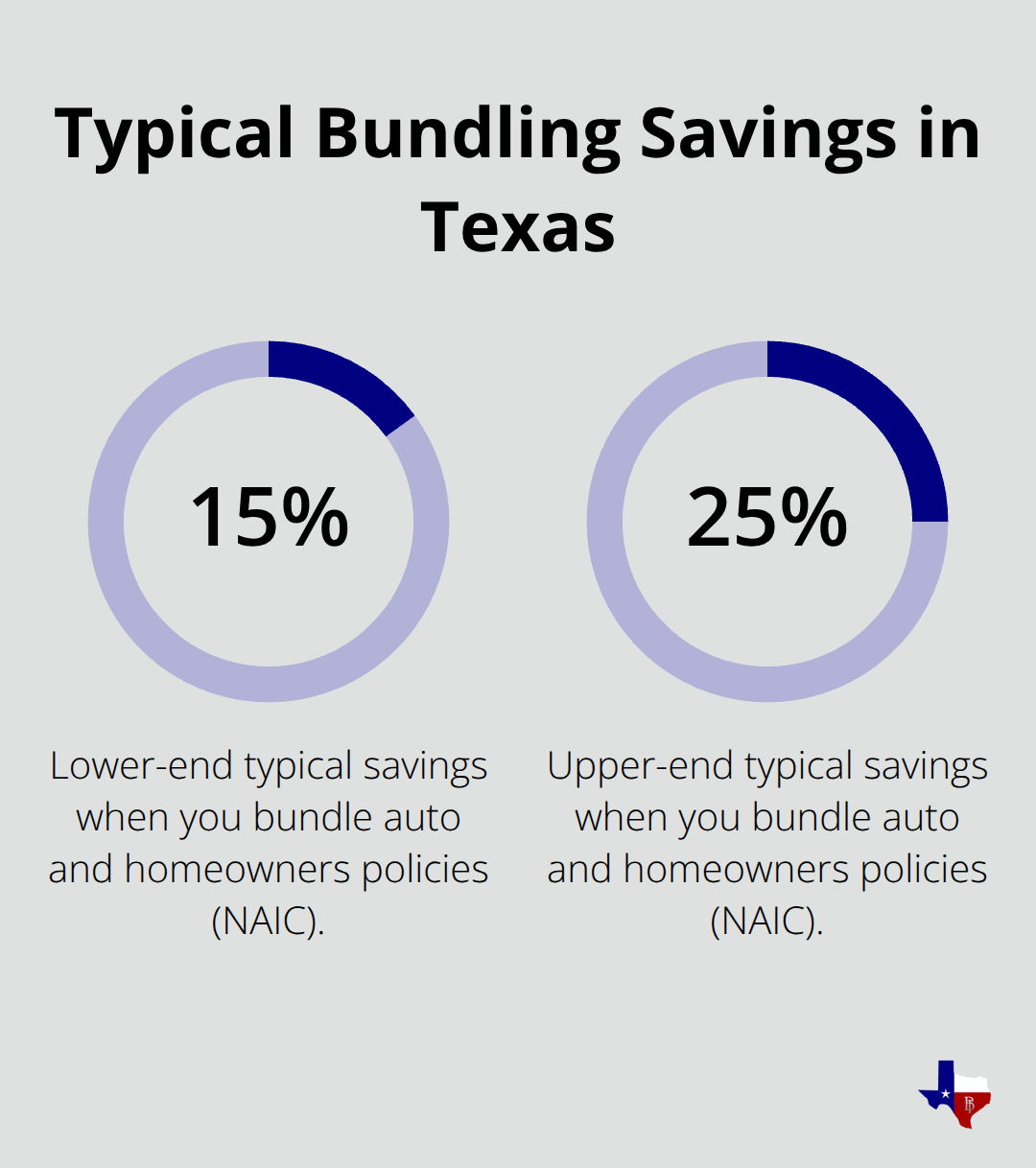
Find out if they offer bundling discounts-combining auto and homeowners policies typically saves 15 to 25 percent according to the National Association of Insurance Commissioners. Confirm the agent represents carriers that actually perform well in your area. If you live in West Texas where hail damage claims spike during spring and early summer, you want an agent who works with carriers known for quick hail claim settlements in that region.
Request and Compare Multiple Quotes
Request quotes from at least three independent agents before deciding, which allows you to compare not just rates but also how each agent structures coverage. An agent who recommends significantly higher liability limits than competitors might understand your actual risk profile better, or they might be padding your policy. Compare their recommendations side by side to identify outliers.
The best agent matches your needs precisely rather than selling you a standard package, responds to emails and calls within one business day, and reviews your coverage annually to identify savings opportunities. Once you’ve narrowed your choices, the next step involves understanding the specific policy details that matter most for your situation.
What Actually Matters When Comparing Policies
Coverage Limits Protect Your Assets
Coverage limits and deductibles determine how much protection you actually have when something goes wrong, yet most people choose these numbers without understanding the real-world consequences. A $250,000 liability limit might sound adequate until you cause an accident that injures multiple people or damages expensive property-then that limit becomes dangerously low. The average verdict in a personal injury lawsuit in Texas is $826,892, which demonstrates why adequate coverage matters. We recommend liability limits of at least $300,000 per person and $500,000 per accident for auto insurance, which costs only marginally more than minimum coverage but protects your assets substantially better.
Deductibles Require Honest Math
Your deductible represents the amount you pay out of pocket before insurance kicks in, and this choice involves real math, not guessing. A $500 deductible versus a $1,000 deductible on homeowners insurance typically saves $200 to $400 annually, but that savings disappears immediately if you file a claim. Calculate how much you could actually pay in an emergency-most financial advisors suggest deductibles should not exceed what you have in accessible savings. For renters in Texas, a $500 deductible on personal property coverage makes sense because you’re protecting items that cost real money, and claims for theft or water damage happen frequently enough to justify lower deductibles.
Premium Costs Vary Based on Risk Assessment
Premium costs vary wildly for identical coverage because insurers use different rating models and weigh risk factors differently. A 45-year-old homeowner in Austin pays dramatically different rates than someone with identical home characteristics in a flood-prone area near Houston, and carriers price this risk differently. The National Association of Insurance Commissioners reports that bundling auto and homeowners policies saves customers 15 to 25 percent, which translates to $300 to $600 annually for many Texas households. Ask each agent specifically which discounts apply to your situation-safety features on your home (alarm systems, deadbolts), good driving records, completing defensive driving courses, and even paperless billing generate real savings that compound over time.
Claims Process Quality Determines Real Performance
Contact your state insurance commissioner’s office to check complaint ratios for specific carriers, which shows how many complaints each insurer receives per thousand policies sold. A carrier with a complaint ratio of 0.5 (half a complaint per thousand policies) handles disputes far more smoothly than one with a ratio above 1.0. Customer support quality matters most when you’re dealing with damage at midnight or need clarification on coverage before a deadline. Ask agents whether their carriers offer 24/7 claims reporting and whether you can file claims through a mobile app or online portal without waiting for business hours.
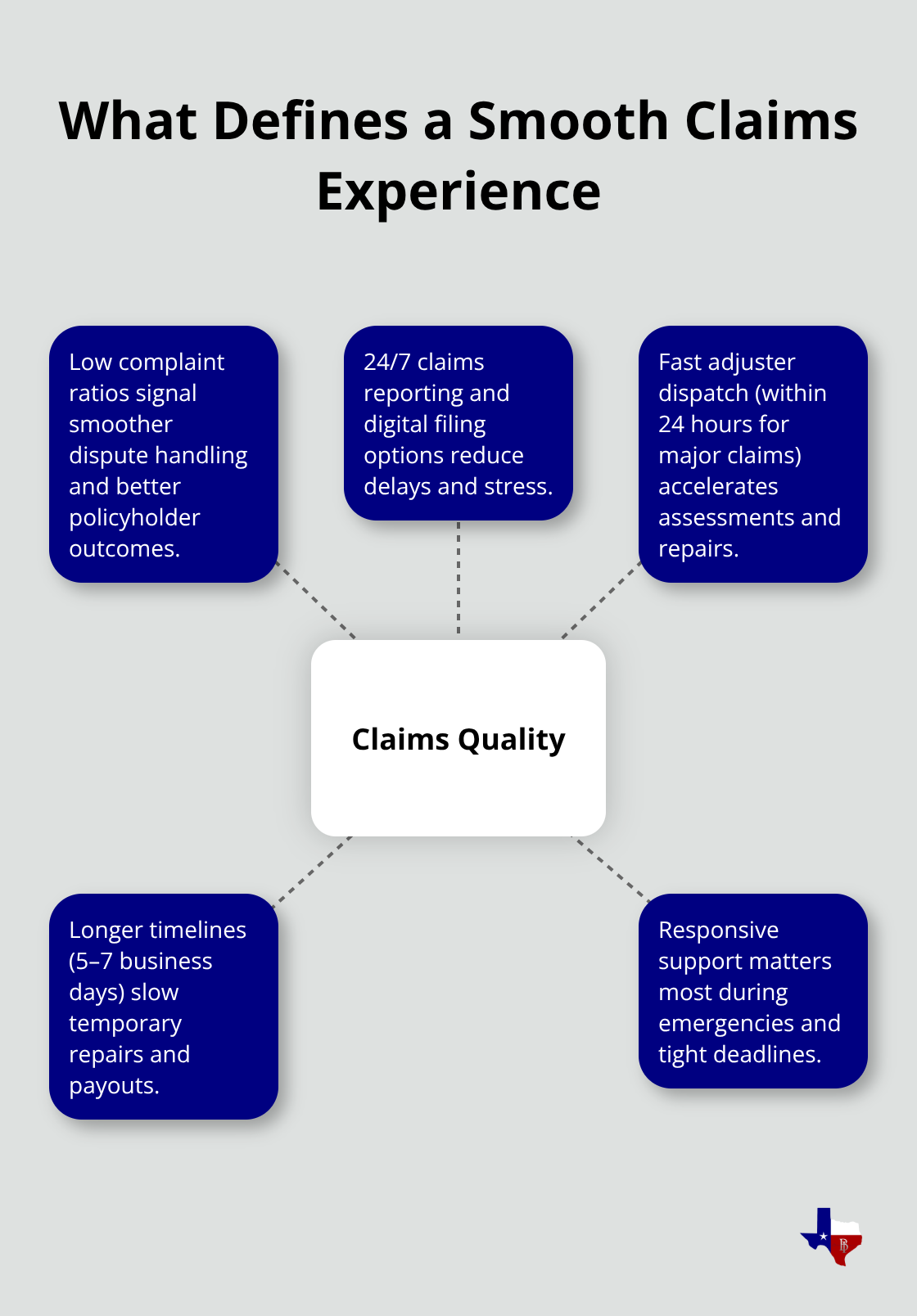
Some Texas agents partner with carriers that send adjusters within 24 hours for major claims while others work with companies requiring 5 to 7 business days, and this difference determines whether you get temporary repairs covered quickly or wait weeks for assessment.
Final Thoughts
Independent agents in Texas work for you, not for an insurance company’s bottom line. When you compare independent agents in Texas, you work with professionals who access multiple carriers, understand local risk factors, and structure coverage around your actual needs rather than pushing standardized products. This flexibility translates directly into better rates, more appropriate coverage, and service that responds to your situation.
Contact independent agents in your area and request quotes for your specific situation. Provide identical information to each agent so you can compare rates and coverage recommendations side by side. Ask each agent which discounts apply to you, how quickly their carriers settle claims in your area, and whether they review your coverage annually to identify savings opportunities.
We at Brooks Insurance have spent over 50 years helping Texas families and businesses find coverage that protects what matters to you. Visit Brooks Insurance to request quotes and speak with our licensed agents about your insurance needs. The right policy match is within reach when you work with an agent who understands Texas and puts your interests first.
Disclaimer: The information provided in this blog is for general informational purposes only and does not constitute legal, financial, or insurance advice. Coverage options, terms, and availability may vary. Please consult with a licensed professional for advice specific to your situation