
General liability coverage in Texas isn’t optional-it’s the foundation that protects your business from expensive lawsuits and medical bills when someone gets hurt or property gets damaged at your location.
At Brooks Insurance, we’ve seen firsthand how quickly a single incident can threaten a Texas business. The right policy stands between you and financial disaster.
What General Liability Coverage Actually Protects
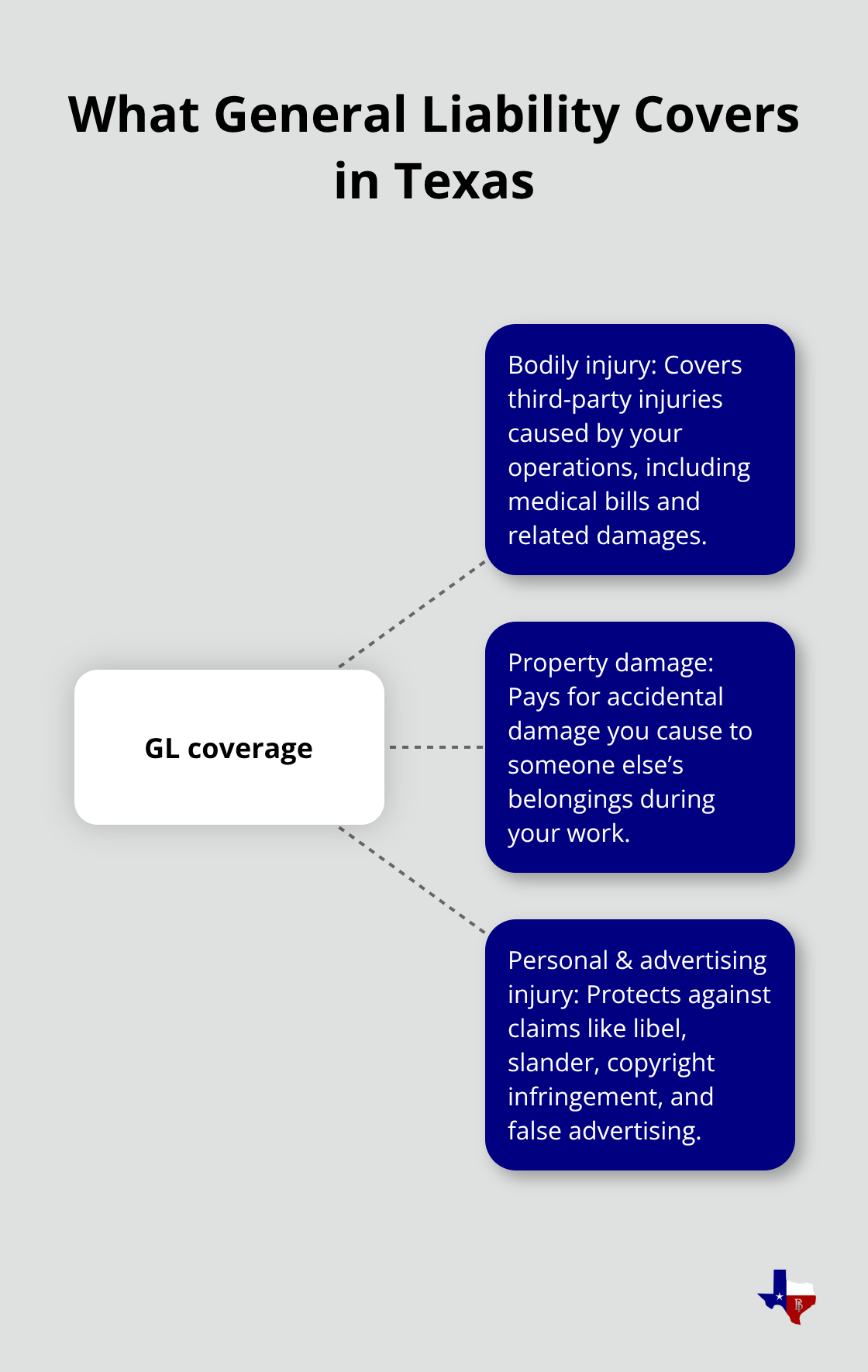
General liability coverage protects your Texas business against three critical financial threats that can drain your bank account fast. First, it covers bodily injury claims when someone gets hurt because of your business operations-a customer slips on a wet floor in your retail store, a client trips on debris at your job site, or a pedestrian gets hit by equipment you’re moving. Second, it covers property damage you cause to someone else’s belongings-you accidentally damage a client’s equipment during service, your delivery vehicle hits a customer’s car in the parking lot, or your construction crew damages a neighboring building. Third, it covers personal and advertising injury claims, which includes defamation, slander, libel, copyright infringement, and false advertising that harm someone’s reputation or business. The Hartford reports the average annual cost for small business general liability insurance runs about $810, or roughly $68 per month, making it one of the most affordable protections you can buy.
Legal Defense Costs Protect Your Bottom Line
General liability coverage pays your legal defense costs even if a claim turns out to be completely frivolous. Your policy covers attorney fees, court costs, settlements, and judgments for covered claims-expenses that can easily reach $50,000 to $150,000 before a case even goes to trial. Without this coverage, you’d pay these costs out of pocket while fighting the lawsuit. Medical payments coverage adds another layer of protection by paying for minor injuries to third parties directly, regardless of fault. This means if someone gets a small cut or bruise on your property, you can pay their medical bills immediately and often resolve the situation without a formal claim, protecting your reputation and keeping your claims history clean.
How Coverage Limits Affect Your Protection
Your general liability policy includes specific limits that determine how much the insurer will pay for covered claims. Most Texas businesses carry limits around $1 million per occurrence and $2 million aggregate, though your actual needs depend on your industry and risk exposure. Higher limits cost more in premiums but provide stronger financial protection when serious incidents occur. The Hartford data shows that industry-specific average annual premiums vary significantly-restaurants pay about $1,352 per year, while photographers pay around $421 per year. Understanding your exposure helps you select limits that match your actual risk without overpaying for unnecessary coverage.
What Happens When You Need Coverage
When a third party files a claim against your business, your insurer steps in to investigate and defend you. The coverage applies to incidents that occur during your policy period, protecting you from unexpected financial liability. Your claims history directly affects future premiums, so resolving claims quickly and maintaining a clean record helps keep your costs down. As you grow your Texas business, you should review your coverage limits annually to confirm they still match your operations and risk profile.
Coverage Limits and Cost Factors for Texas Businesses
Your Deductible Choice Shapes Your Premium
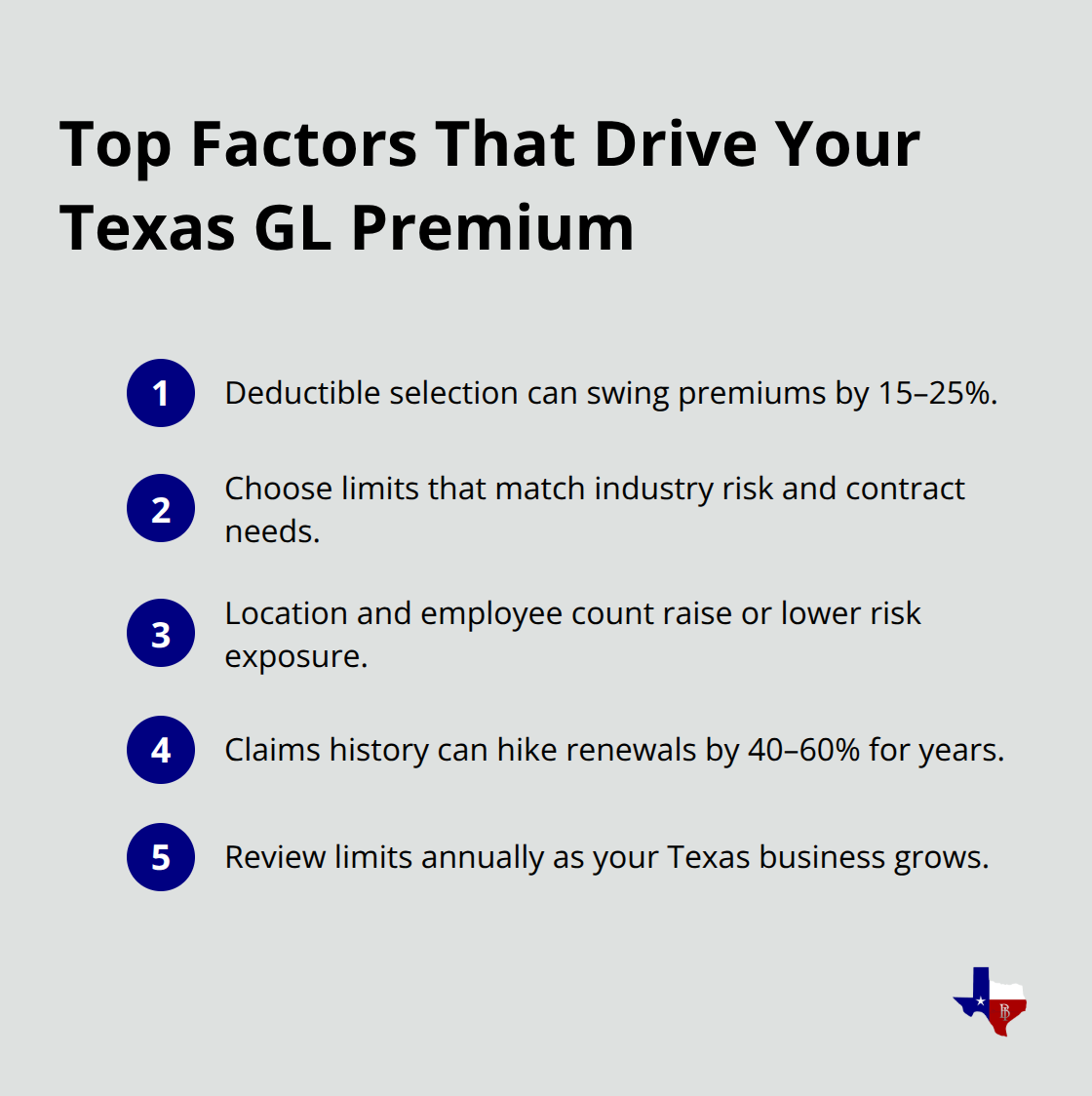
Your deductible choice matters far more than most Texas business owners realize. A $1,000 deductible versus a $5,000 deductible swings your annual premium by 15 to 25 percent, according to industry pricing patterns. Start with a $2,500 deductible for most small to medium Texas businesses because it balances reasonable out-of-pocket protection with meaningful premium savings.
Go lower only if you operate in high-risk environments where minor incidents happen frequently. Go higher only if your cash reserves can absorb a $5,000 hit without disrupting operations.
Policy Limits Match Your Industry Risk
Your policy limits tell a different story entirely. The standard $1 million per occurrence and $2 million aggregate works for many Texas businesses, but restaurants should honestly consider $2 million per occurrence because food-related liability claims escalate fast. Retail stores and service providers typically stay safe at $1 million per occurrence. The Hartford’s data shows restaurants pay $1,352 annually on average, nearly double what photographers pay at $421 per year, largely because incident severity and frequency differ drastically between industries.
Location and Business Size Drive Costs Up
Location inside Texas affects your premium more than most business owners expect. A business in Austin pays significantly more than an identical operation in Lubbock because urban density, local building codes, and historical claim patterns create higher risk exposure. Manufacturing operations in the Houston area face different underwriting scrutiny than the same operation would in rural Texas. Your employee count directly multiplies your cost because more workers mean more exposure to workplace-related third-party claims. A five-person consulting firm pays roughly half what a 25-person firm pays for identical coverage limits.
Claims History Becomes Your Most Powerful Lever
Your claims history becomes your most powerful lever for controlling costs going forward. One serious claim increases your renewal premium by 40 to 60 percent for three to five years, so preventing incidents through proper safety protocols saves far more money than any premium discount ever will. The Hartford reports that a clean claims history helps reduce costs over time, reflecting safer operations that insurers reward with better rates at renewal. This reality means your safety practices today directly determine your insurance expenses for years ahead.
Understanding these cost factors prepares you to make informed decisions about your coverage, but the real protection comes from knowing what situations actually trigger claims in Texas operations.
Common Claims and Real-World Scenarios
Slip and Fall Incidents Cost Texas Businesses Thousands
Slip and fall incidents occur constantly at Texas retail locations, restaurants, and service businesses, representing the single largest category of general liability claims across the state. A customer slips on a wet floor in your store, a client trips on uneven pavement at your office entrance, or a restaurant patron falls because of spilled food-these incidents trigger immediate medical bills, potential lawsuits, and claims that cost $15,000 to $45,000 depending on injury severity. The Hartford data shows restaurants face significantly higher risk, paying $1,352 annually on average compared to retail stores at $712 per year, directly reflecting the frequency and cost of slip and fall incidents in food service environments. Your general liability policy covers the injured person’s medical expenses, lost wages, and pain and suffering claims, plus your legal defense costs if they sue.
Slip and fall prevention saves far more money than any insurance discount ever will. Install proper drainage systems, maintain clear walkways, post warning signs for wet floors, and document your safety inspections regularly.
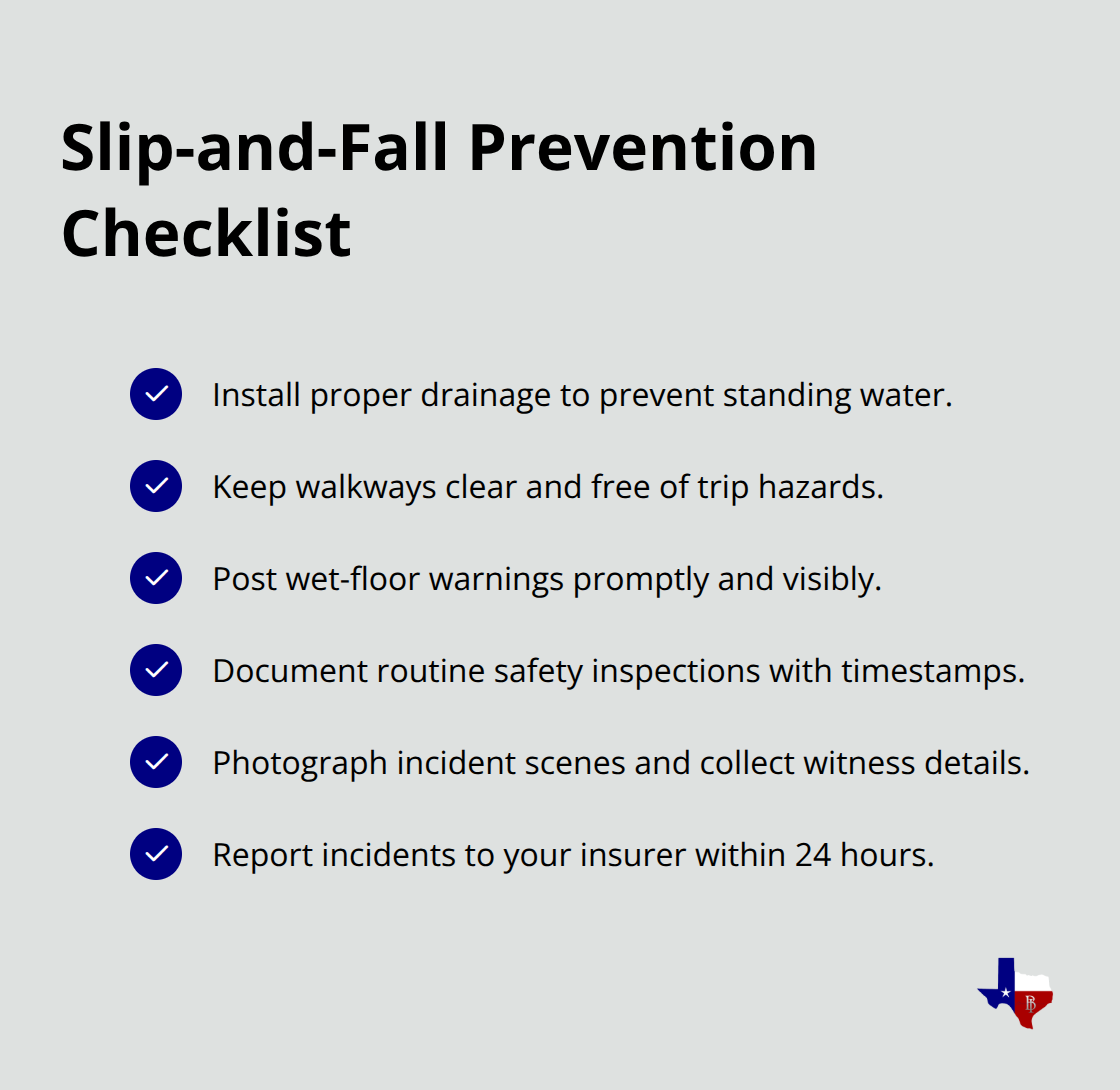
If an incident does occur, photograph the scene immediately, collect witness contact information, and report it to your insurer within 24 hours because delays complicate claims investigation and can jeopardize coverage.
Product Liability Claims Require Quality Control Focus
Product liability and advertising injury claims follow different patterns but carry equally serious financial consequences. If your product causes customer injury-a defective tool causes a laceration, contaminated food causes illness, or faulty equipment causes property damage-your general liability coverage handles the claim, though serious product issues may exceed standard limits and require umbrella coverage. These claims often involve expensive legal defense even when your business ultimately prevails, making the legal defense component of your policy invaluable.
Texas businesses in manufacturing, food production, and retail should audit their products quarterly for safety issues and maintain detailed records of quality control testing. This proactive approach demonstrates to insurers that you take safety seriously and can help protect your coverage eligibility when claims arise.
Advertising Injury Claims Demand Marketing Caution
Advertising injury claims arise when your marketing creates legal problems: a competitor sues for false advertising claims, a customer claims your ad infringed their copyright, or someone alleges your marketing caused them reputational harm. These claims often involve expensive legal defense even when your business ultimately prevails, making the legal defense component of your policy invaluable.
Have legal counsel review major marketing campaigns before launch, particularly if your messaging makes comparative claims about competitors or uses images you don’t own outright. Document your compliance efforts because insurers evaluate coverage eligibility partly on whether you maintained reasonable safety and marketing practices before a claim occurs.
Final Thoughts
General liability coverage in Texas protects your business from the financial devastation that follows a single serious incident. The Hartford data shows small business owners pay roughly $68 per month for this protection, making it one of the most affordable safeguards available. Your specific cost depends on your industry, location, employee count, and claims history, but the investment pays dividends the moment someone files a claim against your business.
Selecting adequate coverage means matching your policy limits to your actual risk exposure rather than choosing the cheapest option available. Restaurants need higher limits than photographers because food-related claims escalate faster and cost more to defend. Your deductible choice matters equally because a $2,500 deductible typically balances premium savings with reasonable out-of-pocket protection for most Texas operations.
We at Brooks Insurance represent multiple top-rated insurance companies, which means you have a larger selection of coverage, pricing, and payment options than you would working with a captive agent. Our licensed agents understand Texas business risks and can help you select general liability coverage that matches your specific operations and contract requirements. Contact Brooks Insurance today to get a quote tailored to your Texas business.
Disclaimer: The information provided in this blog is for general informational purposes only and does not constitute legal, financial, or insurance advice. Coverage options, terms, and availability may vary. Please consult with a licensed professional for advice specific to your situation