

Starting a business means taking on new risks. One lawsuit from a customer injury or property damage claim can drain your startup’s finances fast.
General liability for startups isn’t optional-it’s a business necessity. At Brooks Insurance, we help Texas entrepreneurs understand what coverage they actually need and how to get protected without overpaying.
What General Liability Actually Covers
General liability insurance protects your startup from three major financial threats that can sink a young business. The first is bodily injury claims. If a customer slips on a wet floor in your office or gets injured by your product, general liability covers their medical bills, lost wages, and pain and suffering damages. The National Safety Council found that medically consulted injuries cost an average of $48,000. The second protection is property damage liability. If your equipment damages a client’s belongings, or you accidentally cause structural damage to a rented space, this coverage pays for repairs or replacement. The third component is legal defense costs.
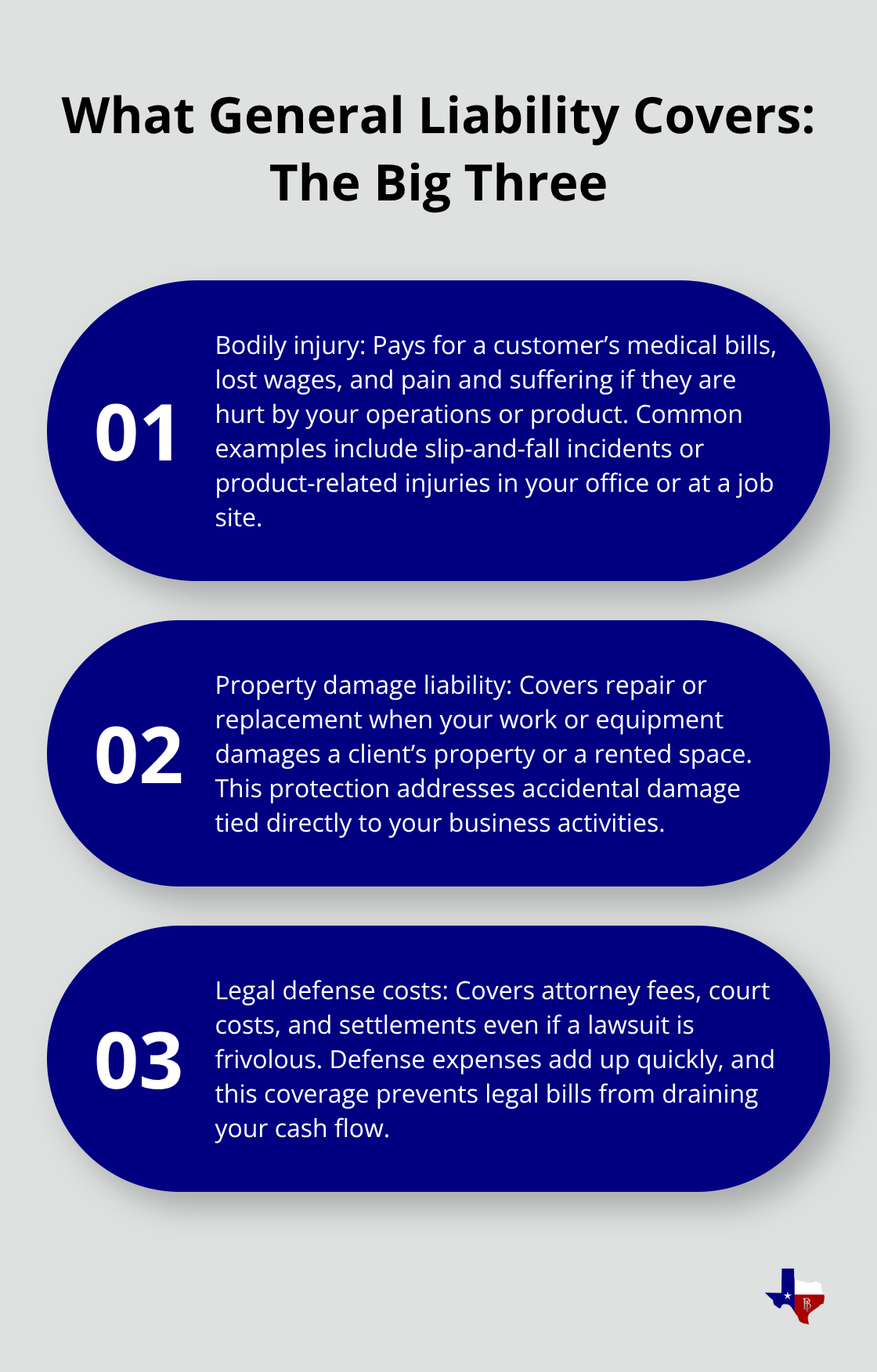
This matters more than most startups realize. Even if a lawsuit is frivolous, defending it costs money fast. Your general liability policy covers attorney fees, court costs, and settlement expenses, which can easily reach $5,000 to $10,000 before any judgment is rendered.
Medical Payments vs. Liability Claims
Many startups confuse medical payments coverage with liability claims, but they work differently. Medical payments coverage pays small medical bills immediately without determining fault, typically up to $5,000 per person. Liability coverage only pays when your business is legally responsible for injuries or damage. For Texas startups, having both is smart because medical payments can resolve minor incidents quickly and keep customers satisfied.
Coverage Limits Matter for Your Industry
A $1 million general liability policy sounds adequate until you face a real claim. Construction startups, manufacturers, and service businesses that work at client locations need higher limits because injury risk is greater. Retail businesses and consulting firms typically operate safely with $1 million in coverage. However, if your startup serves multiple clients simultaneously or operates in a high-risk environment, a $2 million policy is worth the modest premium increase.
What Gets Left Out
General liability does not cover employee injuries, which require workers’ compensation insurance instead. It also excludes professional liability claims, vehicle damage, or intentional acts. Startups offering services like consulting, accounting, or design need separate professional liability coverage because general liability won’t defend you against claims that your advice or work caused financial loss. Understanding these gaps in coverage is the first step toward building a complete protection strategy for your business.
Why General Liability Insurance Matters for Your Startup
Lawsuits happen faster than most startups expect. The U.S. Chamber of Commerce reports that small businesses face an average of 0.9 lawsuits per company per year, and a single claim costs between $5,000 and $50,000 in legal fees alone before any settlement payment. Without general liability coverage, your startup absorbs these costs directly from operating capital. A customer injury claim or property damage incident doesn’t care about your business stage or revenue. Texas courts award damages based on actual harm, not startup status. Young companies often close their doors after a single uninsured claim because they lack the cash reserves to cover both legal defense and damages. This isn’t theoretical risk-it’s a real financial threat that derails businesses every year. General liability insurance transfers that risk to an insurer, which means your startup’s survival doesn’t depend on a single lawsuit outcome.
Client and Vendor Requirements Are Non-Negotiable
Most professional clients and vendors require proof of general liability insurance before they work with you. If you bid on contracts with established companies, government agencies, or property management firms, they’ll request a certificate of insurance showing minimum coverage limits, typically $1 million. Without it, you face automatic disqualification from entire categories of work. Larger corporations won’t even consider vendors without documented coverage. This standard procurement practice spans across industries. The cost of obtaining general liability insurance is minimal compared to the revenue opportunities you lose without it. A startup pays $300 to $600 annually for basic $1 million coverage, yet misses out on contracts worth tens of thousands of dollars simply because they can’t provide proof of insurance.
Credibility Signals Professional Stability
Customers make assumptions about your business based on whether you carry insurance. A sign in your office stating you’re fully insured, or mentioning coverage in your service agreement, signals professionalism and stability. New customers already take a risk choosing an unfamiliar startup over established competitors. Knowing you’re insured reduces their perceived risk. This matters especially for service businesses like plumbing, electrical work, landscaping, or consulting. When customers see you’ve invested in proper coverage, they trust you more and pay premium rates rather than shopping purely on price. Insurance isn’t just protection-it’s a marketing advantage that gives your startup credibility against established competitors.
The Financial Reality of Going Uninsured
One uninsured claim can wipe out months of profit. If a customer suffers a serious injury at your location, medical costs alone can reach significant amounts. Add legal defense costs, and you’re looking at substantial exposure. Most startups don’t have that cash sitting in reserves. The alternative-losing a lawsuit without insurance-means creditors can pursue your personal assets. This personal liability exposure (sometimes called piercing the corporate veil) transforms a business problem into a personal financial catastrophe. General liability insurance protects both your company and your personal finances from this outcome.
Moving Forward with Proper Protection
Understanding why you need general liability insurance is the first step. The next step involves assessing your specific business risks and determining what coverage limits actually protect your startup.
Finding Your Right Coverage Amount
Choosing general liability coverage means matching your policy limits to actual business risk, not picking a number that sounds reasonable. Most Texas startups default to $1 million in coverage because it’s standard, but that choice should come from analyzing your specific operations. Start by identifying where injuries or property damage could realistically occur in your business. A consulting firm operating from a home office faces minimal risk compared to a contractor working at client sites daily.
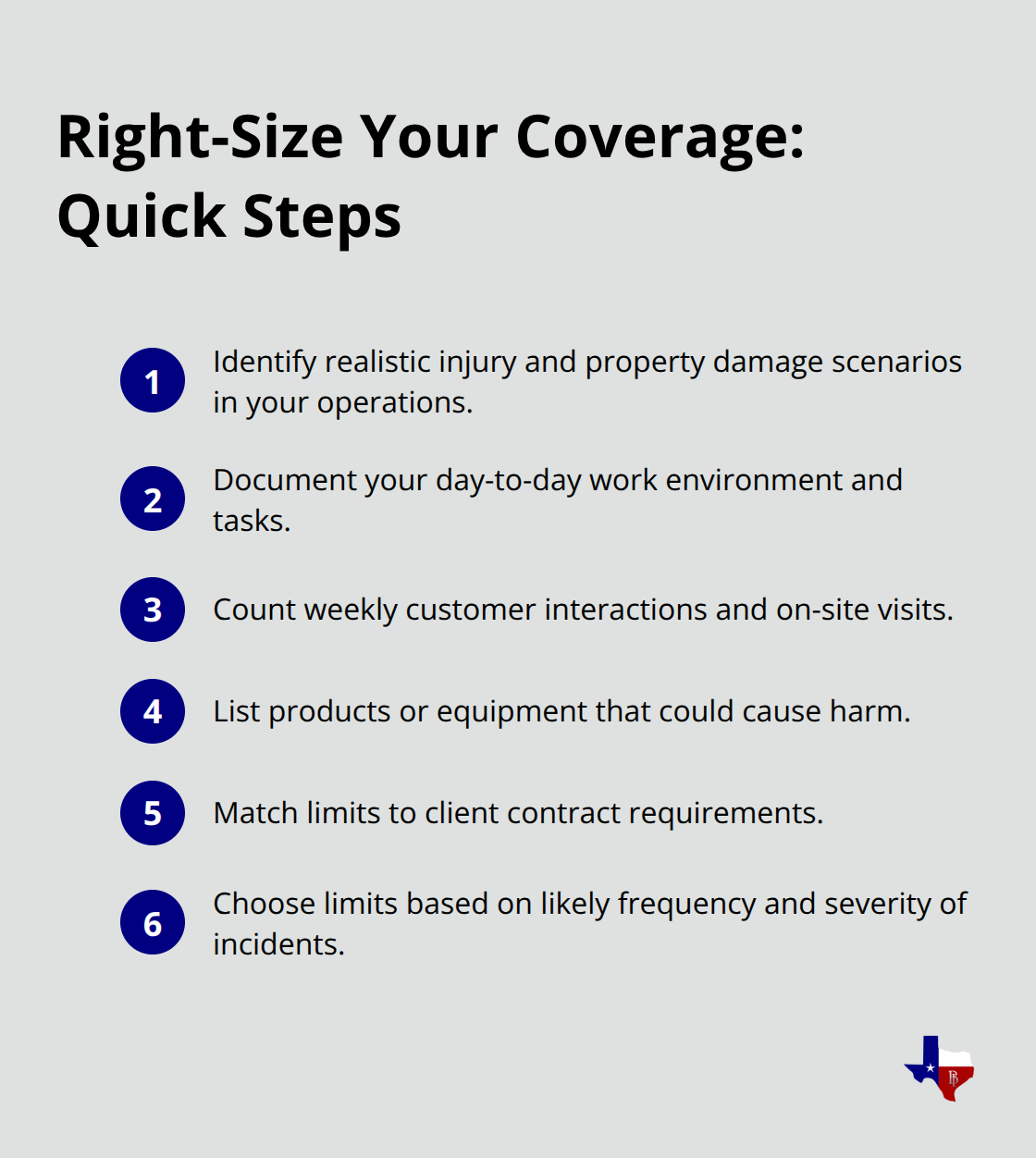
Document your typical work environment, the number of customers you interact with weekly, and whether you handle products or equipment that could cause serious harm. This assessment takes an hour and prevents the costly mistake of being underinsured when a claim happens. The Small Business Administration doesn’t mandate specific coverage limits for general liability, which means insurers and clients set those expectations. Your job is finding the intersection between what your clients require and what your actual risk justifies.
Determining Limits Based on Industry Exposure
Construction and trades require higher limits because injury risk is substantial. A framing contractor should carry at least $2 million in coverage because falls, equipment injuries, and structural damage claims routinely exceed $1 million. Retail businesses and offices typically operate safely with $1 million limits. Professional service providers like accountants or marketing consultants can often go lower, but only if they don’t work at client locations. The determining factor isn’t your industry label-it’s the frequency and severity of potential incidents. If your startup regularly works in multiple client locations, handles heavy equipment, or serves vulnerable populations, higher limits become economical. A $2 million policy costs roughly 30 to 40 percent more than $1 million coverage, but protects against claims that would bankrupt a startup. When you compare that premium difference to the financial exposure, the upgrade becomes obvious. Texas courts don’t reduce damages because you’re a startup, so your coverage should reflect realistic claim amounts in your field.
Shopping for Actual Competitive Pricing
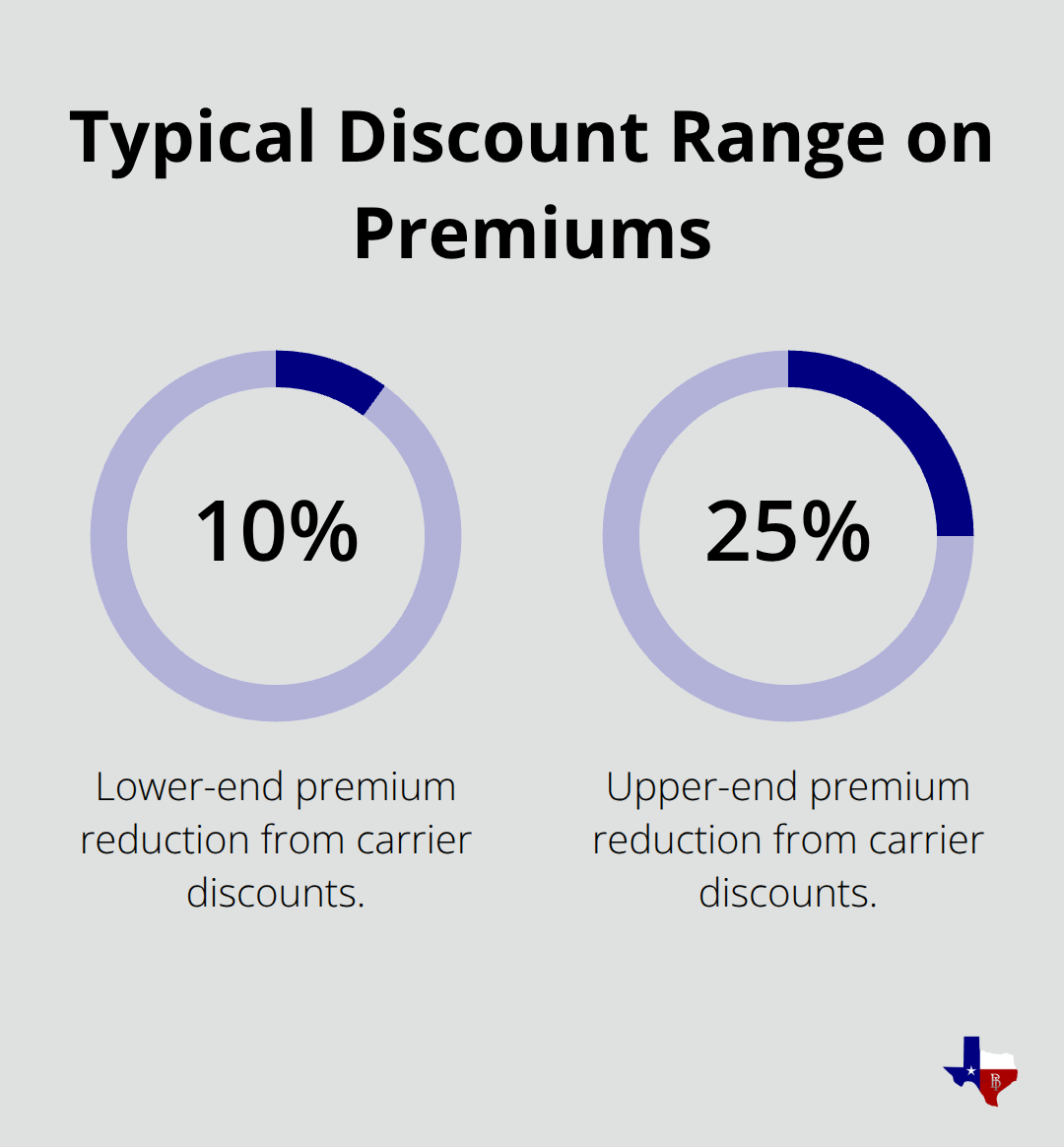
Request quotes from at least three insurers because premium variation is significant for identical coverage. One insurer might quote $400 annually for $1 million coverage while another charges $650 for the same limits. These differences reflect how each company evaluates your specific risk profile and their appetite for startups in your industry. Online quote tools give initial estimates, but speaking with licensed agents produces better results because they understand Texas-specific factors and can identify discounts you’d miss otherwise. As an independent agency, we represent multiple top-rated insurance companies, which means you access a larger selection of coverage, pricing, and payment options rather than being limited to one carrier’s pricing. When you compare quotes, verify that coverage limits, deductibles, and exclusions match across proposals. A $300 annual quote with a $2,500 deductible differs substantially from a $500 quote with a $500 deductible. Lower premiums sometimes reflect higher deductibles or narrower coverage, so read the details carefully. Ask each insurer about available discounts for bundling coverage, completing safety training, or maintaining claims-free records. These discounts often reduce your annual premium by 10 to 25 percent, making a more expensive base quote cheaper than it initially appears.
Final Thoughts
Start by documenting your specific operations-where customers visit, what products or equipment you handle, and how many people interact with your business weekly. This assessment takes minimal time but prevents the mistake of being underinsured when a claim occurs. Then request quotes from multiple insurers to see actual pricing for your startup’s risk profile, since premium variation between carriers is substantial and comparing options saves you hundreds of dollars annually.
We at Brooks Insurance have helped Texas business owners find the right general liability for startups coverage at competitive rates for over 50 years. As an independent agency, we represent multiple top-rated insurance companies, which means you access a larger selection of coverage options and pricing rather than being limited to one carrier. Our licensed agents understand Texas-specific business risks and identify discounts that reduce your premium by 10 to 25 percent.
Getting general liability insurance requires making informed decisions about your specific needs, but the process itself isn’t complicated. Request quotes or speak with one of our agents about protecting your startup today.
Disclaimer: The information provided in this blog is for general informational purposes only and does not constitute legal, financial, or insurance advice. Coverage options, terms, and availability may vary. Please consult with a licensed professional for advice specific to your situation