

Picking the right insurance partner in Texas matters more than most people realize. When you’re making independent agency decisions in Texas, you’re not just comparing prices-you’re choosing who’ll stand beside you when claims happen.
At Brooks Insurance, we’ve seen firsthand how the right agency relationship transforms how Texans manage their coverage. This guide walks you through exactly what to look for.
What Makes Independent Agencies Different
Single Carrier vs. Multiple Carrier Access
Captive agents represent one insurance company only, which limits what they can offer you. They work within that single carrier’s policies and pricing rules, with no flexibility when renewal time arrives. Independent agencies operate differently-we represent multiple top-rated insurance companies, which means you access genuine comparison shopping across carriers. When your policy renews, we can re-shop your coverage across our network instead of accepting whatever rate your current carrier proposes.
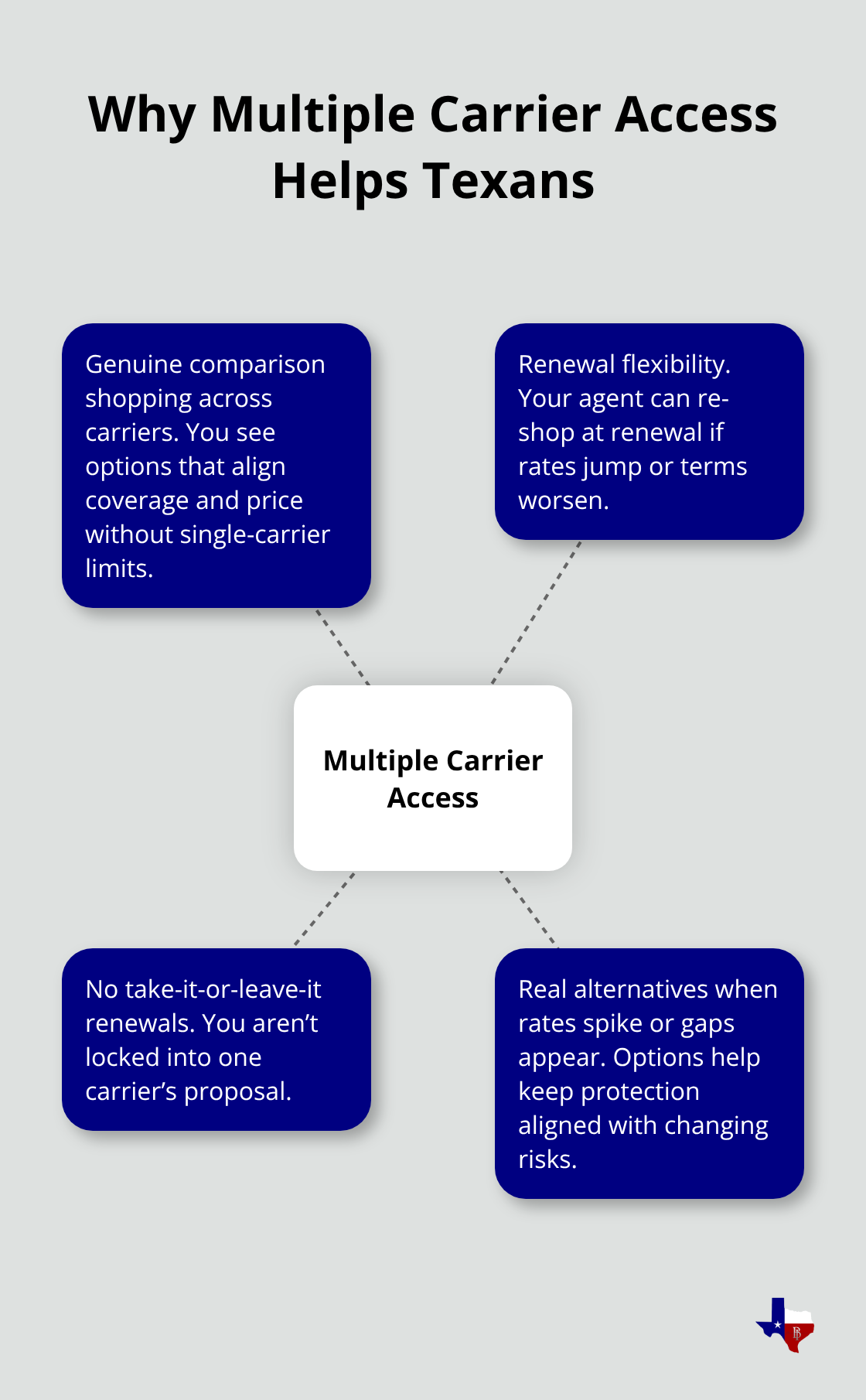
This matters most when rates spike or coverage gaps emerge, because you have real alternatives instead of accepting what one company dictates.
Why Multiple Carriers Matter for Texas Risks
Texas businesses face specific challenges that single carriers often struggle to address. Hail, wind, and specialized liability risks require carriers with local underwriting expertise and appetite for regional exposure. Independent agencies deliver better renewal flexibility and more carrier options tailored to Texas risks than captive agents can match. If you own rental properties or run a commercial operation, a single carrier frequently won’t align with your specific risk profile the way multiple carriers can. We at Brooks Insurance work with carriers that understand Texas markets and can customize coverage to fit what you actually need.
Ongoing Support and Advocacy
Your relationship with an agency extends far beyond the initial sale. Licensed agents and staff at independent agencies stay accessible throughout the policy lifecycle-a phone call or email away when coverage questions arise or a claim needs handling. You work with people familiar with your account history and your specific situation, not transferred to call centers staffed by representatives who’ve never seen your file. This continuity proves most valuable when something goes wrong and you need an advocate who understands your business and can guide you through the claims process.
The difference between working with a captive agent and an independent agency becomes clearest when you need support. Now let’s examine what specific credentials and capabilities you should evaluate when selecting an agency partner.
What to Verify Before Selecting Your Agency
Check Licensing and Disciplinary History
Start with licensing and disciplinary history, not just license status. The Texas Department of Insurance maintains an agent lookup tool that shows current license standing and expiration dates, but this tells only half the story. Pull the disciplinary history separately to identify enforcement actions or complaint patterns that a clean license won’t reveal. An agent with an active license but multiple complaints filed through the NAIC consumer complaint database or your state attorney general’s office represents real risk.
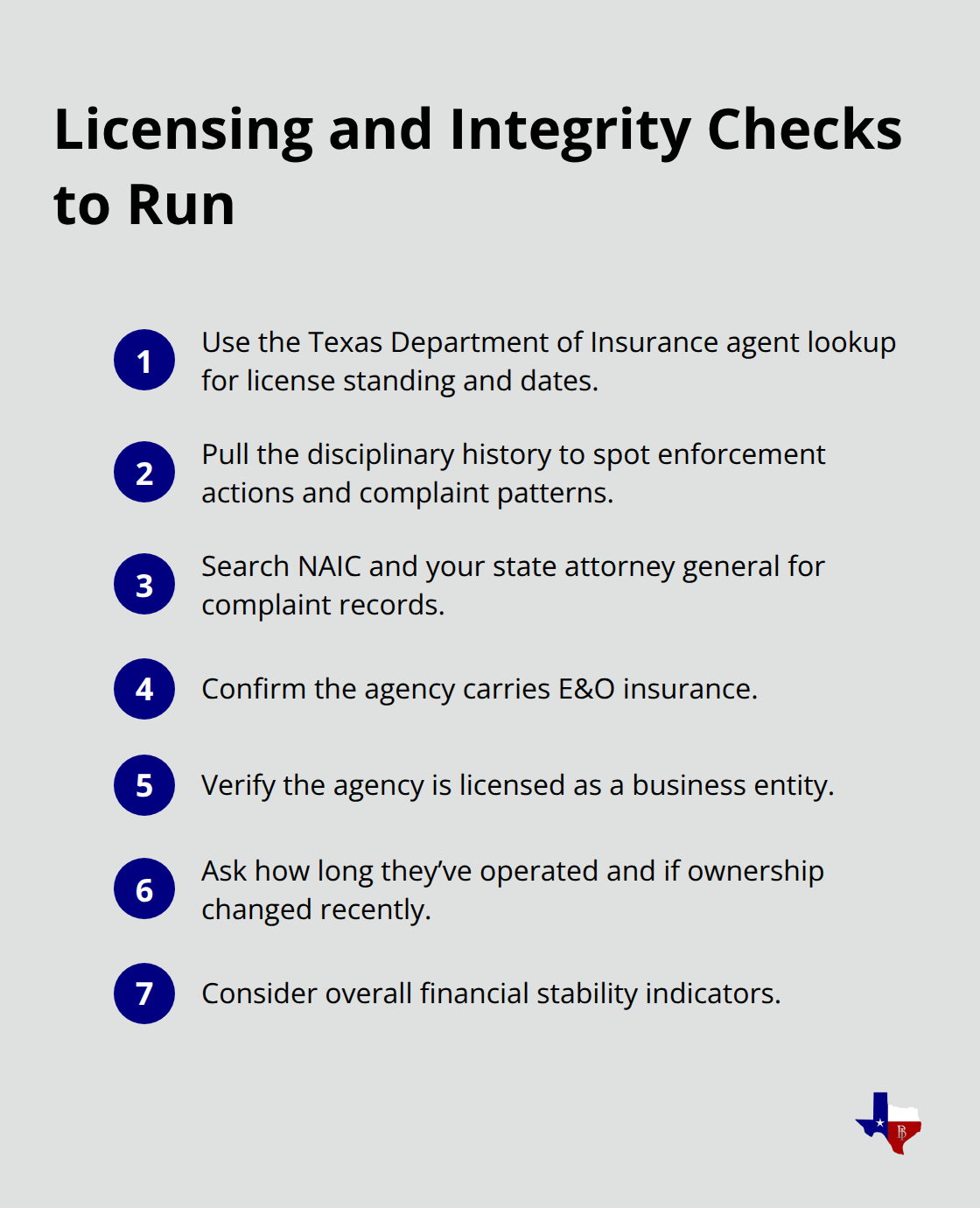
Ask your prospective agency how long they’ve operated, whether ownership has changed recently, and confirm they carry E&O insurance themselves-this protects you if something goes wrong with their advice or service delivery. Financial stability matters too; verify they’re licensed as a business entity, not just as individuals, which signals professional infrastructure.
Evaluate Responsiveness and Account Management
Test responsiveness before committing money. Send an email asking specific coverage questions and track how quickly you receive a substantive reply. Call during business hours and note whether you reach a real person or get transferred endlessly. Ask who handles your account if your primary agent becomes unavailable-vague answers indicate poor internal processes. Request references from clients with similar coverage needs to yours, whether that’s landlord policies or commercial liability. A strong agency will provide these without hesitation and those references should speak to actual claims support, not just policy sales.
Compare Quotes with Transparency
Pricing transparency requires more than accepting the first quote. Build a detailed coverage specification sheet before requesting quotes, including dwelling limits at replacement cost, personal property amounts, liability coverage, wind/hail deductibles, and flood coverage separately (since flood never comes with standard homeowners policies). When comparing quotes across carriers, verify each carrier’s financial strength through AM Best, S&P, or Moody’s ratings and research their claims-handling reputation. If one quote is dramatically cheaper than others, ask specifically what coverage or endorsements were removed to achieve that price-roof replacement cost coverage, water backup protection, and ordinance or law endorsements frequently disappear in low-ball quotes. An honest agency explains these differences transparently rather than glossing over them.
Understand What Questions Matter Most
The questions you ask reveal whether an agency truly understands your situation. Inquire about which insurance companies they represent and request their top three carriers for your specific address and risk profile. A concise answer indicates real comparison work rather than generic responses. Ask how they handle claims and what support you receive when a loss occurs-this separates agencies that sell policies from those that advocate for you when it matters most. Find out what additional services or tools they offer, whether that’s policy analysis, coverage reviews, or digital account access. These details separate agencies that treat you as a transaction from those building a genuine partnership.
Your vetting process now complete, you’re ready to move forward with confidence. The next step involves understanding exactly what questions to ask during your initial consultation with a prospective agency partner.
The Right Questions Separate Good Agencies from Great Ones
Ask About Carrier Relationships and Local Expertise
The difference between an agency that merely sells policies and one that truly partners with you comes down to specificity. When you call a prospective agency, move past surface-level questions and ask about their carrier relationships for your exact address and risk profile. An agency worth your time will answer this in under two minutes because they’ve already analyzed your situation. If they hesitate or provide vague responses about having access to many carriers, they’re not performing real comparative work. This directness matters because it reveals whether the agency understands your market and has completed the legwork before you even sit down.
Investigate Claims Support and Advocacy
Claims handling separates agencies that disappear after the sale from those that earn your loyalty. Ask exactly what happens when you file a claim and who guides you through the process. The honest answer should include a specific name or team, not a reference to a claims department somewhere else.
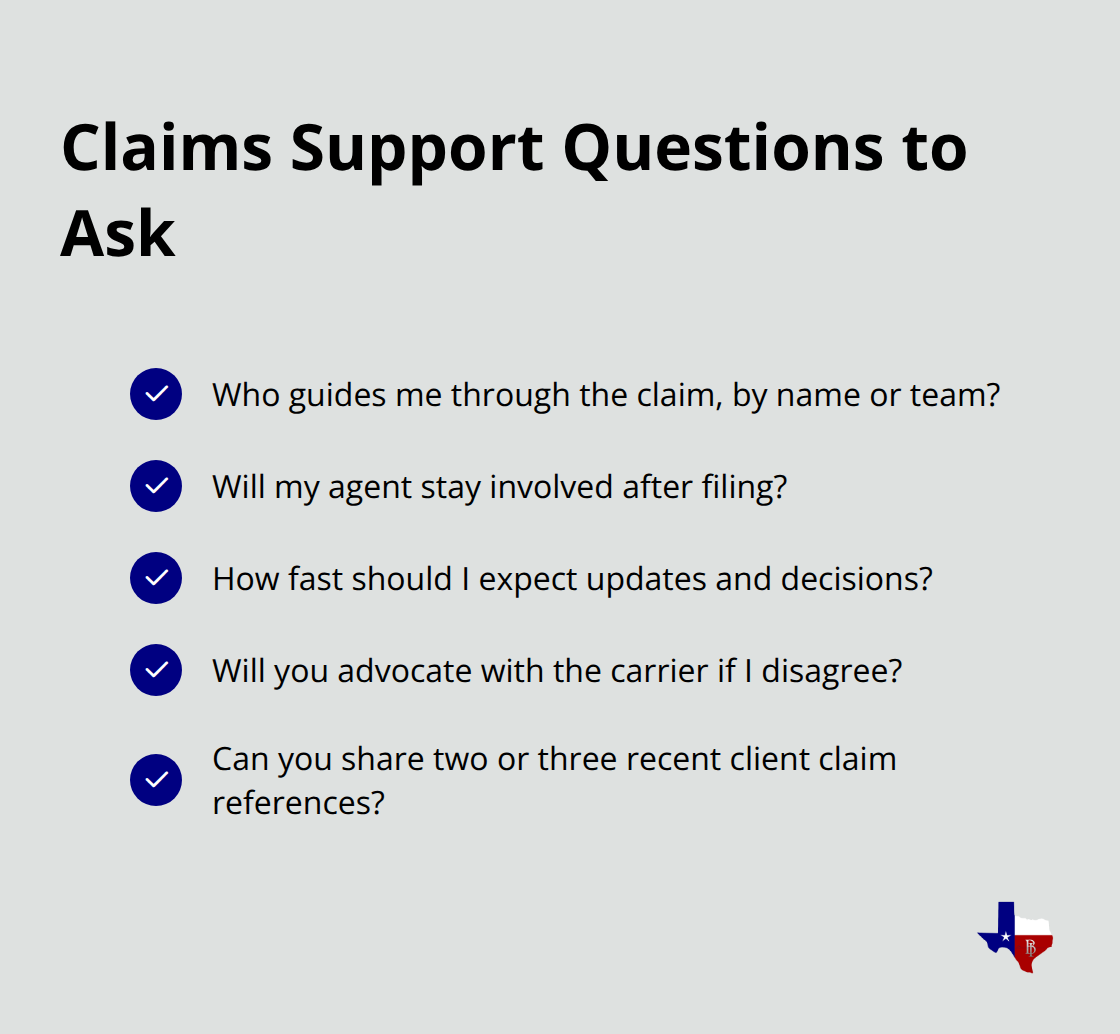
Ask whether your agent stays involved in the claim or transfers you to an unfamiliar representative. Ask how quickly you can expect communication and whether the agency advocates with the carrier if you disagree with their decision.
Request the names of two or three recent clients who filed claims and speak with them directly about their experience. An agency confident in its claims support welcomes this scrutiny. You’ll learn whether the agency truly stands beside you when it matters most or simply processes paperwork and moves on.
Evaluate Tools and Services Beyond Policy Sales
Inquire about what tools and services extend beyond policy sales. Does the agency offer annual coverage reviews to catch gaps as your situation changes? Can you access your policy documents online or only through email requests? Do they provide education about coverage options specific to Texas risks like hail and wind damage?
Some agencies offer policy analysis services, risk assessments, or digital account management that add real value between renewals. Others simply wait for renewal notices to arrive. The agencies that invest in these services demonstrate commitment to your long-term protection rather than short-term commissions. This distinction often determines whether you’ll maintain the relationship for years or shop around at the next renewal.
Final Thoughts
Making independent agency decisions in Texas requires you to find a partner who understands your specific risks and advocates for you when claims happen. Throughout this guide, we’ve examined what separates independent agencies from captive agents, how to verify credentials and responsiveness, and which questions reveal whether an agency truly serves your interests. The agencies worth your time answer directly about their carrier relationships, explain claims support with specifics, and offer tools that extend beyond policy sales.
Your vetting process should include checking licensing and disciplinary history through the Texas Department of Insurance, testing responsiveness before committing, and requesting references from clients with similar coverage needs. When comparing quotes, build a detailed coverage specification sheet and ask what coverage was removed if a quote seems too cheap. These steps take time, but they eliminate agencies that treat you as a transaction rather than a partnership.
Contact Brooks Insurance to discuss your coverage needs and experience how independent agency decisions in Texas work when you partner with licensed agents who stay accessible by phone or email. We represent multiple top-rated insurance companies, which means you get genuine comparison shopping and coverage customized to your actual needs. Trust your instincts about responsiveness and whether the agency demonstrates real expertise about your risks, because the right partnership transforms how you manage insurance from a necessary expense into genuine protection.
Disclaimer: The information provided in this blog is for general informational purposes only and does not constitute legal, financial, or insurance advice. Coverage options, terms, and availability may vary. Please consult with a licensed professional for advice specific to your situation