
Living on the Texas coast offers stunning views and a unique lifestyle, but it comes with real insurance challenges that most inland homeowners never face. Hurricane season, saltwater damage, and severe storms create specific risks that standard homeowners policies simply don’t cover.
At Brooks Insurance, we help Texas coastal homeowners navigate these complexities and find the right protection. This guide walks you through what you need to know about Texas coastal home insurance, from state requirements to choosing the best policy for your seaside property.
Understanding Texas Coastal Home Insurance Requirements
State and Lender Coverage Standards
Texas coastal properties face insurance requirements that differ significantly from inland homes, and understanding these standards protects both your investment and your finances. The Texas Department of Insurance doesn’t mandate specific coverage levels for coastal homes, but mortgage lenders do-most require homeowners insurance with wind and hail coverage, which is standard in coastal areas. However, standard homeowners policies exclude flood damage entirely, and that’s where most coastal homeowners face a significant gap. Federal law requires flood insurance if your property sits in a high-risk flood zone and you have a federally-backed mortgage.
Flood Insurance Options
The National Flood Insurance Program offers coverage for coastal properties, though many coastal Texans find that private flood insurance provides better rates and higher limits. You’ll want to compare both options carefully, as private insurers sometimes offer more flexibility for properties near the water. Your location relative to flood zones determines whether flood coverage becomes mandatory or simply recommended for financial protection.
Wind and Hail Coverage Details
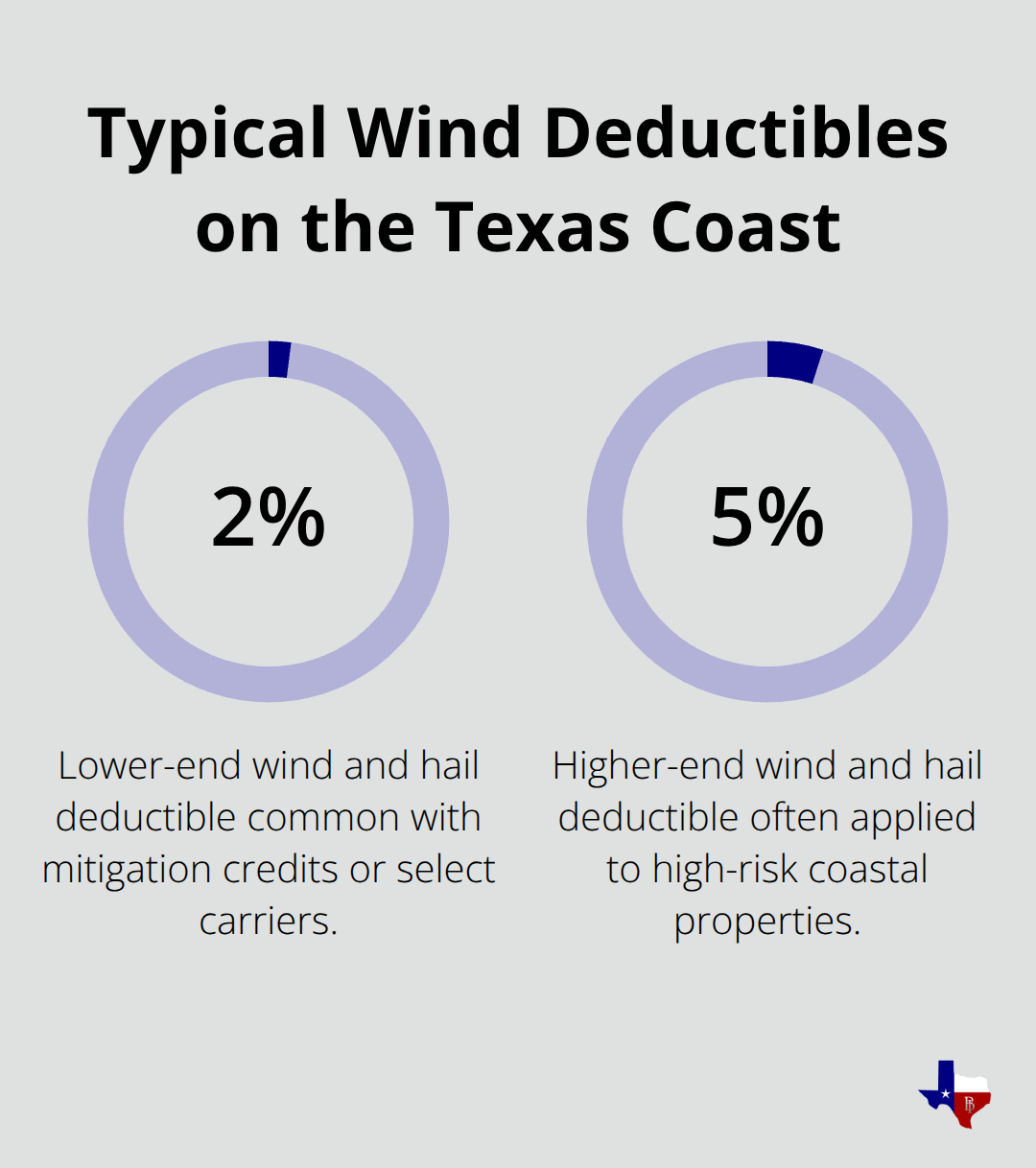
Wind and hail coverage in coastal regions includes damage from hurricanes, tropical storms, and severe thunderstorms-the major threats to seaside properties. Your deductible for wind and hail claims in coastal Texas often runs higher than inland deductibles, frequently between 2% and 5% of your home’s insured value. This means a $500,000 home could face a $10,000 to $25,000 deductible for wind damage alone, which significantly impacts your out-of-pocket costs after a major storm.
Saltwater Corrosion and Maintenance Gaps
Saltwater corrosion and environmental degradation present another coverage consideration that many coastal homeowners overlook until damage occurs. Standard policies don’t cover gradual salt spray damage, rust formation on metal components, or deterioration from salt-laden air-insurers classify these as maintenance issues rather than sudden damage. You’ll need to handle regular maintenance and protective measures like specialized coatings on metal fixtures and frequent inspections of exterior components yourself.
Finding the Right Coverage Structure
The combination of mandatory flood coverage, elevated wind and hail deductibles, and gaps in corrosion protection means coastal Texas homeowners must carefully review their entire policy structure. An independent agent can review your specific property location, elevation, distance from the coast, and past claim history to determine whether standard coverage suffices or if you need additional riders or separate policies. This personalized assessment becomes your foundation for selecting the right coastal protection strategy.
What Threatens Your Texas Coastal Home
Hurricane Damage and Wind Exposure
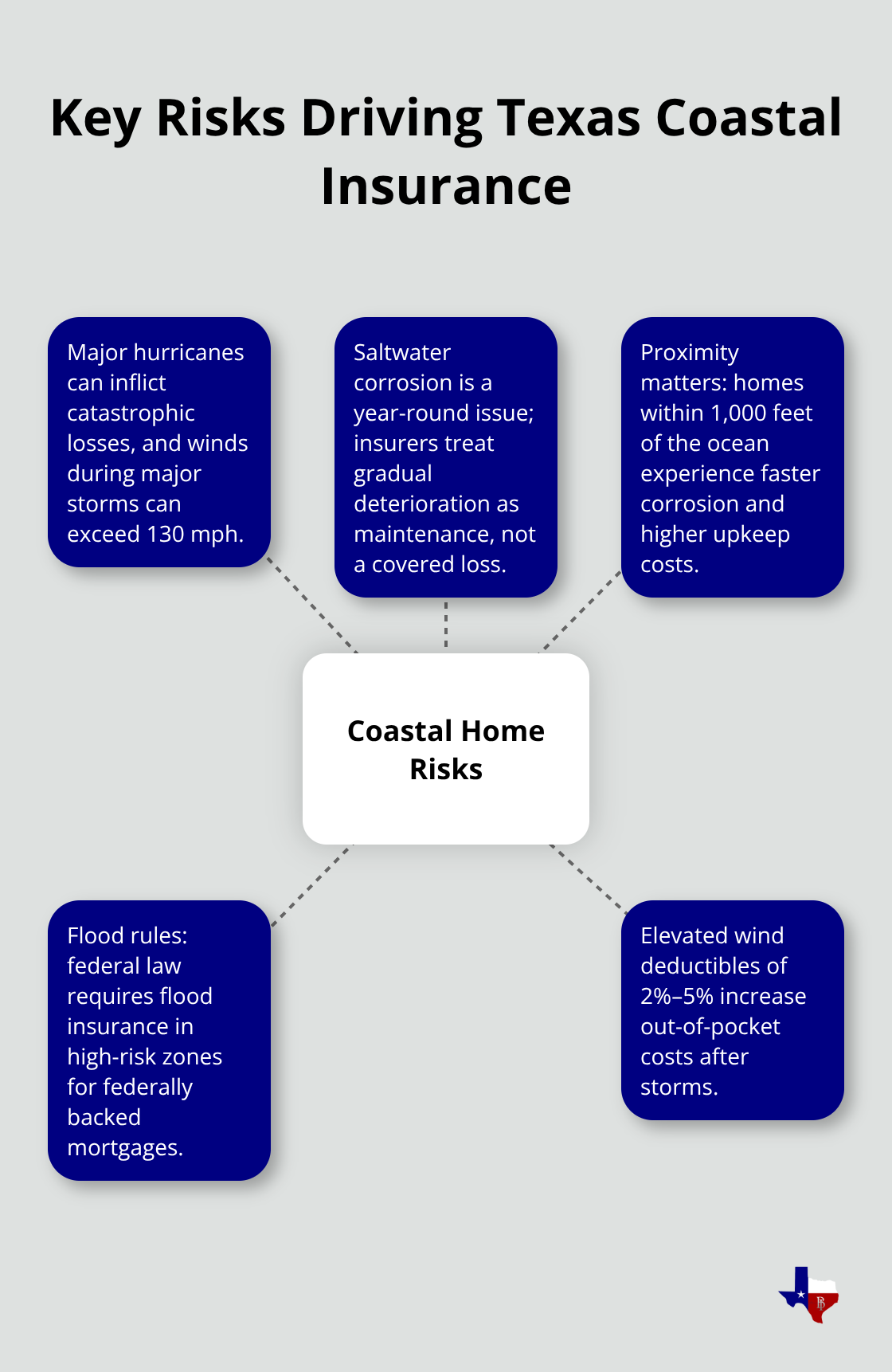
Hurricane season brings the most dramatic risk to Texas coastal properties, and the numbers show why this matters financially. Texas has been hit by a major hurricane 64 times since 1851, with Category 3 or higher storms capable of causing hundreds of thousands of dollars in damage to a single home. During the 2017 hurricane season, Texas coastal communities faced over $125 billion in total damages, with individual homes sustaining wind damage exceeding $500,000 in the hardest-hit areas. Wind speeds during major hurricanes exceed 130 mph, which means your roof, windows, siding, and structural integrity all face simultaneous assault from extreme forces and flying debris. This isn’t theoretical risk-your coastal property faces genuine exposure to these storms, and your insurance deductible determines how much of that damage falls on your shoulders.
Saltwater Corrosion: The Year-Round Threat
The less dramatic but equally costly threat comes from saltwater corrosion, which attacks your property year-round regardless of storm activity. Metal fixtures, HVAC components, electrical systems, and even concrete foundations deteriorate faster in coastal environments due to salt-laden air and spray. Insurance companies classify this gradual degradation as maintenance rather than sudden loss, which means your standard policy won’t cover the replacement of corroded air conditioning units, rusted metal railings, or deteriorated exterior trim. You’ll spend thousands on preventive maintenance and replacements that homeowners 20 miles inland never encounter.
Location and Corrosion Rates
Properties within 1,000 feet of the ocean experience accelerated corrosion rates compared to those further back, making your specific proximity to the water a critical factor in calculating long-term ownership costs. The salt spray that reaches your home intensifies with proximity to the shoreline, which means your maintenance budget and insurance strategy must account for this geographic reality. Understanding where your property sits relative to the ocean helps you anticipate both the corrosion timeline and the coverage gaps your policy will create.
Planning for Coastal Risks
These dual threats-sudden hurricane damage and gradual saltwater deterioration-shape how you should structure your coastal insurance protection. Your wind and hail deductible will determine your out-of-pocket costs after a major storm, while your maintenance budget must cover the corrosion damage that insurance won’t touch. With these risks clearly identified, selecting the right policy structure becomes your next priority.
Selecting Coastal Coverage That Matches Your Property
Calculate Your True Out-of-Pocket Costs
Coastal Texas homeowners often accept whatever policy their lender requires without understanding how deductibles and coverage limits actually protect their specific property. Your wind and hail deductible, which is often calculated as a percentage of your home’s insured value, creates a massive financial difference between policies. A home valued at $400,000 might carry an $8,000 deductible at 2% versus $20,000 at 5%-that’s a $12,000 gap that comes directly from your pocket after a hurricane. Calculate your actual out-of-pocket exposure under different deductible scenarios before comparing prices. Most coastal homeowners underestimate this number until damage occurs, which means you should run the math now while you have time to adjust your coverage structure.
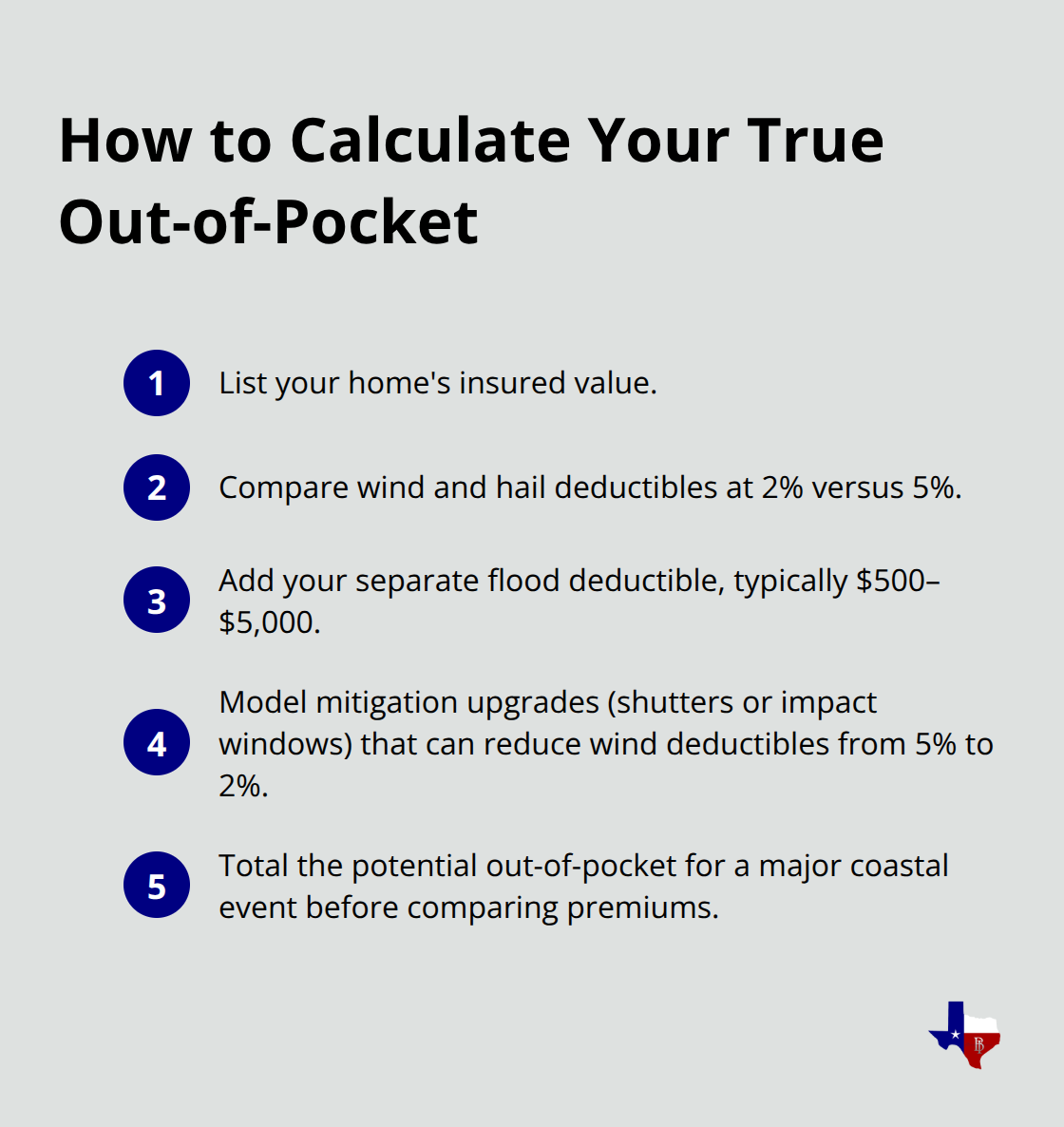
Flood insurance deductibles operate separately from wind deductibles, typically ranging from $500 to $5,000. Combining these two separate out-of-pocket maximums reveals your true financial exposure during a major coastal event. Some policies allow you to reduce your wind deductible by installing hurricane shutters or impact-resistant windows, which can lower your deductible from 5% to 2% and save thousands in future claims.
Work with an Independent Agent
An independent agent becomes invaluable when navigating coastal coverage because they represent multiple insurance companies rather than pushing a single carrier’s products. As an independent agency with over 50 years of experience in Texas, Brooks Insurance works with multiple top-rated insurers to match your specific coastal property against the companies that offer the best rates and coverage for your situation. Your property’s distance from the ocean, elevation above storm surge levels, construction materials, and claim history all influence which carriers will offer competitive pricing and which will decline coverage entirely.
A carrier that charges premium rates for a beachfront property in Galveston might offer excellent pricing for a home two miles inland in Corpus Christi. This variation means that shopping with an independent agent who knows multiple carriers saves you significant money compared to contacting individual companies on your own.
Verify Financial Stability and Claims History
Insurance company ratings matter significantly in coastal areas because a financially weak carrier might struggle to pay claims during a major hurricane when thousands of coastal homeowners file simultaneously. The National Association of Insurance Commissioners tracks financial stability ratings, and you should verify that any company covering your coastal property maintains an A rating or higher for financial strength. Avoid carriers that have faced significant claim-paying difficulties during past hurricane seasons, as this pattern predicts future problems when you need your insurance most.
Final Thoughts
Texas coastal home insurance protects your financial security against risks that inland homeowners never face. The combination of hurricane exposure, elevated wind deductibles, and saltwater corrosion creates a complex insurance landscape where your out-of-pocket costs during a major storm depend entirely on the deductible structure you choose today. Calculating your actual financial exposure before selecting a policy matters far more than simply finding the lowest premium.
Your next step involves gathering your property details including distance from the ocean, elevation, construction materials, and current policy information. Then compare wind and hail deductibles across multiple carriers to understand how each option affects your finances after a hurricane. You should also evaluate flood insurance options through both the National Flood Insurance Program and private carriers to find the coverage that matches your property’s specific flood risk.
At Brooks Insurance, we work with multiple top-rated insurers to match your coastal property against carriers that offer competitive pricing and appropriate coverage limits for your situation. Our licensed agents understand Texas coastal risks and can review your specific property location to identify coverage gaps before they become expensive problems. Contact Brooks Insurance today to discuss your Texas coastal home insurance needs with an agent who knows your market and your risks.
Disclaimer: The information provided in this blog is for general informational purposes only and does not constitute legal, financial, or insurance advice. Coverage options, terms, and availability may vary. Please consult with a licensed professional for advice specific to your situation