

Running a commercial vehicle operation in Texas means navigating specific insurance requirements that protect your business and comply with state law. Many business owners underestimate the complexity of Texas commercial vehicle insurance or overpay because they haven’t compared options.
At Brooks Insurance, we help Texas business owners find coverage that actually fits their operations and budget. This guide walks you through what you need to know to make informed decisions about your fleet’s protection.
What Commercial Vehicle Insurance Actually Covers
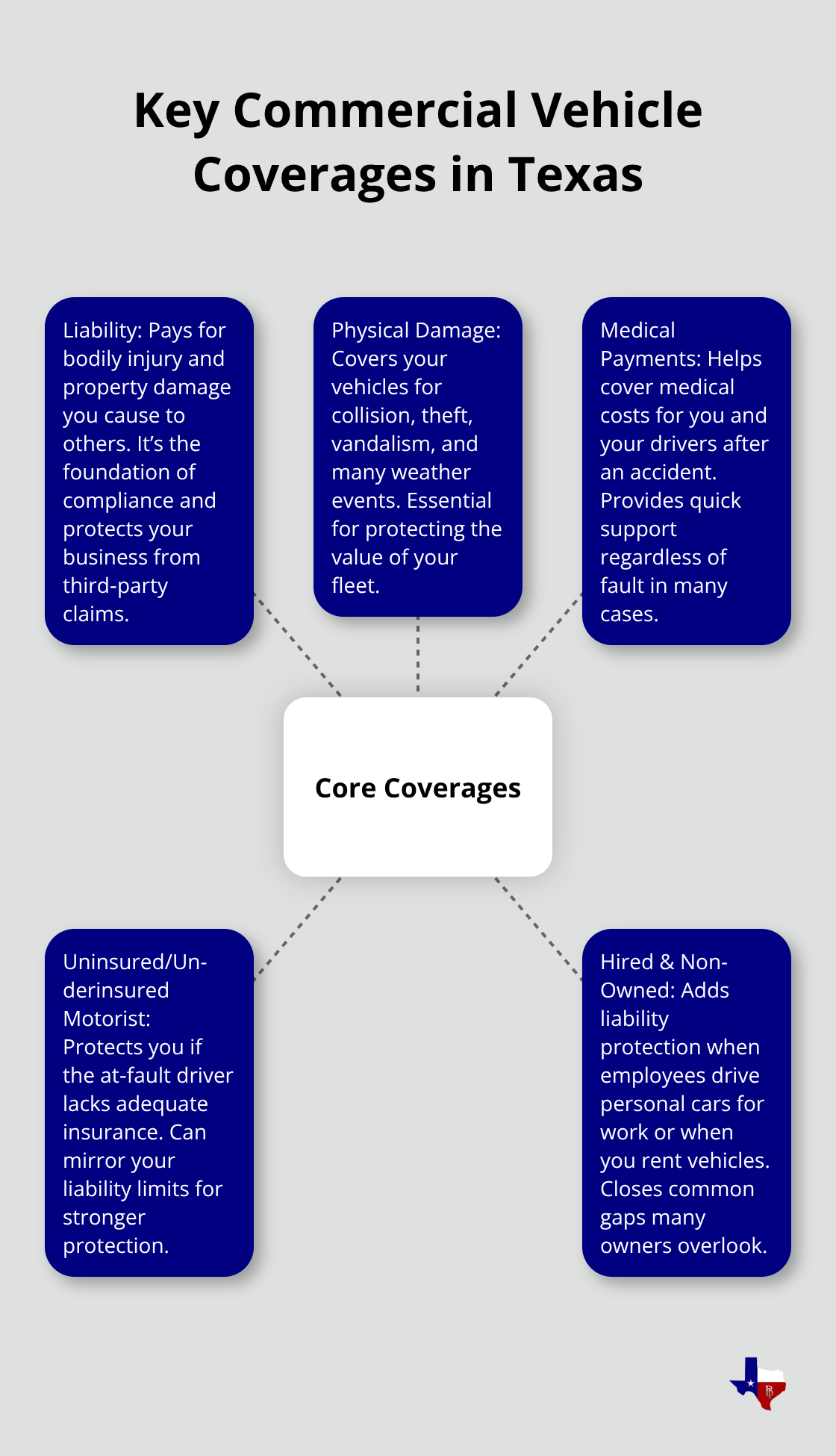
Commercial vehicle insurance in Texas differs fundamentally from personal auto coverage because your business vehicle faces different risks and liability exposure than a personal car. Standard personal auto policies explicitly exclude business use, which means operating a vehicle for commercial purposes without proper coverage violates state law and leaves you unprotected. Commercial vehicle insurance covers liability for injuries or property damage you cause to others, physical damage to your own vehicles from collisions or theft, medical payments for your drivers, and uninsured motorist protection if someone without adequate insurance hits you.
The Texas Department of Transportation requires minimum liability coverage, which includes bodily injury and property damage protection. Many business owners mistakenly believe their personal policy covers occasional commercial use or that they only need basic liability, but Texas regulators take this seriously and violations can result in fines up to $1,000 plus license suspension.
The Financial Risk of Operating Without Proper Coverage
Operating without commercial vehicle insurance in Texas exposes your business to catastrophic financial risk. A single accident where you injure someone can result in lawsuits exceeding $100,000 or more, which your personal policy won’t cover. Texas law holds business owners personally liable for accidents involving commercial vehicles, meaning creditors can pursue your personal assets, not just your business assets. If you lease or finance vehicles, your lender requires commercial coverage as a condition of the loan agreement, so skipping this insurance could trigger default on your vehicle financing. The misconception that you can save money by avoiding commercial coverage is dangerous and backwards-a single liability claim without proper insurance can cost more than years of premiums.
How Fleet Size and Vehicle Type Affect Your Rates
Your insurance costs depend heavily on what you actually do with your vehicles. A contractor with three pickup trucks transporting tools pays different rates than a delivery service with ten vehicles running routes daily, even though both need commercial coverage. Vehicles used for transporting hazardous materials or passengers face higher premiums than those used for general business purposes. The experience level of your drivers significantly impacts your rates, with companies that require driver training and maintain safety records paying substantially less than those with poor driving histories. Understanding these rate factors helps you anticipate what your operation will cost and identify where you might reduce expenses through better safety practices or driver management.
Coverage Options and How to Choose the Right Policy
Liability Coverage Limits That Protect Your Business
Liability coverage forms the foundation of any commercial vehicle policy in Texas, and selecting the wrong limits exposes your business to financial catastrophe. Texas requires minimum liability coverage of $30,000 for bodily injury per person and $60,000 per accident, plus $25,000 for property damage, but these minimums fall dangerously short for most operations. A single serious accident involving a commercial vehicle generates medical bills exceeding $200,000 or more, and if you’re found liable with only state minimum coverage, you pay the difference from your personal assets. Most commercial vehicle operators should carry at least $100,000 in bodily injury per person and $300,000 per accident, with property damage coverage of $100,000 or higher. Contractors working on construction sites, delivery services with multiple daily routes, and passenger transport operations need even higher limits, typically $500,000 to $1,000,000 combined single limits. Your lender or clients may require specific coverage amounts as a condition of doing business, so verify those requirements before finalizing your policy.
Physical Damage Coverage and Deductible Selection
Physical damage coverage protects your actual vehicles from collision, theft, vandalism, and weather-related damage, and the deductible you select directly impacts your monthly premium. Most Texas business owners choose deductibles between $500 and $1,000, balancing lower premiums against manageable out-of-pocket costs when damage occurs. If your fleet includes newer vehicles worth $30,000 or more each, comprehensive and collision coverage becomes essential because a single total loss without this protection can force you out of business. The deductible you pick should reflect your cash flow situation and your willingness to absorb losses without straining operations.
Uninsured Motorist Protection and Specialized Coverage
Uninsured motorist protection covers your drivers if they’re hit by someone without adequate insurance, and Texas law allows you to carry this coverage up to your liability limits, which protects both your vehicles and your drivers’ medical expenses. The Texas Department of Insurance reported that uninsured drivers represent approximately 15 percent of drivers on state roads, making this coverage far more than theoretical protection. Specialized coverage options like hired and non-owned vehicle liability apply when your employees use their personal vehicles for business or when you rent vehicles temporarily, and many business owners overlook these gaps until an accident forces them to pay out of pocket.
Understanding your coverage options positions you to make decisions based on your actual operational needs rather than guesswork. The next step involves examining what factors drive your insurance costs and where you can legitimately reduce your premiums without sacrificing protection.
How to Lower Your Commercial Vehicle Insurance Costs
Insurance premiums for commercial vehicles reflect genuine risk factors that insurers measure carefully, and understanding what drives your rates empowers you to make strategic decisions that reduce costs without cutting corners on protection. Your driving record matters most, with a single at-fault accident increasing your premium by 20 to 40 percent depending on severity, while multiple violations can double your rates or cause insurers to decline coverage entirely. Vehicle age and type significantly impact pricing because newer vehicles cost more to repair and older vehicles may lack safety features that insurers reward, meaning a ten-year-old work truck typically costs less to insure than a brand-new one. The number of drivers on your policy and their individual records determines much of your expense, with each driver’s age, experience, and violation history factored into separate rates that compound across your fleet. Annual mileage matters substantially because vehicles driven 15,000 miles yearly face different risk profiles than those driven 50,000 miles, and you should provide accurate estimates rather than guessing because underreporting mileage can void your coverage if an accident occurs. Texas insurers also consider your industry type, with construction contractors paying more than office supply delivery services, and your territory because urban routes with heavy traffic generate higher claims than rural operations.
Safety Programs That Reduce Your Premiums
Reducing your premiums starts with implementing measurable safety improvements that insurers recognize and reward through rate discounts. Formal training through defensive driving courses qualifies most commercial operators for premium reductions, and these programs teach techniques that genuinely reduce accident frequency and severity. GPS tracking and telematics systems on your vehicles demonstrate accountability and allow you to monitor risky driving behaviors like excessive speeding or hard braking, with many insurers offering 10 to 20 percent discounts for fleets using these technologies. A clean safety record (documented zero accidents over multiple years) strengthens your negotiating position when your policy renews, and some insurers offer loyalty discounts of 5 to 10 percent for customers with accident-free histories.
Shopping and Comparing Your Coverage Options
Shopping your coverage annually rather than renewing automatically remains your most powerful cost-reduction tool because rates vary dramatically between insurers for identical coverage, with differences sometimes exceeding 30 percent for the same business profile. Comparing quotes from at least three different insurers takes roughly two hours and frequently reveals savings of $500 to $2,000 annually on commercial vehicle policies, making it one of the highest-return uses of your time. As an independent insurance agency with over 50 years of experience, we at Brooks Insurance represent multiple top-rated insurance companies, which means you have access to a larger selection of coverage, pricing, and payment options when you work with us.
Adjusting Your Deductible Strategy
Increasing your deductible from $500 to $1,000 typically reduces your premium by 10 to 15 percent, a worthwhile trade-off if your cash flow can absorb occasional out-of-pocket costs without disrupting operations. The deductible you select should align with your ability to cover unexpected vehicle damage without straining your business finances (consider your typical monthly cash reserves when making this decision). Lower deductibles cost more in premiums but protect your cash flow during difficult months, while higher deductibles reduce your monthly expense but require financial reserves to handle claims.
Final Thoughts
Commercial vehicle insurance protects your Texas business from financial devastation, but only when you understand what coverage you actually need and structure your policy for your specific operations. The minimum liability limits required by Texas law leave you dangerously exposed, and a single serious accident wipes out years of business profits if you haven’t carried adequate protection. Your rates depend on measurable factors you control, from driver safety records to fleet maintenance and mileage patterns, which means reducing your premiums doesn’t require cutting corners on coverage.
Audit your current coverage against your actual operational needs, considering your vehicle types, annual mileage, number of drivers, and the specific work your fleet performs. Implement safety improvements like driver training and telematics systems that reduce both accident frequency and your insurance costs. Shop your coverage annually with multiple insurers because rate differences for identical policies frequently exceed 30 percent, and this comparison takes just a few hours but often saves hundreds or thousands annually.
An independent insurance agent gives you access to multiple top-rated insurance companies rather than being locked into a single carrier’s options and pricing. Contact Brooks Insurance today to review your current Texas commercial vehicle insurance coverage and explore options that protect your business without overpaying-our licensed agents answer your questions directly and help you navigate policy details that matter to your operation.
Disclaimer: The information provided in this blog is for general informational purposes only and does not constitute legal, financial, or insurance advice. Coverage options, terms, and availability may vary. Please consult with a licensed professional for advice specific to your situation