

Running a fleet in Texas means juggling multiple vehicles, drivers, and insurance policies all at once. The complexity grows fast, and one oversight can cost you thousands in claims or compliance violations.
We at Brooks Insurance help fleet owners navigate Texas fleet auto insurance with strategies that actually work. This guide walks you through the essentials: managing your vehicles efficiently, controlling costs, and meeting Texas regulations.
How to Organize Fleet Operations Without Drowning in Paperwork
Managing multiple vehicles and drivers demands systems, not just good intentions. Fleet owners who rely on spreadsheets and memory quickly find themselves buried under compliance issues, missed maintenance schedules, and duplicate coverage. Texas fleet operators have learned this lesson repeatedly. The solution is straightforward: invest in fleet management software, implement driver accountability programs, and maintain detailed vehicle records. These three elements work together to reduce insurance claims, lower your premiums, and keep your operation running smoothly.
Fleet Software Stops Administrative Chaos
Fleet management software platforms like Samsara, Verizon Connect, and Geotab track vehicle locations, maintenance schedules, fuel consumption, and driver behavior in real time. These platforms generate data that proves your commitment to safety and maintenance. When you file a claim, insurers can see documented evidence of regular inspections and preventive maintenance. This directly impacts your rates. Texas fleets with 10 or more vehicles should budget between $50 and $150 per vehicle monthly for software subscriptions, but the premium reductions typically offset this cost within the first year.
Driver Behavior Programs Cut Claims Dramatically
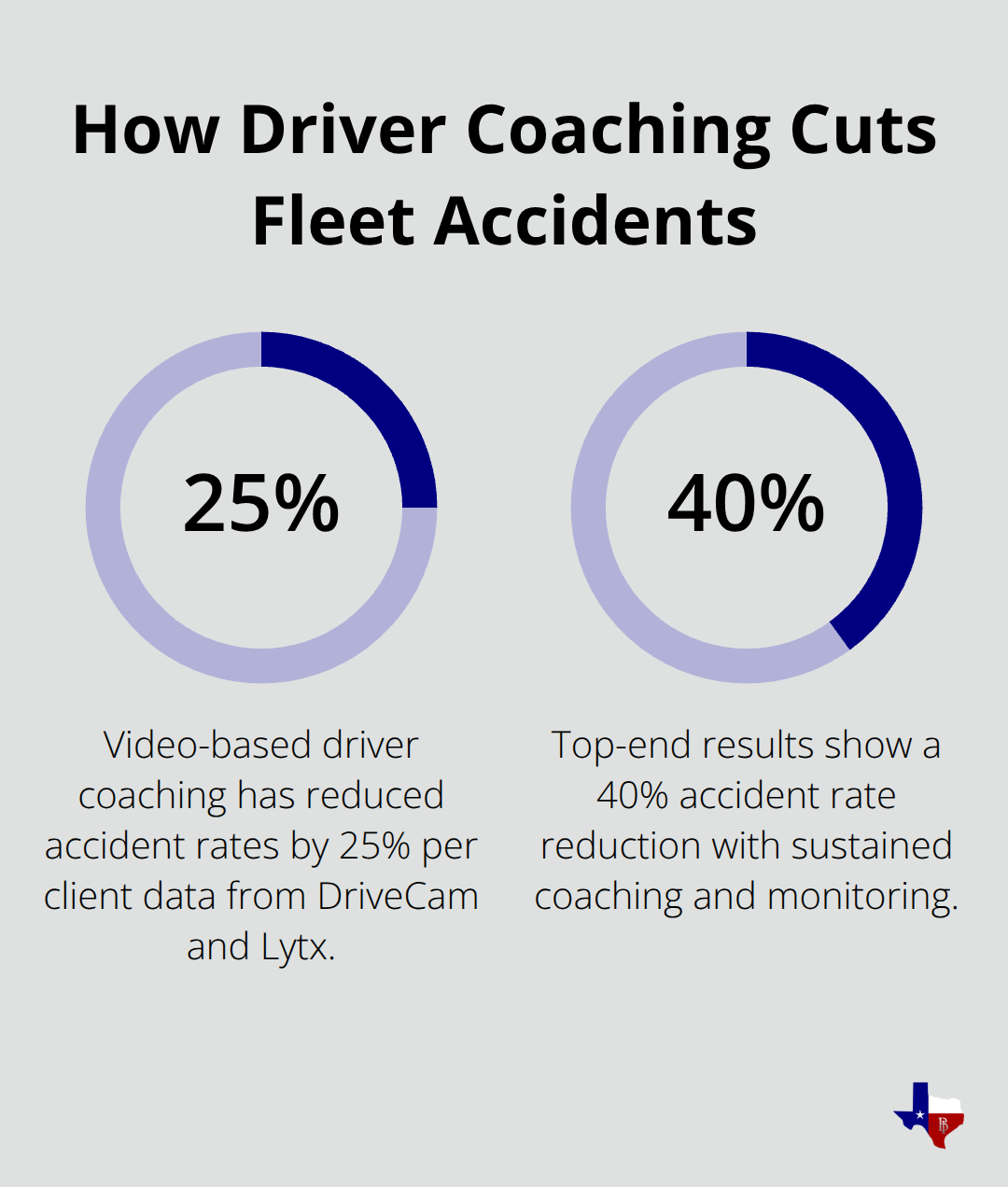
Insurance companies penalize fleets with high claim rates. Driver monitoring systems that track speeding, hard braking, rapid acceleration, and distracted driving help you identify risky operators before they cause expensive accidents. Companies like DriveCam and Lytx provide video-based coaching that reduces accident rates by 25 to 40 percent according to their client data. You don’t need to punish drivers; focus on coaching and recognition instead. Reward your safest drivers with bonuses or preferred assignments, and provide additional training for those showing risky patterns.
This approach builds a safety culture and gives your insurance agent concrete evidence that you actively manage risk.
Maintenance Records Protect You During Claims Disputes
Texas regulations require commercial vehicles to pass annual inspections. Comprehensive maintenance records protect you when disputes arise. If a vehicle fails mechanically and causes an accident, insurers will investigate whether you neglected maintenance. Keep detailed logs of oil changes, tire rotations, brake inspections, and major repairs. Digital record systems automatically flag when vehicles are due for service. A properly maintained fleet also experiences fewer breakdowns, which means less downtime and lower operating costs beyond just insurance savings. Your maintenance records should include dates, mileage, work performed, and the technician’s name. This documentation proves due diligence if a claim ever goes to litigation.
With your operations organized and your vehicles properly maintained, the next step involves controlling costs and selecting the right coverage options for your specific fleet needs.
Cutting Fleet Insurance Costs Without Sacrificing Protection
Multi-Vehicle Discounts Vary Dramatically Between Carriers
Fleet insurance premiums fluctuate based on how you structure your coverage and manage your claims history. Most Texas fleet owners overpay because they treat each vehicle as an individual policy instead of negotiating as a collective unit. The key is understanding that multi-vehicle discounts vary wildly between insurers, and the cheapest option rarely provides the best value when claims arise. A fleet of five vehicles might save $800 annually with one carrier but $2,400 with another, yet most owners never compare beyond their current provider. The difference comes down to how each insurer calculates risk, values your safety programs, and applies discounts for fleet size.
Larger fleets with 20 or more vehicles typically qualify for 15 to 25 percent discounts compared to single-vehicle rates, according to industry data from the National Association of Insurance Commissioners. However, these discounts only materialize if you shop aggressively and provide insurers with documentation of your maintenance records and driver safety initiatives. Many Texas fleet operators leave 30 to 40 percent in potential savings on the table simply because they accept the first quote.
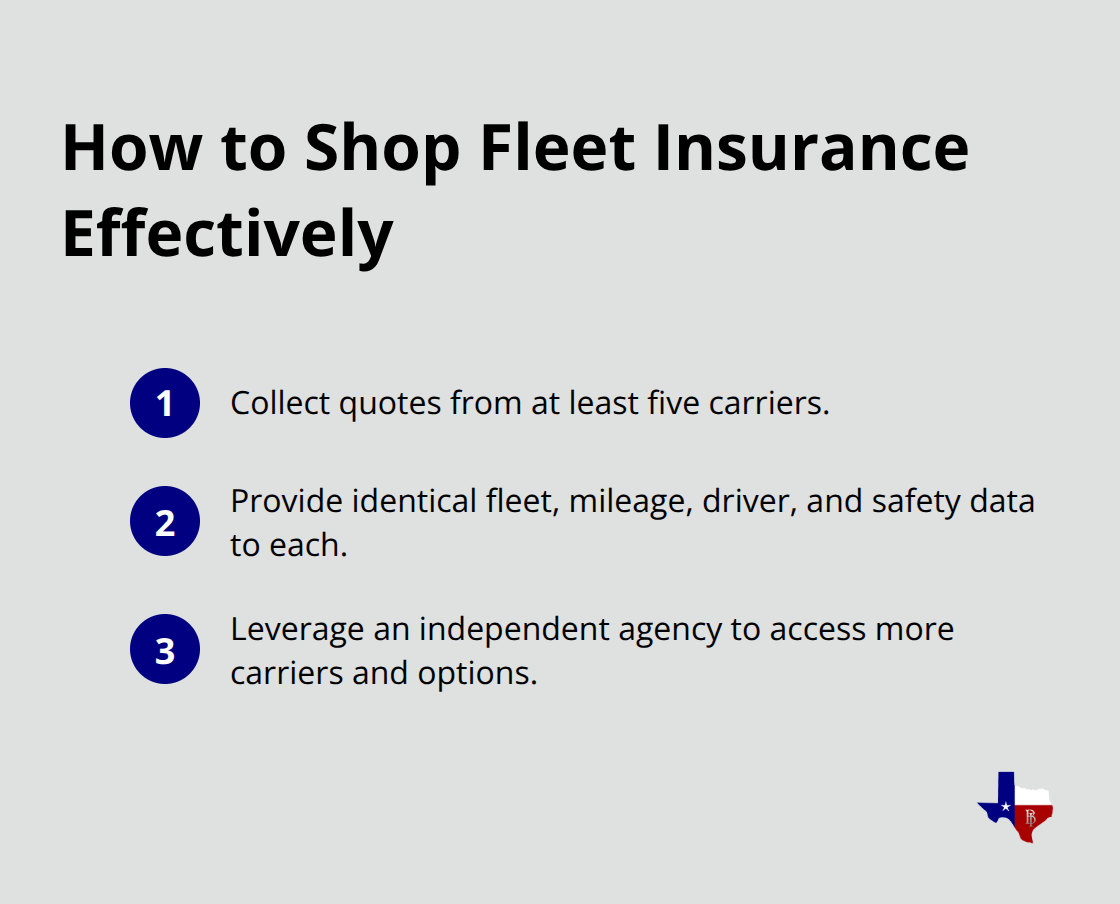
Start by collecting quotes from at least five different carriers, then present each one with identical information about your fleet composition, annual mileage, driver records, and safety programs. This forces apples-to-apples comparisons and gives you leverage to negotiate better terms. An independent agency like Brooks Insurance represents multiple top-rated insurance companies, which means you access a larger selection of coverage, pricing, and payment options without shopping multiple carriers yourself.
Strategic Coverage Limits Protect Against Catastrophic Risk
Coverage limits require strategic thinking beyond just meeting Texas minimum requirements. Texas law mandates minimum liability coverage of 30/60/25, meaning $30,000 per person and $60,000 per accident for bodily injury, plus $25,000 for property damage. These minimums protect you legally but expose your business to catastrophic financial risk if you cause serious injuries or property damage.
A single accident involving multiple vehicles or pedestrians can generate claims exceeding $500,000 easily, which is why you should carry 100/300/100 coverage as a baseline, especially if your vehicles operate in high-traffic urban areas or on highways. Your coverage selection should also account for vehicle type and use. Pickup trucks used for light hauling face different risk profiles than delivery vans making frequent stops or box trucks carrying high-value inventory. Commercial general liability coverage becomes essential if your fleet includes vehicles used for services or goods delivery.
Uninsured motorist coverage protects your drivers when hit by uninsured Texas drivers, who represent about one in seven drivers on state roads according to a 2023 study by the Insurance Research Council. This coverage prevents your own drivers from bearing the financial burden of accidents caused by uninsured motorists.
Claims History Reveals Patterns That Drive Rates
Tracking your claims history over 36 months reveals whether your fleet is trending toward more accidents, which indicates either driver quality issues or vehicle maintenance problems. Claims data directly influences your renewal rates, so a single year of high claims can lock you into elevated premiums for three years.
Request your complete loss history from your current insurer, then categorize claims by vehicle, driver, and cause. This analysis often reveals patterns, such as one driver responsible for 60 percent of claims or a specific vehicle model experiencing repeated mechanical failures. Addressing the root cause through driver retraining or vehicle replacement prevents future claims and demonstrates to insurers that you manage risk actively, which translates into better rates at renewal time.
Once you control costs and select appropriate coverage, Texas-specific regulations and environmental factors demand your attention to avoid compliance violations and unexpected coverage gaps.
Texas-Specific Fleet Insurance Requirements and Environmental Risks
Texas Liability Minimums Leave Your Business Exposed
Texas mandates minimum liability coverage of 30/60/25, but this baseline protection fails against real-world claims. A serious multi-vehicle accident generates damages exceeding $500,000 easily, leaving your business liable for amounts far beyond these minimums. We at Brooks Insurance recommend 100/300/100 coverage as the practical floor for any fleet operating in Texas, particularly if your vehicles travel through Dallas, Houston, or Austin where traffic density and claim severity run highest. This elevated coverage costs roughly 15 to 25 percent more than minimum limits but protects your business from catastrophic financial exposure.
Hail and Flood Damage Threaten Texas Fleets Year-Round
Texas weather patterns create specific fleet risks that standard policies often overlook. Hail storms in spring and summer months cause significant damage to vehicle fleets, with Texas experiencing an average of 79 hail days annually according to the National Weather Service. Comprehensive coverage becomes essential for fleets operating in central Texas, where hailstorms generate millions in annual vehicle damage claims.
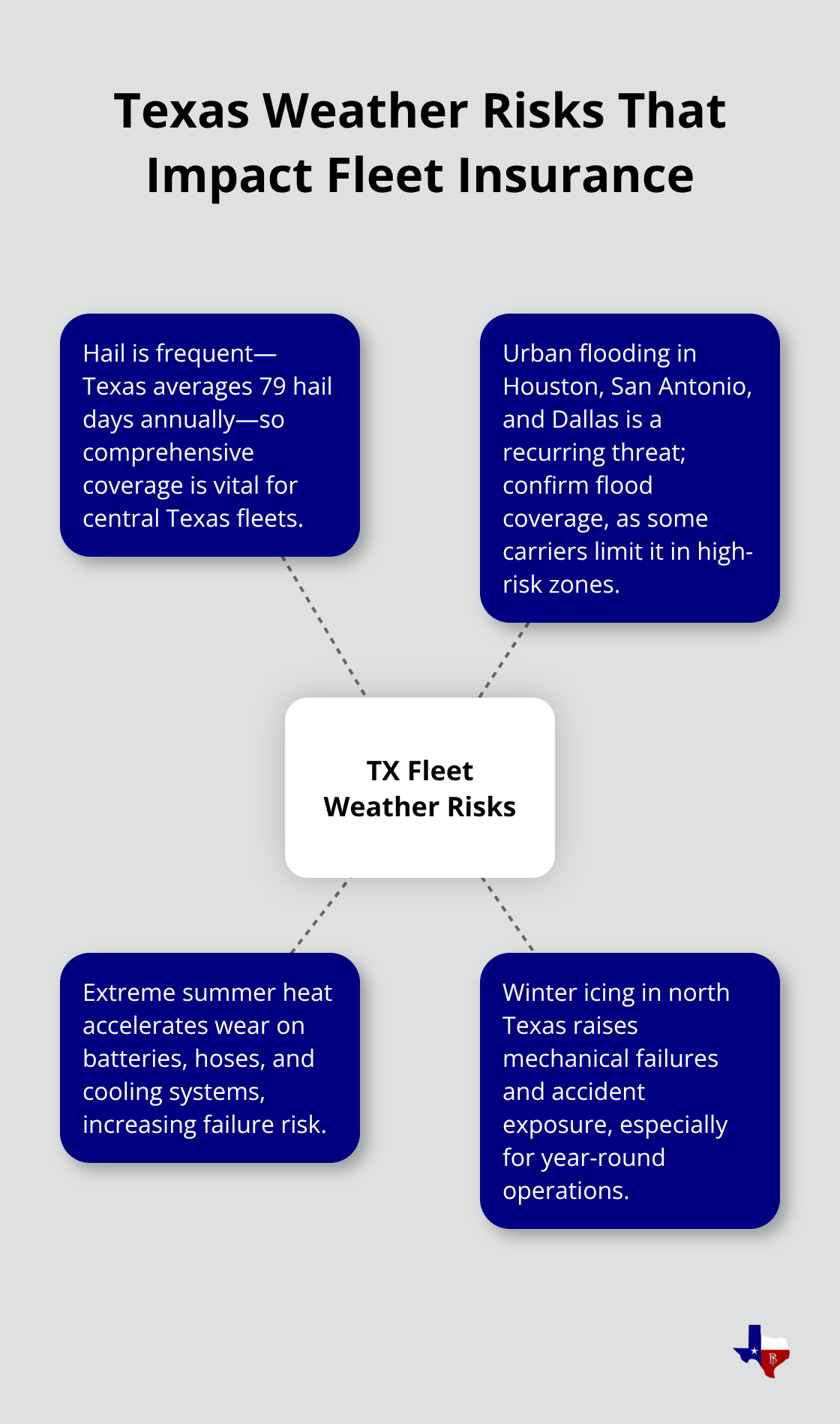
Flooding represents another critical Texas risk, particularly for fleets in Houston, San Antonio, and Dallas metropolitan areas where heavy rainfall overwhelms drainage systems. Comprehensive coverage protects against flood damage, but you must verify your policy includes it since some carriers limit flood coverage in high-risk zones.
Heat and Winter Conditions Increase Mechanical Failures
Summer heat affects vehicle systems and accelerates wear on batteries, hoses, and cooling components. Winter icing in north Texas increases mechanical failures and accident risk, particularly for fleets that operate year-round without seasonal adjustments. These seasonal challenges compound your maintenance costs and raise your accident exposure if vehicles fail during operation.
Commercial Vehicle Regulations Require Specific Coverage
Vehicles over 26,001 pounds require commercial registration and specific insurance endorsements that personal policies exclude. Texas state laws and regulations for commercial vehicles establish mandatory safety inspections, and your fleet insurance must align with these requirements or face coverage denial during claims. If your fleet includes any vehicles used for commercial purposes such as hauling materials, delivering goods, or transporting equipment, you need commercial auto coverage, not personal policies adapted for business use. Texas also enforces stricter liability standards for commercial operators, meaning your drivers face elevated legal responsibility compared to personal vehicle operators.
Align Your Coverage with Texas Regulatory Standards
Commercial auto policies differ fundamentally from personal auto policies in how they handle multiple vehicles, driver qualifications, and liability exposure. Your coverage structure must match your actual fleet operations and vehicle classifications to avoid gaps when claims occur. An independent agency like Brooks Insurance works with fleets to structure coverage that meets Texas regulatory requirements while protecting against the specific risks your operation faces.
Final Thoughts
Texas fleet auto insurance becomes significantly more affordable when you document your safety programs, maintain detailed vehicle records, and shop aggressively across multiple carriers. The difference between overpaying and fair rates often exceeds $2,000 annually for mid-sized fleets, yet most owners never compare options or present insurers with evidence of their risk management efforts. Your fleet information-vehicle types, annual mileage, driver records, and current claims history-forms the foundation for accurate quotes that reflect your actual risk profile.
We at Brooks Insurance work with Texas fleet operators to structure coverage that meets regulatory requirements while protecting against the specific risks your vehicles face. As an independent agency, we represent multiple top-rated insurance companies, which means you access a larger selection of coverage, pricing, and payment options without shopping multiple carriers yourself. Our licensed agents understand Texas weather patterns, state regulations, and the operational challenges fleet owners face daily.
Contact Brooks Insurance for a comprehensive quote that compares your options across multiple carriers and identifies coverage gaps your current policy may have overlooked. Texas fleet operations demand insurance partners who understand your business, not generic quotes from national carriers unfamiliar with local conditions. We help you build a fleet insurance strategy that protects your investment and supports your growth.
Disclaimer: The information provided in this blog is for general informational purposes only and does not constitute legal, financial, or insurance advice. Coverage options, terms, and availability may vary. Please consult with a licensed professional for advice specific to your situation