

Your homeowner’s or auto insurance policy has limits. When a lawsuit or accident exceeds those limits, your personal assets are at risk.
At Brooks Insurance, we see Texas families protect themselves with umbrella policies that provide extra liability coverage when it matters most. This additional layer of protection can save your home, savings, and future earnings from a single catastrophic claim.
How Umbrella Policies Fill Coverage Gaps
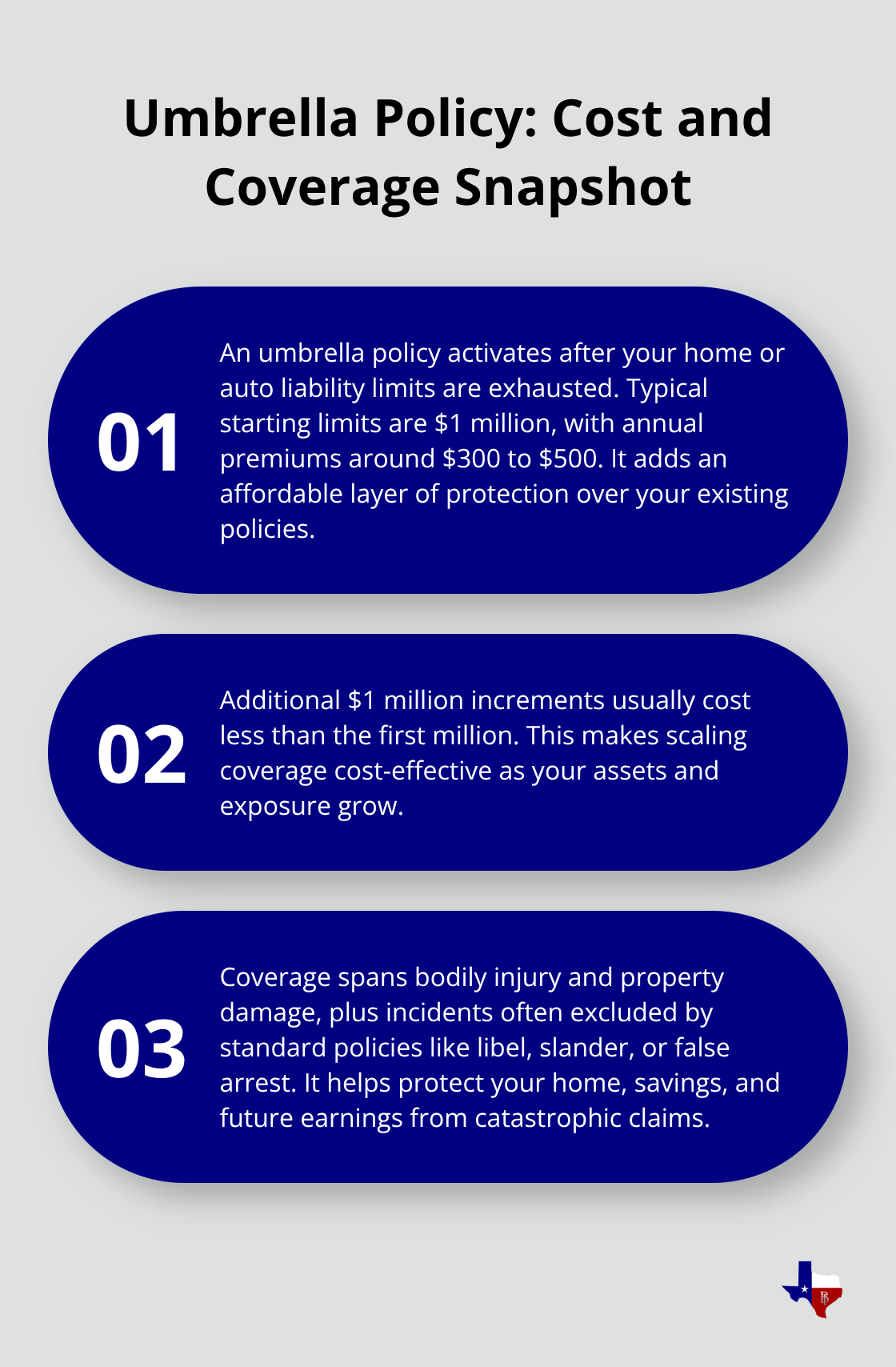
An umbrella policy is straightforward: it’s extra liability coverage that activates only after your home or auto insurance pays out its limits. Your homeowner’s policy with a $300,000 liability limit or your auto policy with $250,000 in coverage has a ceiling. When a lawsuit or claim exceeds those thresholds, you become personally responsible for the rest. That’s where personal liability coverage steps in. A typical umbrella policy starts at $1 million in additional coverage and costs between $300 to $500 annually for that $1 million limit, according to industry data. Each additional $1 million of protection typically costs less than the first million, making it one of the most affordable ways to shield your assets. The policy covers bodily injury liability, property damage liability, and often expenses that your standard policies exclude entirely-like libel, slander, or false arrest claims.
Understanding How Coverage Layers Work
Your umbrella policy sits on top of your existing coverage, not beside it. If you cause a car accident that injures multiple people and the total damages reach $900,000, but your auto policy only covers $300,000, your umbrella picks up the remaining $600,000. You don’t file two separate claims; instead, your primary policy pays first, then your umbrella covers the gap. Most insurers require minimum underlying coverage before they’ll sell you umbrella protection-typically around $250,000 for auto liability and $300,000 for homeowners liability. This requirement exists because umbrella policies function as a last resort, not a replacement for adequate primary coverage. Keeping all your policies with the same insurer matters more than most Texas residents realize. When your auto, home, and umbrella policies come from one company, renewal dates align, coverage coordinates seamlessly, and you often qualify for multi-policy discounts that reduce your overall costs.
Determining Coverage Limits for Your Situation
The right umbrella limit depends on what you have to protect. Start by calculating your net worth: home equity, savings, retirement accounts, and investments. Then add your potential future earnings. Someone with $500,000 in home equity, $200,000 in savings, and thirty years of earning potential should seriously consider $1 million to $2 million in umbrella coverage. Texas homestead exemptions protect a portion of your primary residence from creditors, which can influence how much coverage you actually need. If your home equity falls within your state’s exemption threshold, you may require less umbrella protection for that specific asset. However, IRAs and other retirement accounts have variable creditor protection under Texas law, so include their full value in your asset calculation. This rate environment makes now an ideal time to evaluate whether your current limits match your actual assets and risk exposure. Understanding your coverage needs sets the stage for recognizing which specific incidents your umbrella policy actually protects you against.
When Standard Coverage Falls Short in Texas
How Claims Exceed Primary Policy Limits
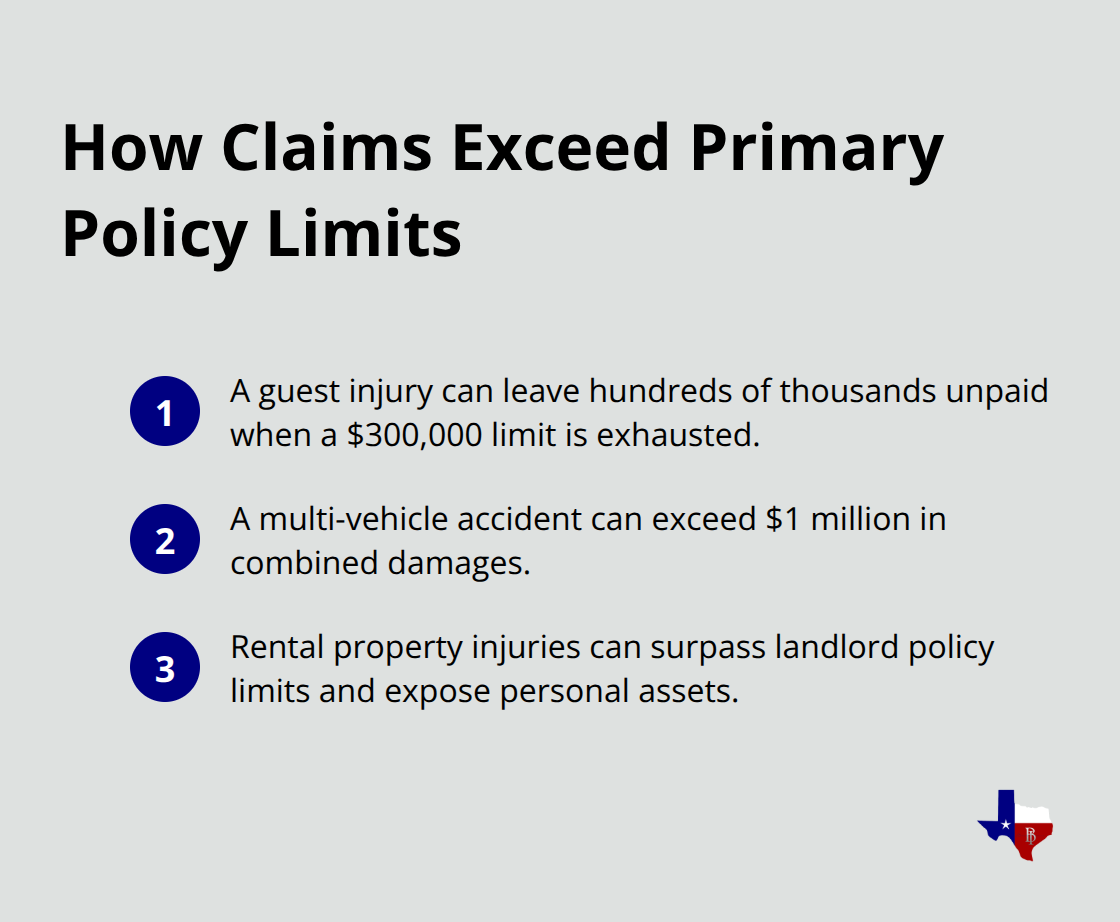
A $300,000 homeowners liability limit sounds adequate until a guest suffers a serious injury at your property and requires ongoing medical care costing $750,000. Your policy pays its $300,000 maximum, leaving you personally responsible for the remaining $450,000. That gap between what your primary insurance covers and what a lawsuit actually costs is exactly why umbrella policies exist.
In Texas, where property values continue climbing and legal judgments trend upward, standard coverage limits lag behind real-world claim expenses.
A multi-vehicle accident on a Texas highway involving serious injuries can easily generate medical bills, lost wages, and pain-and-suffering awards exceeding $1 million. If your auto policy maxes out at $250,000 or $300,000, you face the prospect of defending yourself with personal assets. The same risk applies to rental property owners. A tenant or guest injured on your rental unit can sue for damages that surpass your landlord policy limits, exposing your entire net worth to garnishment and asset seizure.
Why Texas Assets Remain Vulnerable
Texas homestead exemptions protect primary residence equity up to certain thresholds, but that protection disappears for other assets. Your savings accounts, investment portfolios, and future earnings remain vulnerable without additional liability coverage. An umbrella policy transforms this exposure into manageable protection.
Real Incidents That Trigger High-Cost Claims
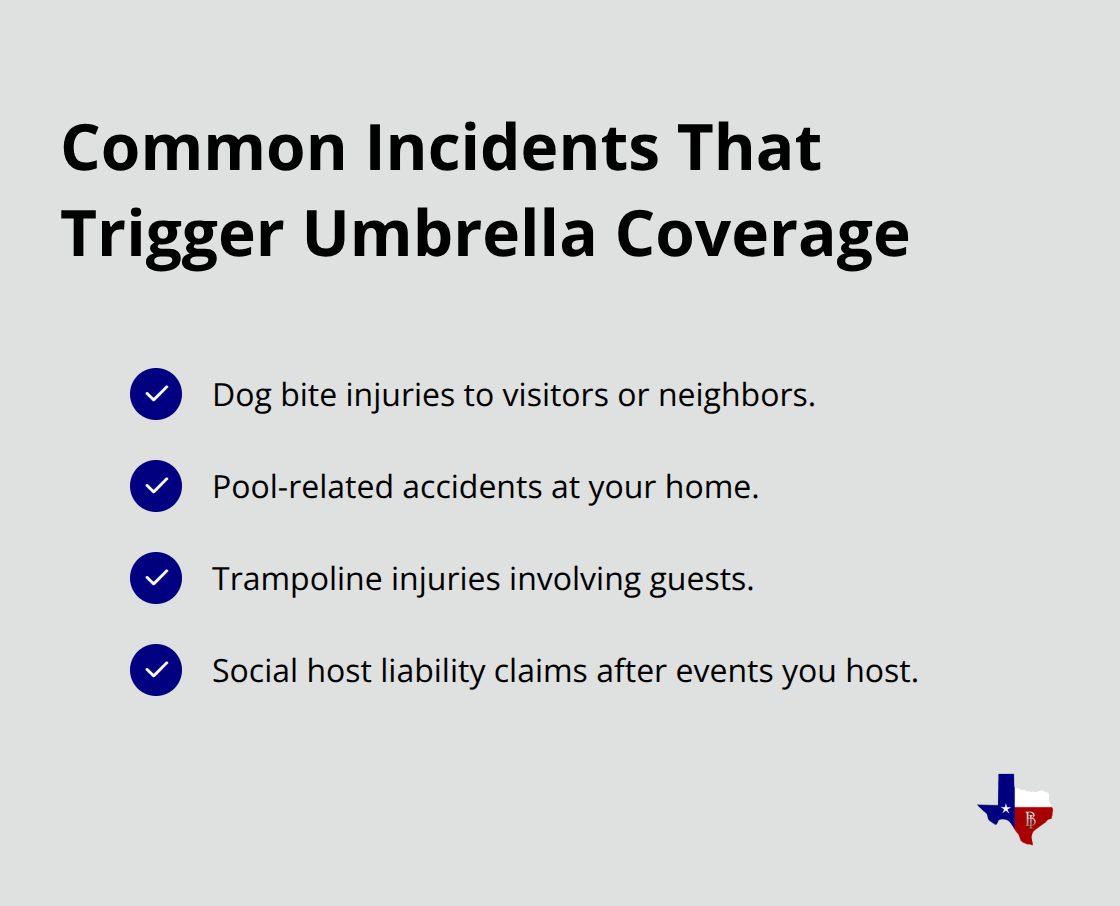
High-cost claims happen more frequently than most Texas residents expect. Dog bite incidents alone can result in significant medical and legal expenses when severe injuries occur. A single incident involving a pool or trampoline at your home can trigger liability claims as courts award substantial damages for permanent injuries. Social host liability claims, where someone injured at your event sues you for serving alcohol or inadequate supervision, regularly reach substantial amounts in damages.
The Current Rate Environment and Affordability
The VIU by HUB 2026 rate report indicates that umbrella insurance rates are stabilizing after two years of sharp increases, with most policies increasing by less than 10 percent annually. This rate environment means premiums remain reasonable relative to the protection they provide. Someone with $500,000 in home equity, $200,000 in savings, and three decades of earning potential faces real financial risk from a single catastrophic claim. That person needs umbrella coverage. So does anyone with a teenage driver in the household, frequent social gatherings, rental properties, or a visible online presence that could trigger defamation claims.
The cost of $300 to $500 annually for $1 million in coverage represents genuine financial protection against events that could otherwise eliminate decades of wealth building. Without that coverage, one lawsuit can force you to sell assets, drain retirement accounts, or face wage garnishment for years. Understanding which specific incidents your umbrella policy covers helps you recognize the real protection it provides when liability claims arise.
What Your Umbrella Policy Actually Covers
Your umbrella policy activates in situations where your primary insurance reaches its limit and stops paying. Texas residents face specific liability risks that standard homeowners and auto policies simply don’t address adequately.
Bodily Injury and Property Damage Claims
Bodily injury claims from serious accidents represent the most common umbrella trigger. If you cause a multi-vehicle collision on I-35 with three injured parties whose combined medical bills, lost wages, and pain-and-suffering awards total $850,000, but your auto policy maxes out at $300,000, your umbrella covers the remaining $550,000 gap. Property damage liability works the same way. A fire that spreads from your home to your neighbor’s house can generate repair costs exceeding $600,000 easily in Texas’s current real estate market. Your homeowners policy covers only up to its stated limit, typically $100,000 to $300,000 for liability. The umbrella picks up everything beyond that threshold. These scenarios happen regularly to Texas residents who thought their primary coverage was sufficient.
Coverage for Excluded Incidents
Your umbrella policy also covers incidents that your standard policies exclude entirely, and this distinction matters tremendously. Libel and slander claims fall into this category. If you post something damaging about someone online or make a false statement that harms their reputation or business, your homeowners and auto policies won’t defend you. An umbrella policy does. False arrest and malicious prosecution claims similarly receive no coverage under standard policies but full protection under umbrella. Rental property owners face particular exposure here. A tenant injured on your rental unit can sue for bodily injury, but they can also claim you violated their rights or acted with malice. The umbrella covers both the injury claim exceeding your landlord policy limits and the legal defense costs for the additional allegations.
Legal Defense and Attorney Costs
Legal defense expenses drain coverage quickly. Your primary policy’s limit gets consumed by defense costs alone, leaving nothing for the actual damages. An umbrella policy covers these defense expenses separately in many cases, meaning your protection extends further than the stated coverage limit suggests.
Common Triggering Incidents
Dog bites, pool injuries, trampoline accidents, and social host liability claims all trigger umbrella protection when underlying policy limits exhaust. Each of these incidents can result in substantial medical expenses and legal judgments that surpass what your standard homeowners or auto policy provides. The key distinction is that your umbrella doesn’t replace your primary coverage-it extends your financial protection when real-world incidents generate damages larger than what standard insurance can handle.
Final Thoughts
An umbrella policy fills a gap that most Texas residents don’t recognize until a lawsuit threatens their home equity, savings, and future earnings. Your homeowners and auto insurance have limits, and real-world claims regularly exceed them. Umbrella policy benefits become clear when you face a $900,000 judgment but your auto policy covers only $300,000-that’s when the remaining $600,000 protection saves your financial future.
Calculate your net worth by adding home equity, savings, retirement accounts, and investments, then factor in your potential future earnings over the next decade or two. Someone with $500,000 in home equity and $200,000 in savings should carry at least $1 million in umbrella coverage, while those with greater assets or higher-risk situations-teenage drivers, rental properties, frequent entertaining-should consider $2 million or more. Texas homestead exemptions protect primary residence equity up to certain thresholds, but your other assets remain vulnerable without additional liability protection.
The current rate environment makes this the right time to evaluate your coverage, as rates stabilize after recent increases with most policies increasing by less than 10 percent annually going forward. Contact us at brooksinstx.com to discuss your umbrella protection needs and receive a personalized quote that matches your financial situation.
Disclaimer: The information provided in this blog is for general informational purposes only and does not constitute legal, financial, or insurance advice. Coverage options, terms, and availability may vary. Please consult with a licensed professional for advice specific to your situation