
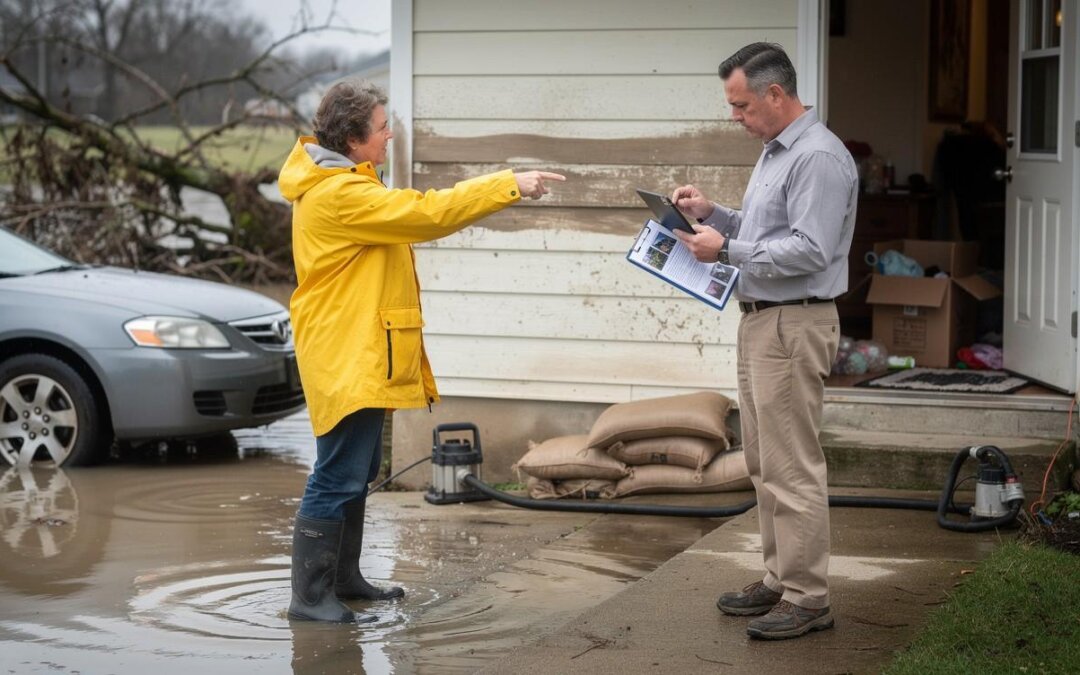
Hurricane flood insurance in Texas isn’t optional-it’s essential. Standard homeowners policies won’t cover flood damage, leaving thousands of Texas residents financially exposed when storms hit.
At Brooks Insurance, we help homeowners understand their flood risk and find the right coverage before hurricane season arrives. This guide walks you through your options and shows you how to protect your property today.
Why Your Homeowners Policy Won’t Protect You from Flood Damage
Standard Policies Exclude Flood Coverage
Most homeowners insurance does not cover flood damage, leaving thousands of Texas homeowners financially exposed when storms hit. Your homeowners policy covers wind damage, hail, and fire, but the moment water from flooding enters your home, you’re on your own without separate flood coverage. This gap exists because flood risk is unpredictable and catastrophic on a large scale-making it impossible for standard insurers to pool that risk affordably. If you have a mortgage from a government-backed lender and live in a high-risk flood zone, your lender will require you to carry flood insurance. Most Texas homeowners outside those designated zones skip it entirely, leaving themselves dangerously exposed.
The Scale of Flood Risk in Texas
The numbers tell a sobering story about flood risk in Texas. NOAA forecasts 8 to 14 named storms and 3 to 6 hurricanes for the Atlantic this season, with Colorado State University projecting a 48 percent chance that a named storm hits Texas. Since 1996, 99 percent of U.S. counties have experienced flooding, meaning flood risk extends far beyond coastal areas and traditional floodplains.
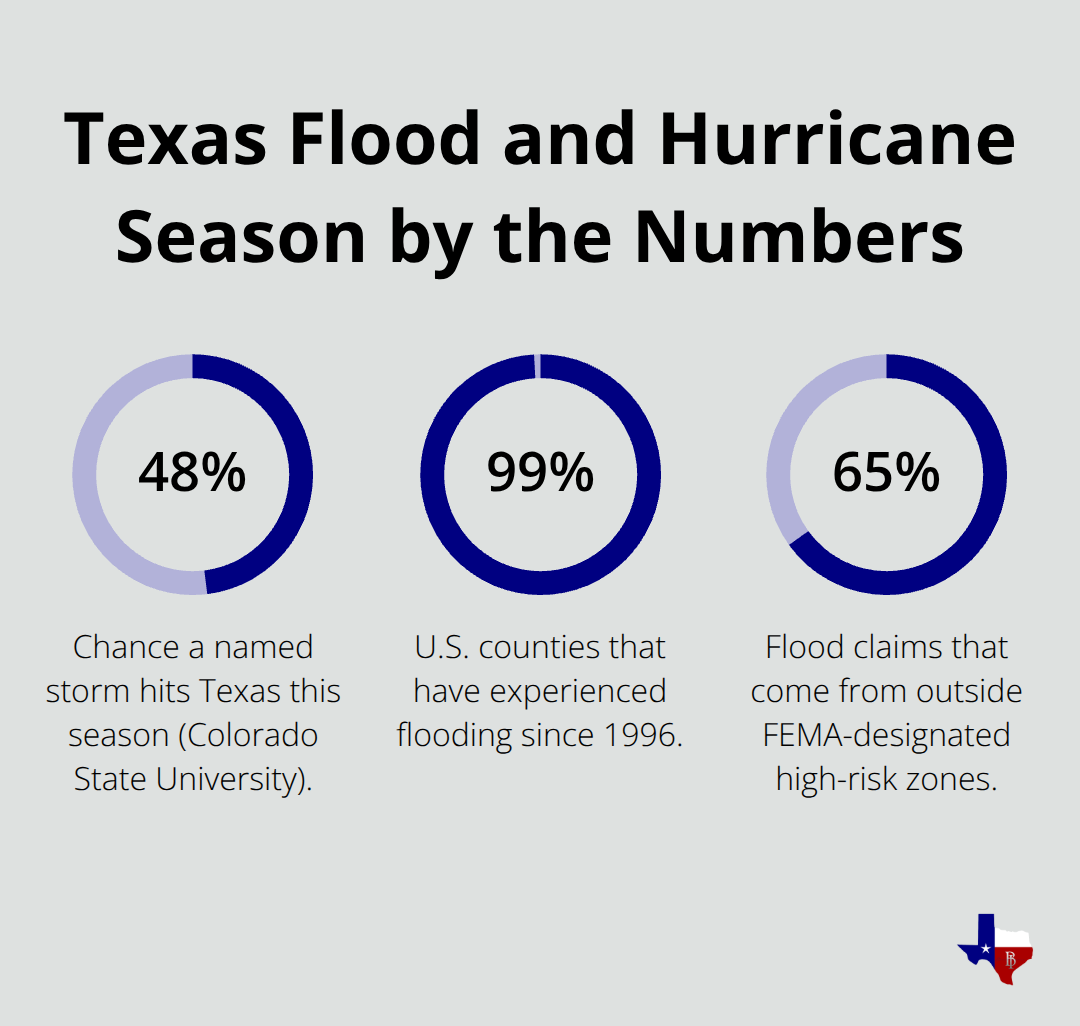
Just one inch of floodwater in a home causes more than $26,000 in damage on average, according to the National Flood Insurance Program. Yet 65 percent of flood claims come from areas outside high-risk flood zones designated by FEMA.
What Flood Claims Actually Pay Out
When Texans do file flood claims, they receive an average payout of around $68,000, which demonstrates the substantial financial protection flood insurance provides. This amount reflects the real costs homeowners face when water damages their property, belongings, and structural elements. Without flood coverage in place, you absorb these costs entirely from your own resources.
The Critical Timing Problem
The harsh reality is that waiting until a named storm approaches the Gulf Coast to buy coverage won’t work. Once a storm enters the region, many insurers stop selling new policies or policy changes, leaving you with limited options. Flood insurance through the National Flood Insurance Program takes 30 days to become active, so acting now during hurricane season is the only way to guarantee protection when storms arrive. This timing constraint means your decision to purchase coverage today directly determines whether you have protection tomorrow.
Your Flood Insurance Options in Texas
Understanding NFIP Coverage and How It Works
The National Flood Insurance Program stands as the nation’s largest single-line insurance program, protecting nearly 4.7 million policyholders with approximately 1.3 trillion dollars in coverage. NFIP operates through a network of more than 47 private insurance companies plus NFIP Direct, meaning you can purchase coverage through independent agents or directly from FEMA. The program accepts applicants from any of its 22,600 participating communities, and Texas qualifies. NFIP policies cover your building, contents, or both, with standard coverage limits that work for most homes.
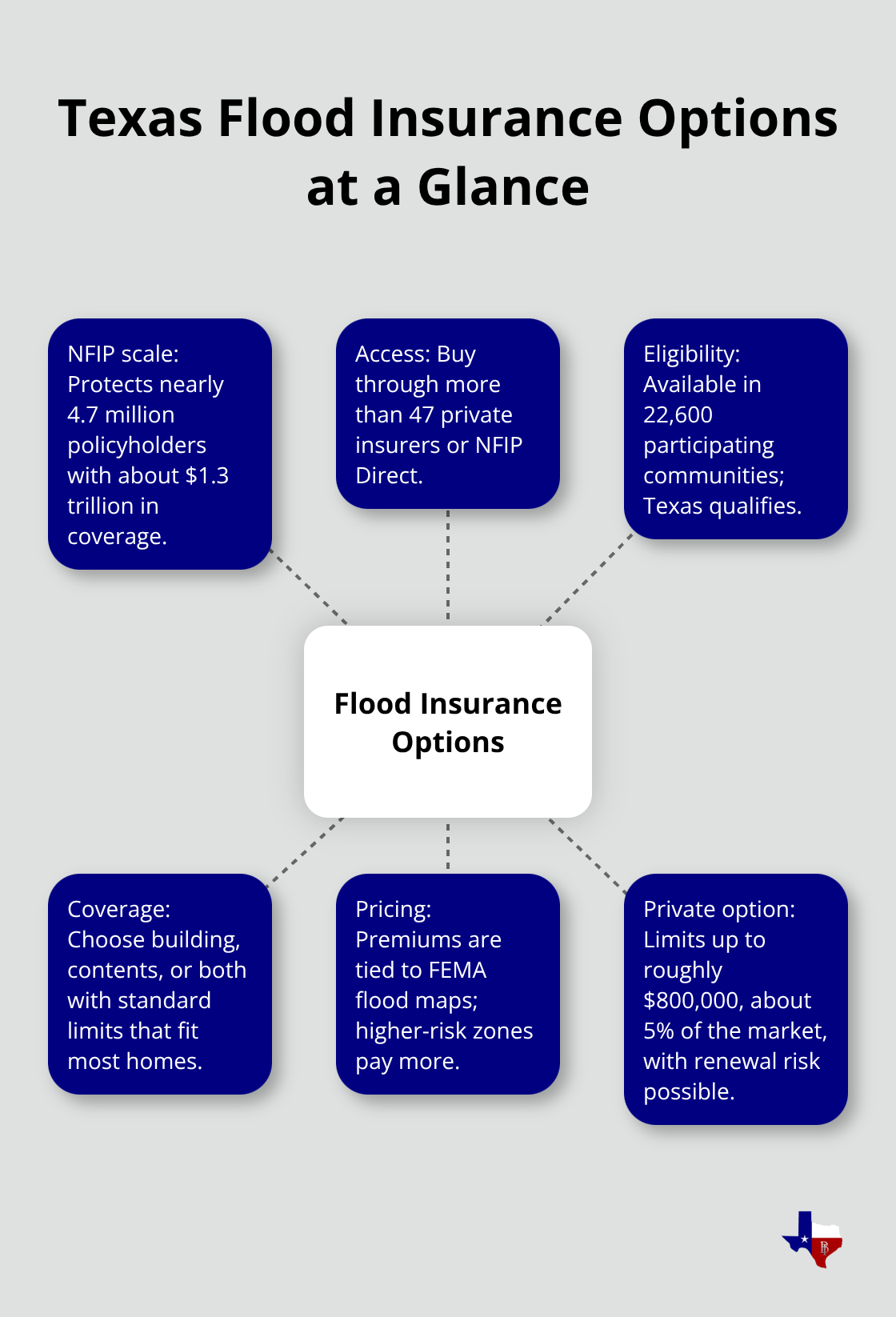
The trade-off is straightforward: NFIP premiums tie directly to FEMA flood maps, so properties in higher-risk zones pay significantly more. A property in a moderate-risk area might cost around 1,000 dollars annually for approximately 250,000 dollars in coverage, though your specific rate depends on elevation, construction type, and precise flood zone designation.
Private Flood Insurance as an Alternative
Private flood insurance has emerged as a viable alternative, with carriers like Beyond Floods and Neptune offering coverage limits up to roughly 800,000 dollars-substantially higher than traditional NFIP caps. Private insurers price risk differently than FEMA maps suggest, potentially offering better rates if their underwriting models deem your property lower risk. However, private flood markets remain selective, covering only about 5 percent of U.S. flood insurance, and availability varies significantly by location. Private policies also carry renewal risk; insurers can decline to renew your coverage, whereas NFIP provides more stability in that regard.
Assessing Your Actual Flood Risk
Your actual flood risk requires more than checking FEMA maps. Colorado State University projects a 48 percent chance that a named storm hits Texas this season, and since 65 percent of flood claims originate outside high-risk zones, your property’s elevation and drainage matter more than your address alone. Start by using the NFIP Quote Tool or visiting FloodSmart.gov to understand what coverage would cost in your area. If you live in a high-risk zone, your mortgage lender already requires flood insurance, so comparison shopping between NFIP and private options makes financial sense.
Comparing Coverage and Costs
For moderate or low-risk properties, most Texans skip flood coverage entirely-a dangerous assumption given that one inch of floodwater causes over 26,000 dollars in damage. Obtain quotes from both NFIP and private carriers, then evaluate coverage limits against your home’s replacement cost, not just its assessed value. Higher deductibles reduce premiums substantially but increase your out-of-pocket expense after a claim. If your home has mitigation features like elevation, improved drainage, or reinforced construction, private carriers may offer discounts that NFIP cannot. The 30-day waiting period for NFIP activation means any delay in purchasing now directly reduces your protection window before peak hurricane months arrive. Your next step involves taking action on these quotes and understanding the specific process to lock in coverage before storms threaten your Texas home.
Acting Now to Secure Your Flood Coverage
The window to purchase flood insurance before hurricane season peaks is closing fast. The National Flood Insurance Program requires 30 days for policies to activate, which means any delay in July or early August directly cuts into your protection period before September and October storms typically arrive. Contact an insurance agent or visit FloodSmart.gov to request quotes from both NFIP and private carriers simultaneously. Gather your property address, home value, and elevation information to get accurate pricing.
Compare the quotes side by side, focusing on coverage limits relative to your home’s replacement cost, not just the premium price. If your property has mitigation features like elevation above base flood elevation, improved drainage systems, or reinforced roof construction, mention these explicitly to private insurers, as they often provide discounts that NFIP cannot match. Once you select a policy, submit your application immediately. Do not assume you can purchase coverage once a named storm enters the Gulf; insurers typically halt new sales and policy modifications within days of a storm threat, leaving you unprotected.
Document Your Home Before Water Arrives
Preparation matters far more than reaction when flooding occurs. Create a detailed home inventory now by photographing or videoing every room, closet, and storage area, noting the condition of major appliances, furniture, and personal belongings. Store this inventory in cloud storage or email it to yourself so you can access it after a flood without relying on devices that may be damaged.
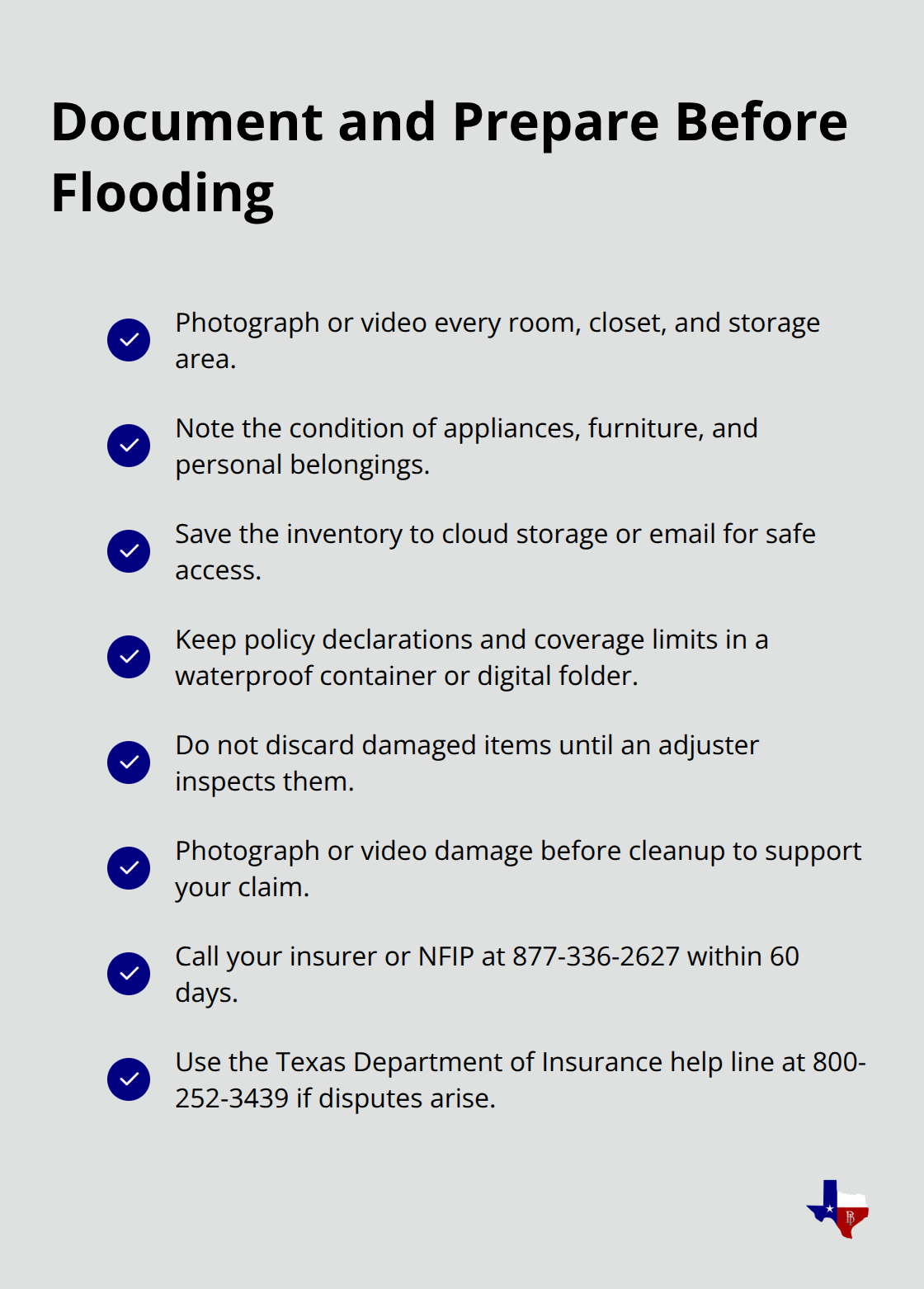
Keep copies of your flood insurance policy declarations and coverage limits in a waterproof container or digital folder.
When flooding actually happens, do not discard damaged items until an adjuster inspects them; photographing or videoing the damage before cleanup begins strengthens your claim significantly. Contact your insurer or the NFIP at 877-336-2627 within 60 days of the flood to file your claim. The Texas Department of Insurance help line at 800-252-3439 can assist if disputes arise.
Understand What Your Policy Covers
NFIP policies do not cover additional living expenses if you must relocate temporarily, though some homeowners policies may include this protection separately. Wind damage and flood damage are treated as distinct claims under most policies, so clarify which coverage applies to each type of loss with your agent before a storm arrives. This distinction matters because your claim outcome depends on accurate classification of the damage.
Review and Adjust Coverage Annually
Your flood insurance needs may change as your home’s value increases or as you complete property improvements. Review your policy annually before hurricane season begins, updating coverage limits if you have invested in home renovations or added valuable possessions. If you initially chose NFIP coverage but now qualify for private flood insurance due to mitigation improvements, request quotes from private carriers to compare pricing.
Conversely, if private insurers decline to renew your policy, switching back to NFIP ensures continuous coverage without gaps. Raising your deductible from $1,000 to $2,500 or $5,000 can reduce premiums substantially, but only if you have sufficient savings to cover that out-of-pocket amount after a flood. Properties outside designated high-risk flood zones often carry lower premiums, but since 65 percent of flood claims originate outside these zones according to FEMA data, low-risk designation should never prompt you to skip coverage entirely.
Final Thoughts
Hurricane flood insurance in Texas protects your home when standard policies cannot. One inch of floodwater causes over $26,000 in damage, yet 65 percent of flood claims originate outside high-risk zones designated by FEMA. NOAA forecasts 8 to 14 named storms this season, with Colorado State University projecting a 48 percent chance that a named storm hits Texas, making action today non-negotiable. Once a storm enters the Gulf, insurers stop selling new policies within days, and the 30-day activation period for flood insurance means your decision now directly determines your coverage tomorrow.
The National Flood Insurance Program covers nearly 4.7 million policyholders through 47 private companies and NFIP Direct, offering building and contents coverage in 22,600 participating communities across Texas. Private flood insurers provide higher coverage limits up to roughly $800,000 and may offer better rates if their underwriting models view your property as lower risk than FEMA maps suggest. People with flood insurance receive average claim payments around $68,000, demonstrating real financial protection when floods strike your home.
Start now by gathering your property address, home value, and elevation information, then request quotes from both NFIP and private carriers simultaneously. Document your home with photos and videos, store copies of important documents safely, and understand whether your property qualifies for mitigation discounts. Contact us at Brooks Insurance today to compare your hurricane flood insurance options and lock in protection before the window closes.
Disclaimer: The information provided in this blog is for general informational purposes only and does not constitute legal, financial, or insurance advice. Coverage options, terms, and availability may vary. Please consult with a licensed professional for advice specific to your situation