
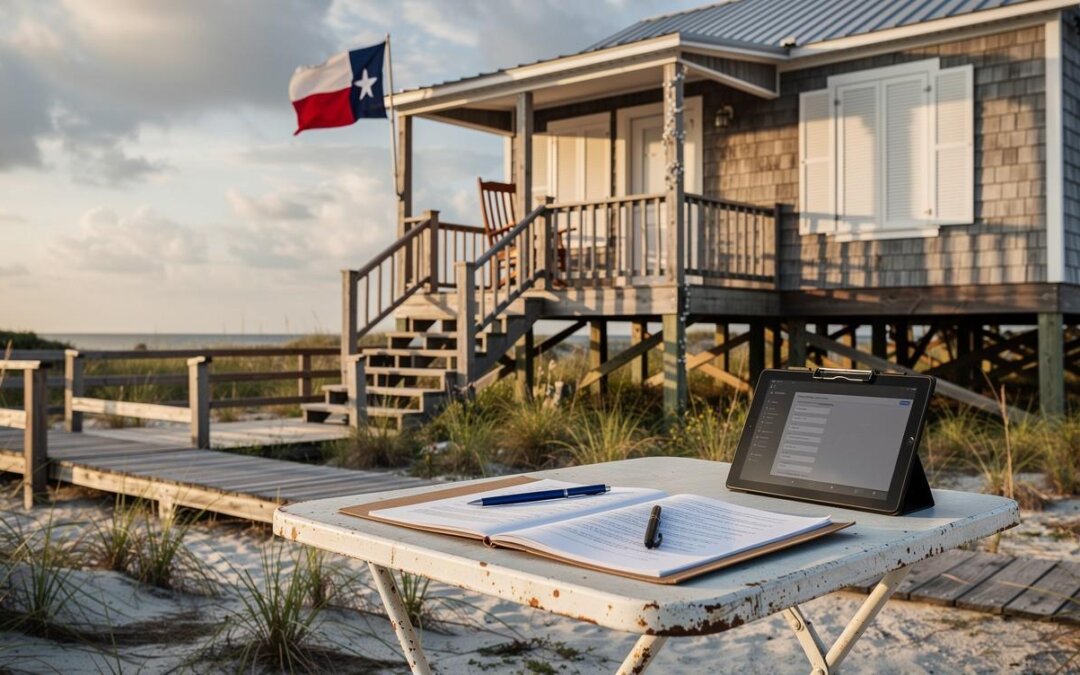
Coastal homes in Texas face unique threats that standard homeowners policies simply don’t cover. Wind, storm surge, and flooding can devastate your property and finances in a single event.
At Brooks Insurance, we help Texas coastal homeowners understand what protection they actually need. This guide walks you through the risks, coverage options, and steps to safeguard your seaside investment.
What Your Coastal Home Insurance Actually Needs to Cover
Coastal homeowners in Texas operate in a market shaped by real data. According to the Texas Department of Insurance, the state’s homeowners insurance market held approximately 8.2 million active policies in 2025, with an average annual premium of $3,506. However, these figures mask a critical truth: standard homeowners policies exclude wind and hail damage in coastal areas, leaving your seaside property dangerously exposed. A typical homeowners policy covers fire, theft, and weather events like rain, but it specifically excludes windstorm damage in Texas coastal counties. This gap exists because wind risk concentrates heavily along the coast, where hurricanes and tropical storms strike with predictable frequency.
The Cost of Unprotected Losses
Hail losses alone cost Texas homeowners $4.9 billion in 2024 and $4.8 billion in 2023, according to the Texas Statistical Plan for Residential Risks. Your standard policy will not pay for these losses. Wind damage in 2024 reached $2.2 billion, and fire losses topped $1.1 billion that same year. You must layer additional coverage on top of your standard homeowners policy to address these specific perils.
The Three-Layer Protection Framework
Coastal Texas requires three distinct insurance policies working together. First, you need a standard homeowners policy covering your dwelling, personal property, and liability for non-wind perils. Second, you must obtain windstorm and hail coverage through the Texas Windstorm Insurance Association (TWIA), which serves 14 coastal counties plus parts of Harris County east of Highway 146. TWIA coverage is separate from your homeowners policy and carries its own premium and deductible. Third, federal flood insurance through the National Flood Insurance Program is non-negotiable for any property in a flood zone, particularly on the coast where storm surge pushes saltwater inland.

The Texas Office of Public Insurance Counsel publishes the Homeowners Storm Guide specifically to explain these three layers and help you understand what each covers. Without all three policies, you face financial ruin from a single coastal storm.
Why Competition Works in Your Favor
Texas has 157 homeowners insurers operating across 81 groups, creating genuine competition for your business. Direct written premiums reached $19.75 billion as of July 2026, according to the Texas Department of Insurance. Rate changes have stabilized recently, with 2025 showing a minus 2.8 percent adjustment and 2026 hovering at plus 0.4 percent through July. This stability matters because it means shopping around today will yield meaningful savings compared to your current rate.
The largest carriers-State Farm, Allstate, USAA, and Farmers-control roughly 55 percent of the market, but smaller specialists often offer better rates for coastal properties. The market improved significantly in 2025, with underwriting losses narrowing to preliminary figures showing a 78.2 percent combined ratio, compared to 105.1 percent in 2023. This improvement translates to insurers becoming more willing to write coastal business and offer competitive pricing. If you last shopped for coverage more than two years ago, your rate almost certainly exceeds current market pricing for comparable coverage.
Finding Your Right Coverage Match
Many Texas coastal homeowners discover coverage gaps only after a loss, when their insurance agent explains what was never covered. The solution lies in understanding your specific property risks and matching them to the right combination of policies. Your next step involves assessing which perils pose the greatest threat to your seaside home and determining the coverage limits that protect your investment adequately.
What Threatens Your Coastal Texas Home Most
Wind and Hail: Your Largest Financial Exposure
Wind and flooding represent the two perils that will bankrupt coastal Texas homeowners fastest. Wind damage in Texas reached $2.2 billion in 2024 according to the Texas Statistical Plan for Residential Risks, and that figure excludes the catastrophic years when a major hurricane makes landfall. Hail compounds the wind problem, costing homeowners $4.9 billion in 2024 alone. Your standard homeowners policy excludes both perils in coastal counties, which means you absorb every dollar of these losses personally.

This is not theoretical risk. Between 2021 and 2024, Texas homeowners filed claims for wind and hail damage totaling over $13 billion. If your home sits within 20 miles of the Gulf Coast or in one of the 14 TWIA-eligible coastal counties, wind and hail damage represents your single largest financial exposure. The question is not whether a damaging wind event will occur, but when it occurs and whether you own the right coverage.
Water Damage Extends Beyond Hurricane Season
Flooding operates differently than wind because it strikes inland as well as along the coast, and storm surge during hurricanes pushes saltwater miles beyond traditional flood zones. The 2021 freeze and water damage event cost Texas homeowners $4.7 billion, demonstrating that water damage extends far beyond hurricane season. Erosion and storm surge gradually undermine coastal properties, reducing their value and making them harder to insure over time.
Properties on Mustang Island, North Padre Island, and Bolivar Peninsula face accelerated erosion rates that insurance companies monitor closely when deciding whether to renew coverage. Storm surge during a major hurricane can push 10 to 15 feet of water inland, affecting homes that sit well above traditional base flood elevation.
Act on Flood Insurance Before Storm Season Arrives
Federal flood insurance through the National Flood Insurance Program covers storm surge damage, but only if you purchase the policy before a storm warning is issued for your area. Many coastal homeowners wait until hurricane season arrives to buy flood coverage, by which time insurers stop selling new policies. If your property sits in a flood zone or within three miles of the coast, you should obtain flood insurance immediately, not when a storm approaches.
The cost averages $800 to $1,200 annually for coastal properties, but a single water damage claim without coverage will exceed $100,000 easily. Your next step involves identifying which specific perils pose the greatest threat to your property and determining the coverage limits that actually protect your investment.
How to Choose the Right Coastal Coverage for Your Texas Home
Map Your Property Against Coverage Zones
Start by identifying your property’s exact location against the three coverage zones that determine which policies you actually need. If your coastal Texas home sits within the 14 TWIA-eligible counties-Aransas, Brazoria, Calhoun, Cameron, Chambers, Galveston, Jefferson, Kenedy, Kleberg, Matagorda, Nueces, Refugio, San Patricio, or Willacy-or in parts of Harris County east of Highway 146, you must obtain windstorm coverage through TWIA rather than a standard homeowners policy. Next, check your property’s flood zone designation using FEMA’s flood maps. If you occupy any flood zone, federal flood insurance through the National Flood Insurance Program becomes mandatory for mortgage lenders and financially prudent for property protection. Properties in CBRA zones on Mustang Island, North Padre Island, and Bolivar Peninsula face additional restrictions where FEMA flood insurance may not be available, requiring you to explore alternative risk management strategies before purchasing.
Set Coverage Limits to Match Your Actual Exposure
Once you understand which policies your location demands, compare coverage limits against your actual exposure. The Texas Department of Insurance recommends dwelling coverage equal to your home’s full replacement cost, not its market value, since coastal construction costs run higher than inland rebuilds due to elevated construction standards and material sourcing challenges. Your personal property limit should cover your contents at 70 to 80 percent of dwelling coverage, though coastal homeowners frequently underestimate this amount and face partial claim denials after storms.
TWIA deductibles typically range from $1,000 to $5,000, and selecting higher deductibles reduces your windstorm premium by 10 to 20 percent, but only if you can absorb that out-of-pocket cost without financial strain. Flood insurance deductibles operate separately and start at $500, with higher deductibles available to reduce premiums for properties with lower flood risk profiles.
Compare Rates Across Multiple Carriers
Shopping across multiple carriers reveals dramatic premium differences for identical coverage. Rate differences of 20 to 40 percent for the same dwelling and personal property limits occur regularly in the Texas coastal market due to each insurer’s unique assessment of wind and hail risk. The Texas Department of Insurance publishes rate filings through the System for Electronic Rates and Forms Filing, allowing you to research how different carriers price coastal risk, though most homeowners find this data overwhelming without professional interpretation.
An independent agent can access quotes from multiple top-rated insurers simultaneously, eliminating the tedious process of contacting each company individually. Your licensed agent reviews your specific property characteristics-construction year, roof condition, distance from water, elevation, and prior claims history-to identify which carriers offer the best rates for your situation.
Maximize Discounts and Policy Bundling
Your credit score influences premium pricing at most insurers, with score improvements of 50 points potentially reducing annual premiums by $100 to $200 across your full insurance portfolio. Bundling homeowners, auto, and umbrella policies with a single carrier typically generates 10 to 25 percent savings compared to purchasing policies separately. Properties with monitored security systems or smoke alarms may qualify for additional discounts ranging from 5 to 10 percent, though you must ask each insurer specifically about these programs since they don’t advertise them uniformly.

An independent agent guides you through these discount opportunities and ensures your policy selections align with your financial situation and risk tolerance, avoiding both underinsurance that leaves you vulnerable and overinsurance that wastes premium dollars on coverage you don’t need.
Final Thoughts
Protecting your coastal Texas home requires action across three distinct insurance layers, and waiting costs you money while exposing your property to catastrophic loss. Your standard homeowners policy handles fire and theft, TWIA windstorm coverage protects against the wind and hail that devastated Texas properties for over $13 billion between 2021 and 2024, and federal flood insurance covers the water damage that strikes during hurricane season and beyond. Without all three policies working together, a single coastal storm wipes out your financial security.
The Texas insurance market offers genuine competition that works in your favor, with 157 homeowners insurers competing for your business and rate changes stabilizing at modest levels. Shopping for coastal home insurance Texas coverage today yields meaningful savings compared to policies purchased years ago, and your credit score, bundled policies, and available discounts can reduce premiums by hundreds of dollars annually. An independent agent reviews your dwelling’s construction year, roof condition, elevation, and prior claims history to match you with carriers that price your risk accurately and offer the discounts you qualify for.
We at Brooks Insurance have spent over 50 years helping Texas homeowners navigate complex insurance decisions, and our licensed agents are available by phone or email to answer your questions about coastal coverage. Contact us at brooksinstx.com to start your coastal home insurance review today and secure the protection your property actually needs.
Disclaimer: The information provided in this blog is for general informational purposes only and does not constitute legal, financial, or insurance advice. Coverage options, terms, and availability may vary. Please consult with a licensed professional for advice specific to your situation