
Running a fleet in Texas means managing multiple vehicles, multiple drivers, and multiple risks. Fleet auto coverage in Texas protects your business from liability claims, accidents, and unexpected repair costs that can drain your budget fast.
At Brooks Insurance, we help Texas companies find the right coverage at rates that make sense. This guide walks you through the essentials so you can protect your vehicles and your bottom line.
What Fleet Auto Insurance Actually Covers
Fleet auto insurance isn’t optional for Texas businesses running multiple vehicles-it’s a legal and financial requirement. This coverage protects your company when a driver causes injury to someone else, damages another person’s property, or gets into an accident with an uninsured motorist. Texas has about 2.7 million small businesses, and many operate vehicles for work. If your business uses vehicles for any commercial purpose, a personal auto policy won’t protect you. Insurance companies specifically exclude business use from personal policies, leaving your company completely exposed to liability claims that could cost tens of thousands of dollars or more.
Fleet auto insurance fills that gap with liability limits that meet Texas’s minimum requirement of 30/60/25, meaning $30,000 per person and $60,000 per accident for bodily injury, plus $25,000 for property damage. Most Texas businesses need higher limits than the state minimum to protect themselves adequately.
The Real Risks Your Fleet Faces
Crowded roads, distracted driving, and a shortage of skilled commercial drivers create more accidents and bigger claims in Texas. According to the Texas Department of Transportation, commercial vehicle crashes remain a significant concern for fleet operators. Your drivers face liability exposure every single day they’re on the road, and one serious accident triggers medical bills, vehicle damage, lost income claims, and legal defense costs that spiral quickly. Uninsured and underinsured motorists pose another major problem-if one of your drivers hits someone without adequate insurance, your fleet coverage protects your company from that financial burden. Rising repair costs also make collision and comprehensive coverage essential. A single commercial vehicle repair costs $10,000 or more, and if your fleet operates in high-traffic areas or regions prone to weather damage, these losses add up fast. Fleet coverage protects your vehicles from collision damage, theft, weather events, and other non-collision losses so you can return to the road without draining cash reserves.
Coverage That Matches Your Business Type
Your fleet’s specific risks depend on what your vehicles do and where they operate. Construction companies face different exposures than delivery services or transportation providers. Vehicle size and equipment also affect your coverage needs-a large food truck with refrigeration and a deep fryer typically costs more to insure than a standard van because the equipment increases replacement costs. Location matters significantly; operations in big cities and weather-prone areas carry higher risk than rural routes. Travel radius affects your rates too (local routes are typically lower risk than regional or statewide driving). Understanding these factors helps you select coverage that actually protects your business rather than paying for unnecessary protection or leaving gaps that could cost you later.
Why Your Texas Business Can’t Wait
Your fleet represents a significant asset and a constant source of liability risk. Without proper coverage, a single accident forces you to pay settlements out of pocket, delay customer deliveries, and damage your business reputation. As an independent agency, we at Brooks Insurance represent multiple top-rated insurance companies, which means you get access to different coverage options and pricing that personal policies simply cannot offer. Understanding what your fleet actually needs is the first step toward protecting your business. The next section walks you through the specific types of coverage available and what each one protects.
What Each Coverage Type Actually Protects
Liability Coverage Forms Your Foundation
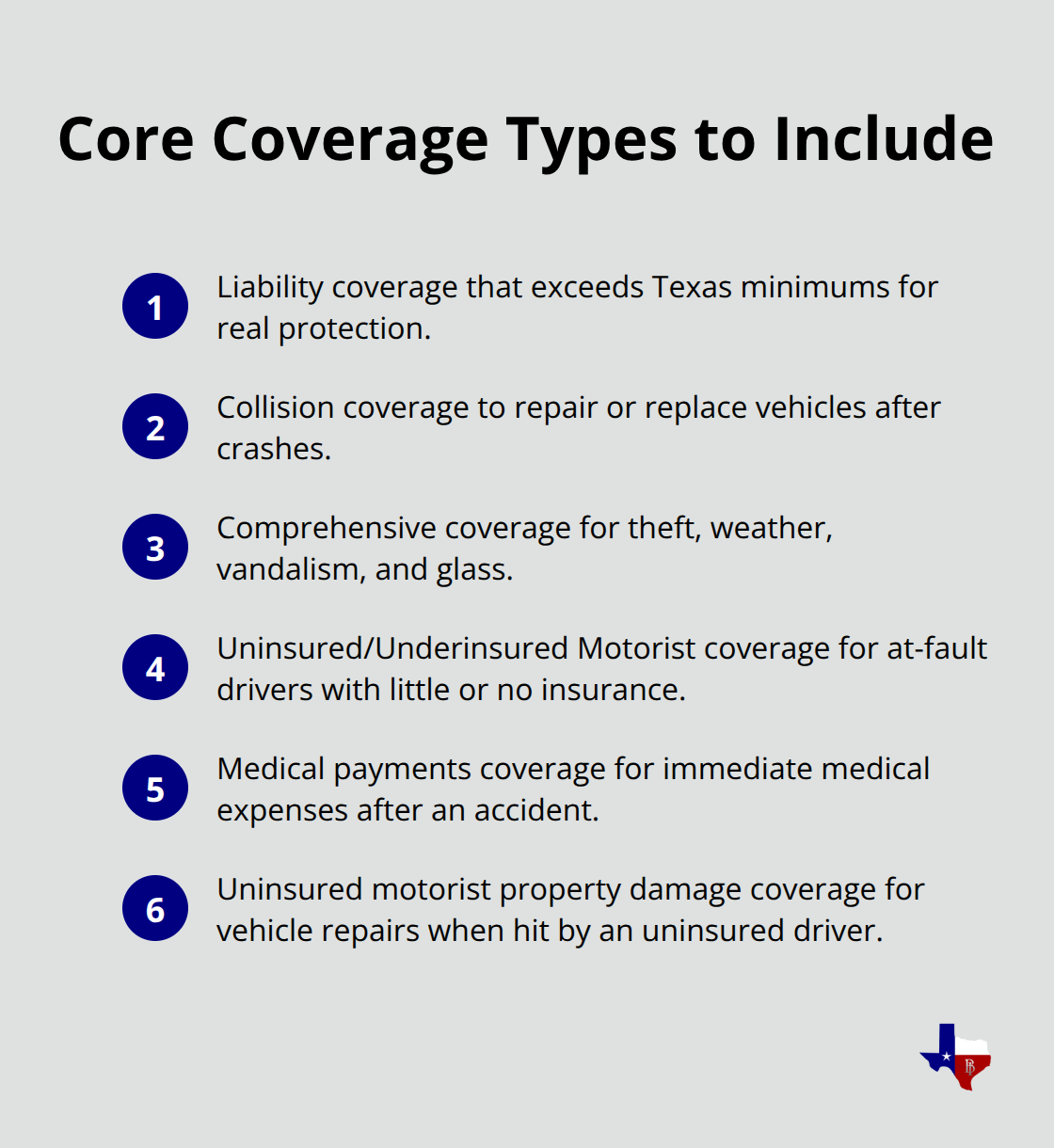
Liability coverage is non-negotiable and forms the foundation of any Texas fleet policy. This coverage pays for medical bills, lost wages, and property damage when one of your drivers injures someone or damages their vehicle or property. Texas requires a minimum of 30/60/25, but that’s genuinely insufficient for most fleets. A single serious injury claim easily exceeds $60,000, leaving your company responsible for the excess. Higher limits like 100/300/100 or 250/500/100 provide real protection without bankrupting your business when accidents happen.
Collision and Comprehensive Coverage Protect Your Assets
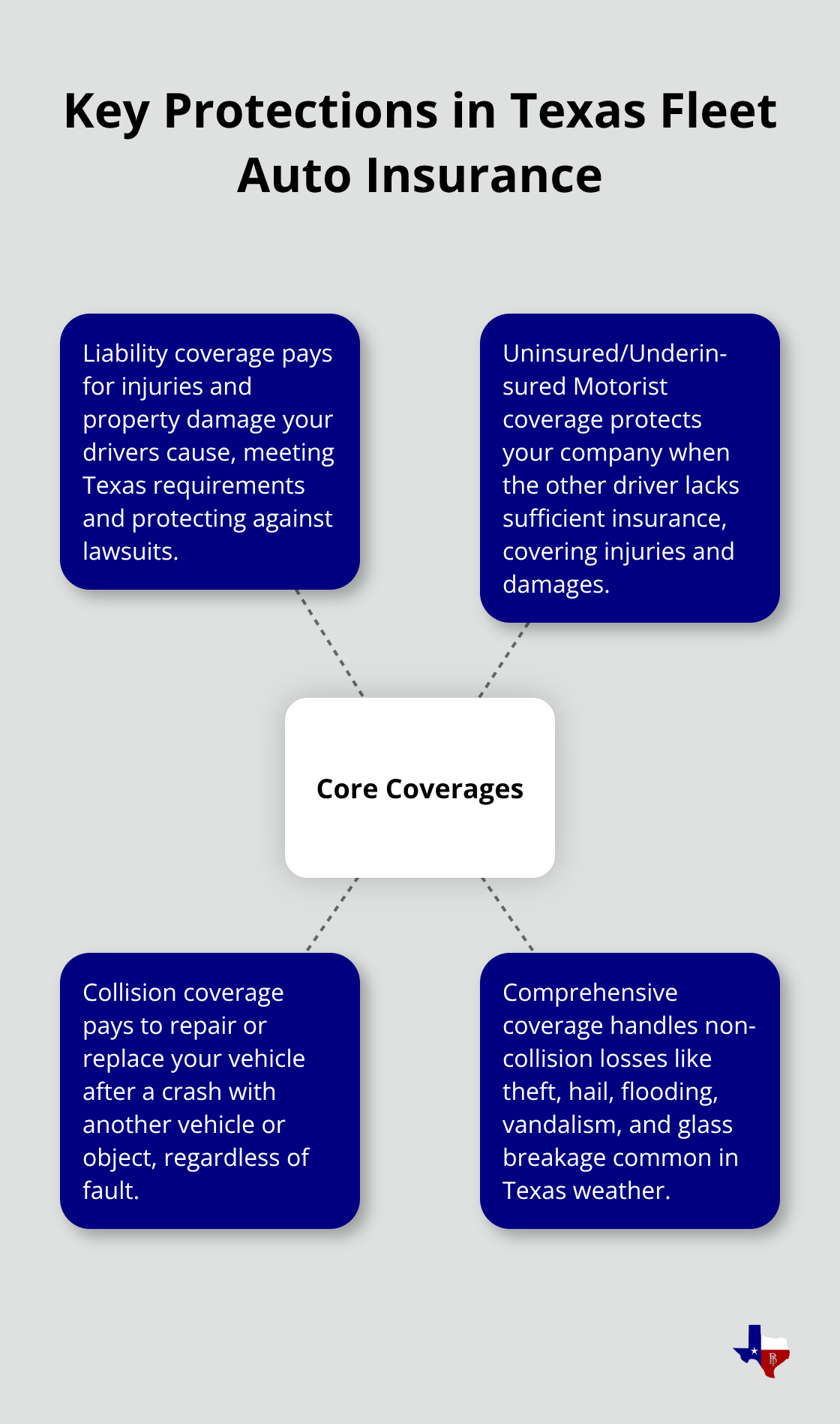
Collision coverage pays to repair or replace your vehicles after an accident with another vehicle or object, regardless of fault. This matters in Texas because repair costs for commercial vehicles run $10,000 or more per incident. Comprehensive coverage handles non-collision losses including theft, weather damage, vandalism, and glass breakage. Texas weather brings hail, flooding, and severe storms that damage fleets regularly, making comprehensive coverage essential rather than optional.
Uninsured Motorist Coverage Shields Your Company
Uninsured and underinsured coverage protects your drivers and company when someone without adequate insurance causes an accident. This is critical because many Texas drivers carry minimal coverage or none at all. If your driver hits an uninsured motorist and gets injured, this coverage pays your driver’s medical bills and lost wages that the at-fault driver cannot cover. Medical payments coverage covers immediate medical expenses for your drivers and passengers after an accident, regardless of who caused it. This speeds recovery and keeps your team from facing personal medical debt after a work-related injury. Uninsured motorist property damage coverage specifically protects your vehicles when hit by an uninsured driver, paying repair costs without relying on the other driver’s insurance.
Specialized Coverage Addresses Your Specific Operations
The right combination of these coverages depends entirely on your fleet’s operation. A construction company with dump trucks and heavy equipment needs robust collision and comprehensive protection because vehicle replacement costs run extremely high. A delivery service operating local routes might prioritize liability and medical payments because frequent stops and urban driving increase accident frequency. Equipment coverage becomes necessary if your fleet carries valuable tools or cargo. Garagekeepers coverage protects your business if you repair or store customer vehicles. These specialized options address specific operational needs that standard coverage ignores.
Match Coverage to Your Actual Risks
Your vehicle values, driver experience, routes, and industry all influence which coverages protect your business most effectively. Construction companies face different exposures than delivery services or transportation providers. Vehicle size and equipment also affect your coverage needs-a large food truck with refrigeration and a deep fryer typically costs more to insure than a standard van because the equipment increases replacement costs. Location matters significantly; operations in big cities and weather-prone areas carry higher risk than rural routes. Travel radius affects your rates too (local routes are typically lower risk than regional or statewide driving). Understanding what each coverage actually protects means you stop paying for irrelevant protection and start investing in coverage that prevents financial disaster when accidents occur. The next section examines the specific cost factors that shape your fleet insurance premiums and reveals practical strategies to reduce what you pay.
What Actually Drives Your Fleet Insurance Costs
Your fleet insurance premium depends on four concrete factors that insurers measure and price directly: your drivers’ safety records, your vehicle maintenance standards, how your fleet operates on the road, and your willingness to bundle policies.
Driver Safety Records Shape Your Premium Most
Driver history matters most because insurers review motor vehicle reports for the past three years, looking for accidents, violations, and claims. A single at-fault accident or moving violation increases your premium significantly, while a clean driving record qualifies you for discounts that compound across your entire fleet. If you employ ten drivers with clean records versus ten drivers with accidents or violations, your premium difference reaches thousands of dollars annually.
Screen drivers carefully before hiring and review their MVRs as part of your formal hiring process. Prioritize driving history in your selection criteria. Some insurers offer driver training programs that reduce premiums when you demonstrate your commitment to safety. Establish distracted driving policies and set clear consequences for violations. Insurers reward this approach with better rates because your actions prove that safety matters to your business.
Vehicle Maintenance Directly Lowers Your Costs
Well-maintained fleets experience fewer breakdowns and accidents, which directly influences your premium. Insurers expect documented maintenance schedules showing regular inspections, tire rotations, brake service, and fluid changes. Neglected vehicles fail on the road, causing accidents that spike your claims history and future premiums. A fleet operating with preventive maintenance costs less to insure than one that responds to problems after they occur.
Create a maintenance calendar and track all service records. This documentation protects your business and demonstrates to insurers that you take vehicle safety seriously. Regular maintenance prevents costly repairs and reduces the likelihood of accidents caused by mechanical failure.
Usage Patterns and Mileage Affect Your Risk Profile
Local delivery routes carry lower risk than regional or statewide operations, so your premium reflects this difference. If your fleet operates primarily within a 50-mile radius of your base, you pay less than a fleet covering multiple counties or states. Telematics systems track driver behavior and vehicle location, providing data that insurers use to identify unsafe driving patterns and target specific remediation.
Document your typical routes and mileage patterns. Share this information with your insurance agent because it directly impacts your quote. Fleets with predictable, localized operations typically qualify for lower premiums than those with unpredictable or extensive travel patterns.
Bundle Policies and Discounts Reduce Your Total Cost
Some insurers offer discounts for pay-in-full policies and when you bundle commercial auto with property or other coverage types. Bundling multiple policies with the same insurer typically saves more than purchasing coverage separately because insurers reward customer loyalty and reduced administrative costs. Texas has about 2.7 million small businesses, and many miss significant savings by not exploring bundle opportunities.
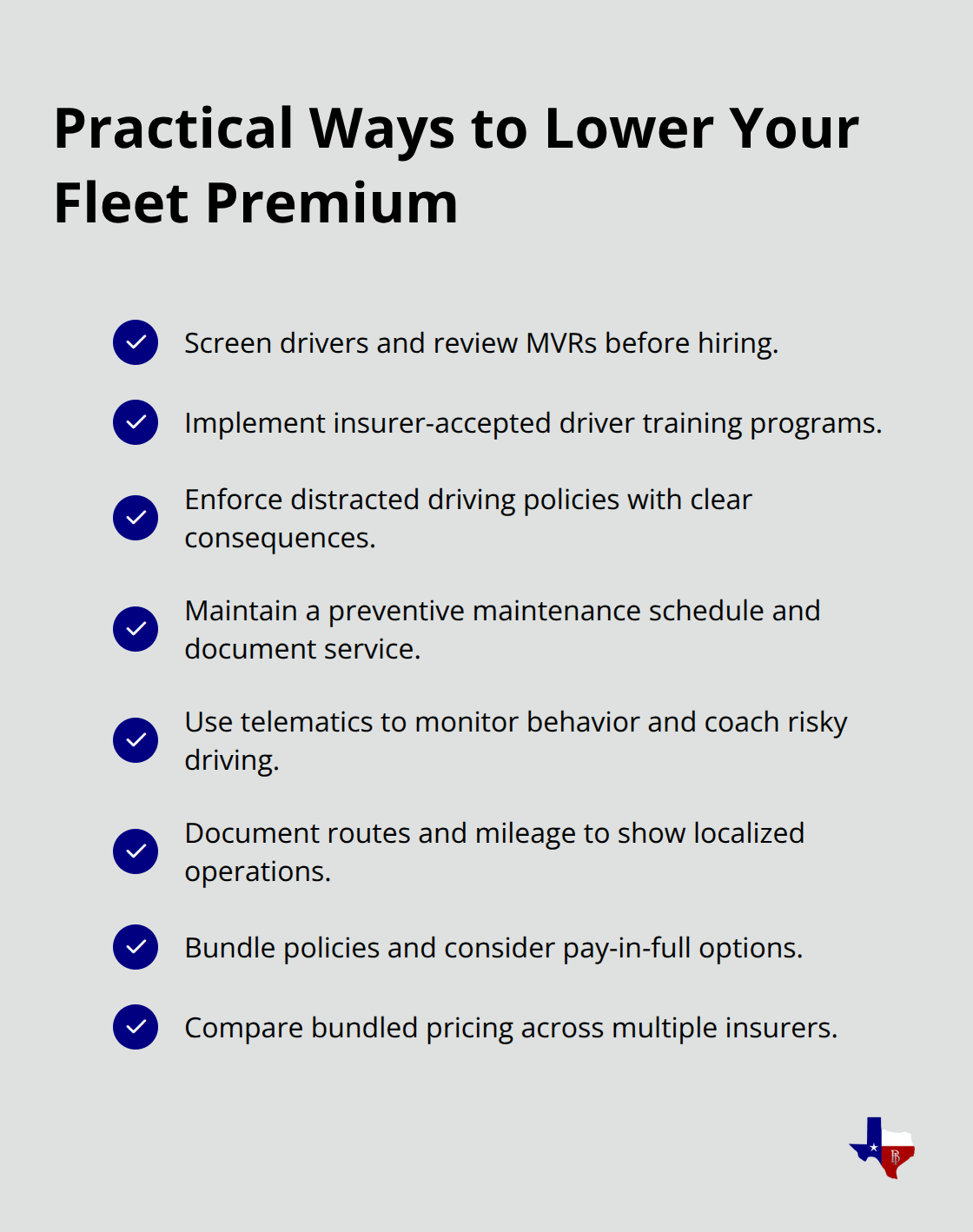
Compare bundled pricing across different insurers to find where your specific business gets the best overall rate. Higher liability limits and additional coverages like medical payments or equipment protection increase your premium, but choosing the right coverage combination prevents catastrophic out-of-pocket losses that dwarf any premium savings. The goal is selecting adequate protection at competitive pricing, not minimizing premium at the expense of real coverage gaps.
Final Thoughts
Finding the right fleet auto coverage in Texas requires more than comparing quotes online. We at Brooks Insurance have spent over 50 years helping Texas businesses protect their fleets, and as an independent agency, we represent multiple top-rated insurance companies so you access different coverage options and pricing that single carriers cannot offer. Our licensed agents work with you to build coverage that matches your actual operations, review your driver records and vehicle types, and recommend the right combination of liability, collision, comprehensive, and specialized coverages that fit your specific business.
We shop your coverage across multiple carriers to find competitive rates and identify bundle opportunities that reduce your total insurance expense. When you need to adjust your fleet size or add seasonal vehicles, we make those changes without forcing you to start from scratch with a new insurer, and we help you document driver training programs and maintenance schedules that qualify you for safety discounts. Your construction company’s needs differ from a delivery service’s needs, and your premium should reflect those differences rather than forcing you into a one-size-fits-all policy.
Our team remains accessible when you have questions about your coverage, need to file a claim, or want to review your policy. Contact Brooks Insurance today to discuss your fleet auto coverage Texas needs and get a quote that reflects your actual business operations.
Disclaimer: The information provided in this blog is for general informational purposes only and does not constitute legal, financial, or insurance advice. Coverage options, terms, and availability may vary. Please consult with a licensed professional for advice specific to your situation