

Getting accurate commercial auto policy quotes requires more than just a quick online search. The numbers matter-vehicle type, driver history, mileage, and location all shift your rates significantly.
At Brooks Insurance, we help Texas business owners cut through the confusion and find quotes that actually reflect their fleet’s risk profile. This guide walks you through what insurers evaluate, how to prepare your information, and how to compare options side by side.
What Drives Your Commercial Auto Rates
Vehicle Type and Weight Class
Vehicle type determines a massive portion of your premium. A heavy-duty truck over 26,000 pounds costs significantly more to insure than a cargo van under 10,000 pounds. This gap exists because heavier vehicles cause more damage in accidents and cost significantly more to repair. Older vehicles sometimes cost less to insure on collision and comprehensive coverage, but a 15-year-old truck with a questionable maintenance history will spike your rates if it signals higher mechanical failure risk. Age alone doesn’t drive rates down consistently-condition and reliability matter more than the calendar year.
Driver Records Shape Your Premiums
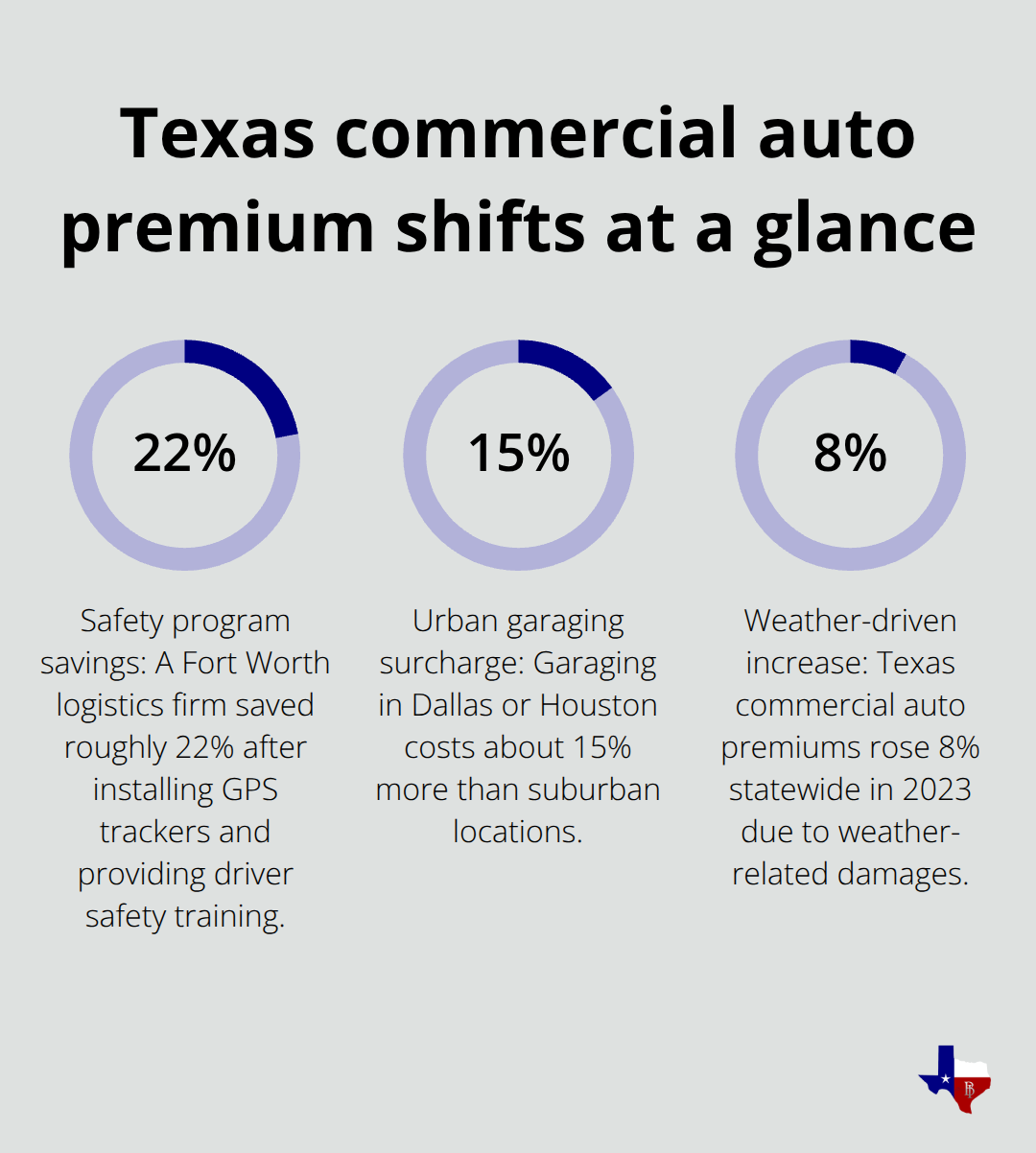
Your drivers’ records are underwriters’ clearest window into future claims. A single at-fault accident raises premiums by 20-40% in Texas, while a DUI can increase costs by 65-85%. Speeding violations over 15 mph add 20-30% to base rates. Drivers under 25 or over 65 see premium variations up to 35% from standard rates because both groups file more claims. This is why quarterly driver record checks and safety training programs make financial sense-a Fort Worth logistics firm saved roughly 22% after installing GPS trackers and providing driver safety training. One clean three-year history qualifies you for 35-50% cheaper rates than a record with violations or claims.
Mileage, Territory, and Weather Exposure
Vehicles driven more than 50,000 miles annually pay substantially higher premiums than those under 25,000 miles. Interstate operations typically increase costs by 25-35% relative to local routes within 50 miles. Operating beyond a 150-mile radius adds 15-30% to premiums according to The Hartford’s FleetAhead data. Urban garaging in Dallas or Houston costs about 15% more than suburban locations because city streets generate higher accident frequency. Houston’s I-610 loop alone sees around 600 crashes per month, elevating premiums for fleets operating there. Texas weather also drives rates up-premiums rose 8% statewide in 2023 due to weather-related damages, and 2024 hailstorms and tornadoes caused about 4 billion dollars in insured losses across the state.
Industry Risk Variations
High-risk industries like construction file about 30% more claims than office-based businesses, pushing construction sector premiums higher across the board. Your specific business type signals risk level to underwriters, and they price accordingly. Understanding where your operation falls on the risk spectrum helps you anticipate quote ranges and identify which coverage adjustments will matter most for your bottom line.
How to Gather Information for Accurate Quotes
Accurate quotes require precise details about your fleet, drivers, and operations. Vague or incomplete information forces underwriters to make conservative assumptions, which inflates your premium.
Document Your Fleet and Business Details
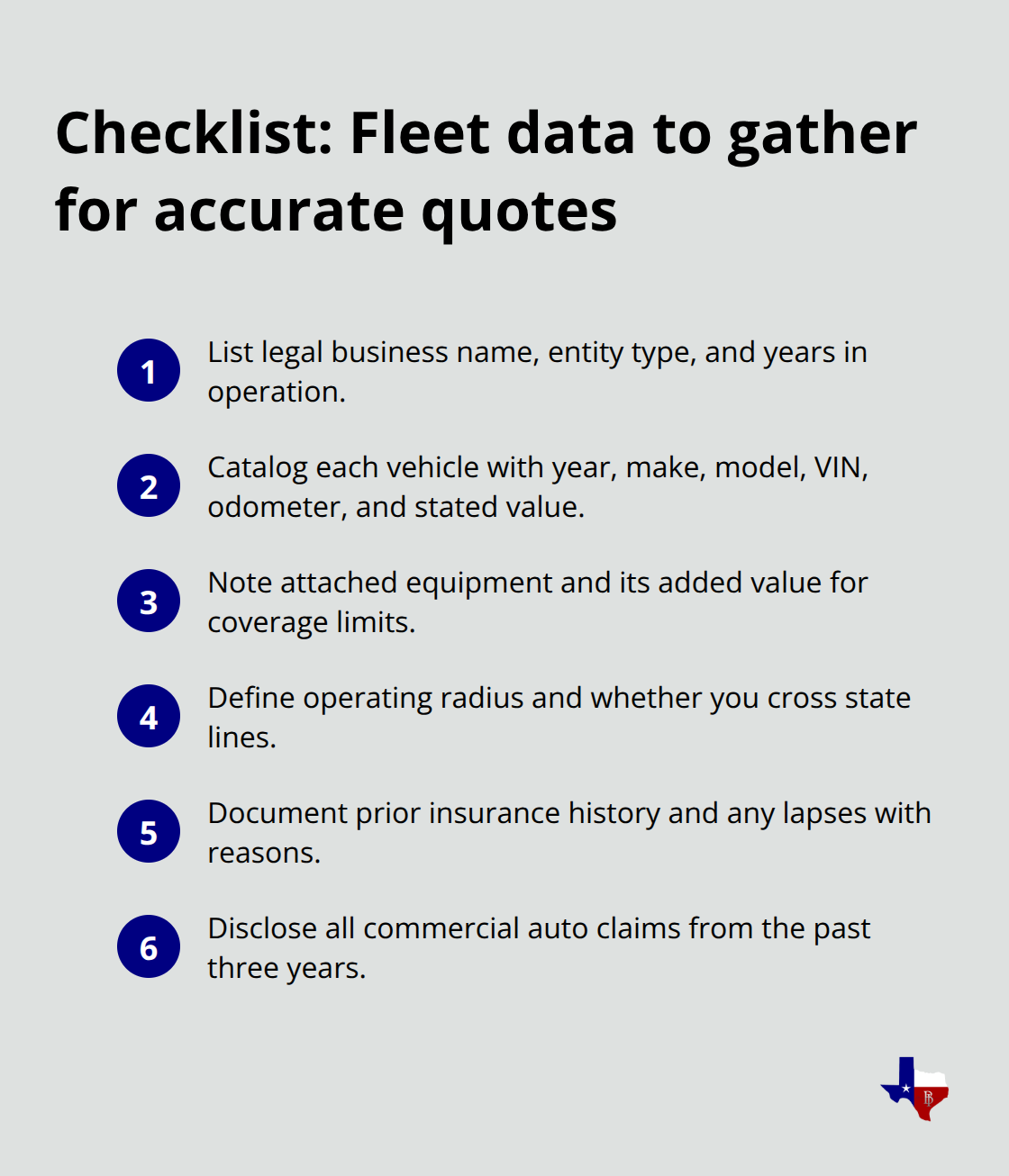
Start with your legal business name, entity type (LLC, corporation, or sole proprietorship), and how many years you’ve been operating. List every vehicle in your fleet with its year, make, model, VIN, current odometer reading, and value both with and without attached equipment. Heavy equipment bolted to a truck bed adds significant value and affects coverage limits, so don’t skip this detail.
Include your geographic operating radius and specify whether you operate across state lines. Interstate operations trigger FMCSA and USDOT requirements that directly impact your coverage eligibility and premium structure. Provide your current or past insurance history, including any lapses with explanations, and disclose every claim involving your commercial vehicles from the past three years.
Compile Complete Driver Information
Driver information requires equal attention to detail. Compile full names, dates of birth, and driver’s license numbers for every person operating company vehicles. Pull each driver’s complete record showing accidents, violations, license suspensions, and DUI history. Note which drivers hold commercial driver licenses (CDLs) since these affect coverage requirements and sometimes lower premiums.
Upload evidence of prior insurance if you have it-carriers often discount policies for businesses showing continuous coverage. Your business type matters enormously, so be specific: say delivery service, not transportation; landscaping contractor, not general labor.
Specify Your Operations and Usage Patterns
Specify your annual mileage per vehicle and whether your fleet operates primarily in urban areas like Dallas or Houston. This information helps underwriters assess your actual exposure and calculate premiums that match your risk level.
Determine Your Coverage and Deductible Strategy
Texas law requires minimum bodily injury coverage of at least $30,000 per person and $60,000 per accident, plus $25,000 for property damage. However, minimum coverage often leaves your business exposed-higher liability limits typically add only 15-20% to your premium but protect you far better.
Decide whether you want to keep Personal Injury Protection (PIP), which is automatically included in Texas policies unless you opt out in writing. For deductibles, understand that raising your collision deductible from $500 to $2,500 reduces premiums by 25-35% annually, but you’ll pay that amount out-of-pocket after a claim. Many operations find $1,000 comprehensive deductibles optimal for balancing cost and manageable out-of-pocket expenses.
With your documentation complete, you’re ready to request quotes from multiple carriers and compare how different insurers evaluate your specific fleet.
Comparing Quotes Side by Side
Why Multiple Quotes Matter
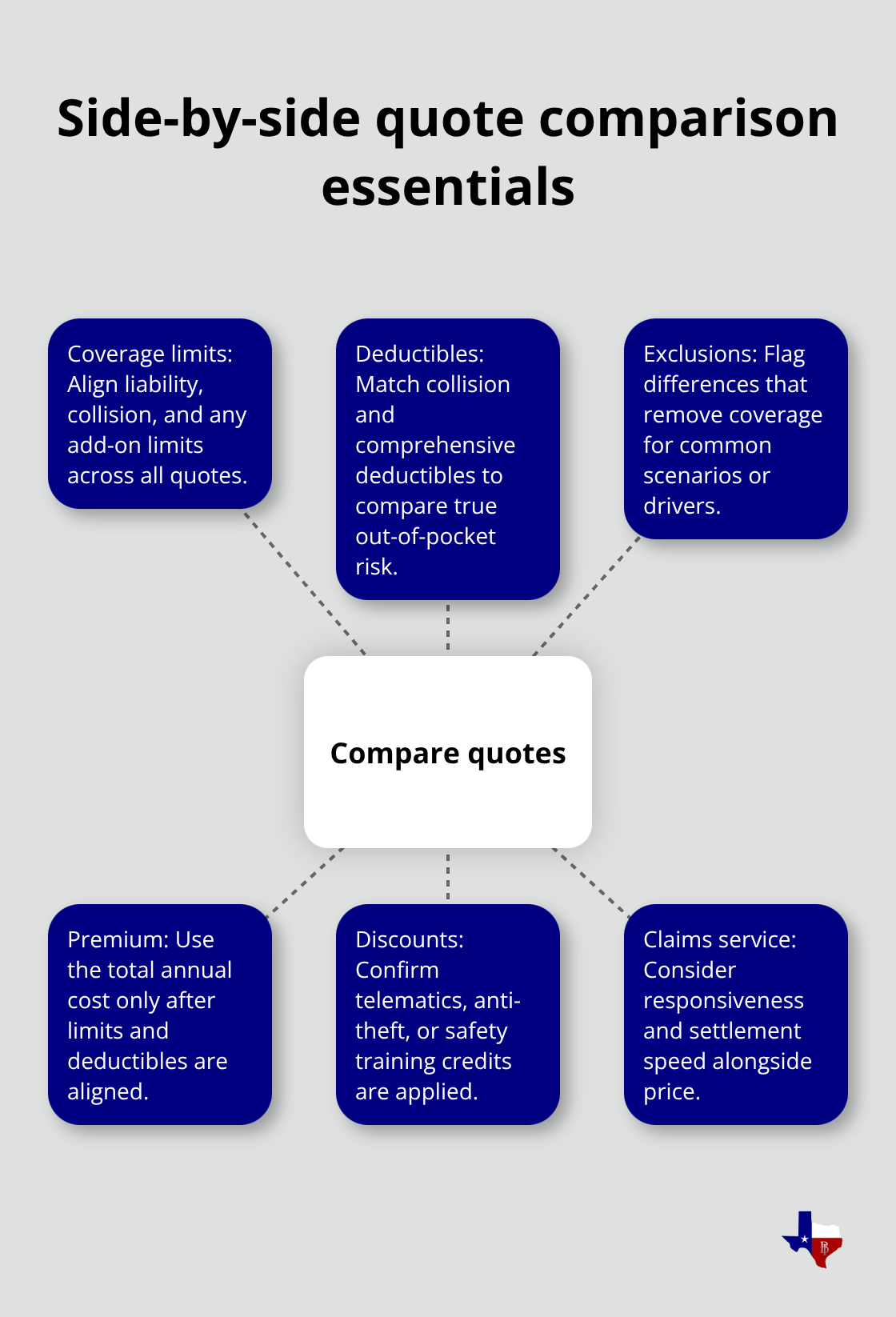
Different carriers price the same fleet wildly differently based on their underwriting appetite and claims experience. One insurer might specialize in construction fleets while another avoids them entirely, creating 30-40% premium swings between carriers for identical coverage. At Brooks Insurance, we represent multiple top-rated insurance companies, which means you access a larger selection of coverage, pricing, and payment options than you would with a single carrier. When quotes arrive, strip away the marketing language and focus on what matters: coverage limits, deductibles, exclusions, and the actual premium.
Comparing Coverage and Cost
A $2,000 annual savings on a policy with $500 deductibles and $1 million liability limits beats a $2,500 savings on a policy with $2,500 deductibles and $500,000 liability limits. The cheaper option leaves you dangerously exposed if a serious accident occurs. Compare apples to apples by ensuring all quotes carry identical liability limits, collision deductibles, and coverage add-ons like uninsured motorist protection or rental reimbursement.
Many carriers offer discounts for safety investments like telematics or anti-theft systems, which can reduce premiums by 10-20%. Ask each insurer what discounts you qualify for based on your fleet’s equipment, driver training programs, or claims history. If you’ve already installed GPS tracking or collision-avoidance technology, make sure your quote reflects that savings.
Evaluating Insurer Reputation and Claims Service
Reputation matters more than price alone because a cheap policy with poor claims service costs far more in the long run. Check National Association of Insurance Commissioners complaint data and online reviews from other Texas business owners operating similar fleets. Construction contractors and delivery services often leave detailed feedback about how quickly insurers paid claims or responded to accidents.
Contact your top three quote candidates and ask how long claims typically take to settle and whether they offer 24/7 claims reporting. Checking claims service quality and response time helps you understand your insurer’s reliability during emergencies. Call their customer service line with a specific question about your coverage and measure how quickly someone answers and whether they actually understand commercial auto insurance.
Verifying Texas Compliance and Making Your Selection
Request written confirmation that all quotes meet Texas minimum requirements: $30,000 bodily injury per person, $60,000 per accident, and $25,000 property damage. Verify whether PIP coverage is included and at what cost, since opting out saves money if your business already carries workers compensation. Your final selection should balance premium cost, coverage strength, claims service reputation, and discount opportunities. The lowest price wins only if the other factors align with your fleet’s actual needs.
Final Thoughts
Accurate commercial auto policy quotes require you to understand what insurers measure, prepare complete documentation, and compare options across multiple carriers. Vehicle weight, driver records, annual mileage, and location drive your rates significantly, and the lowest quote wins only if it provides adequate coverage and comes from an insurer with strong claims service. Strip away marketing language and compare identical coverage limits, deductibles, and add-ons across all quotes to make a fair assessment.
We at Brooks Insurance simplify this entire process by representing multiple top-rated insurance companies, which means you access a wider range of coverage options, pricing, and payment plans than you would shopping alone. Our licensed agents understand Texas-specific risks, from weather exposure to urban accident frequency, and we know which carriers specialize in your industry. Rather than juggling quotes from a dozen different websites, you work with someone who knows your business and can explain trade-offs between premium cost and coverage strength.
Contact us at brooksinstx.com to discuss your commercial auto policy quotes and get started with accurate estimates tailored to your operation. We handle the comparison work so you can focus on running your fleet.
Disclaimer: The information provided in this blog is for general informational purposes only and does not constitute legal, financial, or insurance advice. Coverage options, terms, and availability may vary. Please consult with a licensed professional for advice specific to your situation