

Fleet owners in Texas face rising commercial auto costs that can strain budgets fast. At Brooks Insurance, we’ve helped hundreds of businesses cut their premiums without sacrificing protection.
This guide shows you exactly what drives your rates and how to lower them. You’ll also learn the costly mistakes that most fleet managers make.
What Determines Your Fleet’s Insurance Rate
Your vehicle type sits at the center of your rate calculation, and the difference between choices can swing your premium by hundreds monthly. A Ford F-250 pickup costs roughly $40 to $50 less per month than an F-350 dually for the same contractor operation in Texas, according to rate benchmarking data. Light box trucks push into Class 3 territory above 10,001 pounds GVWR, triggering federal FMCSA compliance requirements and substantially higher liability exposure, which translates to premiums ranging from $380 to $700 monthly depending on risk factors. Cargo vans remain the most cost-efficient option for service trades because their enclosed storage reduces theft risk and eliminates heavy-towing exposure. Electric commercial vehicles cost more to insure than gas or diesel equivalents due to battery replacement risk and limited parts availability, making them a poor choice for budget-conscious fleet managers right now.
How Your Drivers Shape Your Bottom Line
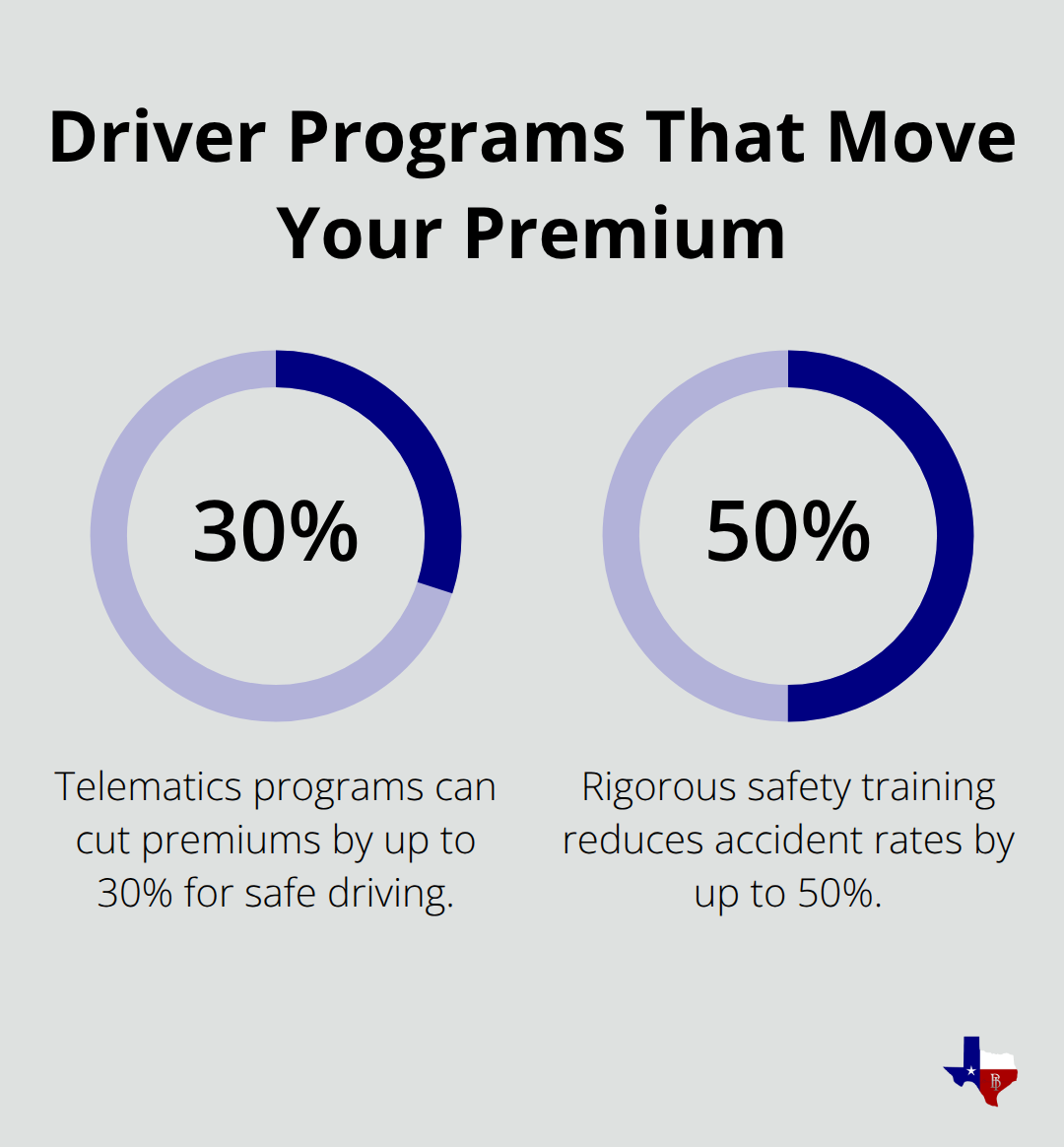
Driver history matters more than most fleet owners realize, and a single violation on your record can permanently damage your rates. Texas premiums rise 7 to 15 percent on average in 2026 because litigation costs and repair inflation continue climbing, but poor driver records push that increase far higher. Telematics or usage-based insurance programs cut premiums by up to 30 percent for safe driving, making driver monitoring your strongest cost-reduction tool. Rigorous safety training reduces accident rates by up to 50 percent according to research, which translates directly into lower renewal rates over time.
New ventures in Texas face a 20 to 35 percent surcharge initially (often 30 to 50 percent higher than established fleets), though this penalty fades after three years with clean loss history.
Coverage Choices That Impact Your Budget
Your liability limit selection determines whether you protect your business or leave it exposed, and the minimum 30/60/25 coverage required in Texas leaves most fleets dangerously underinsured. The Insurance Information Institute recommends liability coverage around $1 million combined single limit for most commercial auto policies, and this higher limit typically costs only $100 to $200 more annually than the state minimum. Collision and comprehensive coverage add significantly to your premium, but higher deductibles lower monthly costs at the expense of larger out-of-pocket expenses after a claim. Hired and non-owned auto coverage costs $100 to $300 yearly for light-duty contractors and protects when employees use personal vehicles for business. Cargo coverage becomes critical for delivery and logistics fleets because it reimburses damage or theft of goods in transit (yet many fleet managers skip this protection entirely).
The Hidden Cost of Underinsurance
Most Texas fleet owners assume the state minimum satisfies their protection needs, but this assumption creates serious financial exposure. A single lawsuit from a severe accident can exceed $1 million in damages, leaving your business liable for amounts beyond your policy limits. Underinsurance forces you to pay out-of-pocket for claims that adequate coverage would handle, potentially bankrupting smaller operations. The modest premium increase for higher limits makes underinsurance a false economy that exposes your fleet to catastrophic risk.
What Comes Next in Your Cost Strategy
Understanding what drives your rates forms the foundation for controlling them. The next section reveals specific strategies that lower your premiums without cutting corners on protection.
How to Lower Your Fleet Premiums Without Cutting Coverage
Bundle Policies to Maximize Savings
Combining your commercial auto policy with other business insurance lines cuts your overall costs substantially. Clients who merge auto coverage with general liability, workers compensation, or property policies typically reduce premiums by 5 to 15 percent. The savings compound across multiple vehicles, making this strategy especially effective for fleets with three or more units.
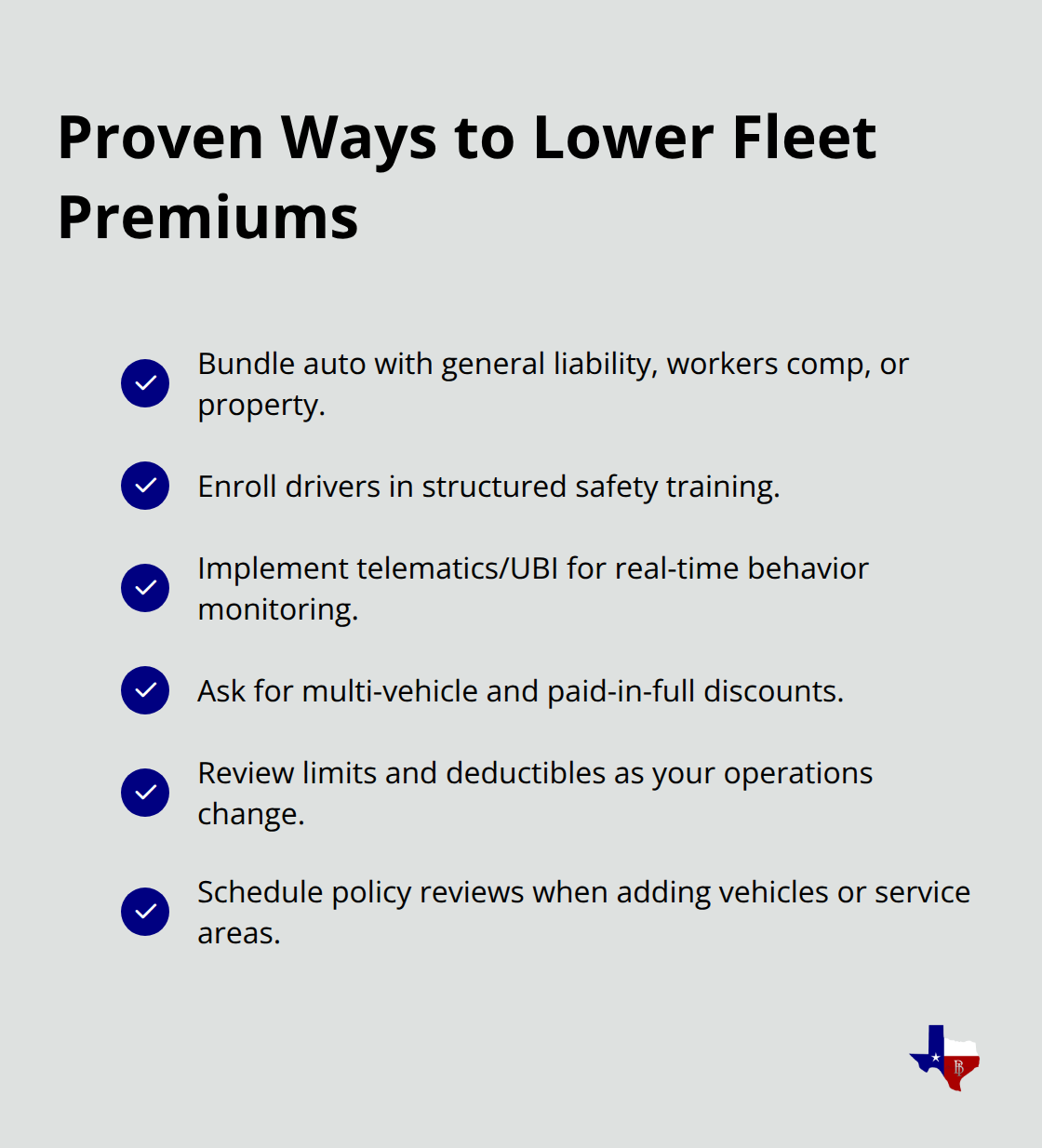
Many carriers offer additional discounts when you pay your full premium upfront rather than in monthly installments, which can trim another 5 to 10 percent from your bill. Ask your agent specifically about multi-vehicle discounts and paid-in-full options before accepting any quote, because these reductions rarely appear unless you request them directly.
Deploy Driver Safety Programs That Carriers Reward
Driver safety programs deliver measurable results that insurers reward with lower rates. Rigorous training reduces accident rates by up to 50 percent according to research, which means carriers see your fleet as lower risk and price accordingly. Telematics programs monitor real-time driving behavior and cut premiums by up to 30 percent for safe operators, making this one of the fastest ways to offset rising costs. Texas fleets operating in high-traffic metros like Houston and Dallas benefit most from these programs because accident exposure is naturally higher in congested areas.
Adjust Coverage and Deductibles to Match Your Needs
Your coverage needs shift as your business grows or contracts, and outdated limits leave you either overpaying for unnecessary protection or exposed to gaps. Schedule a policy review when you add vehicles, hire new drivers, or expand into new service areas. Higher deductibles lower monthly premiums if you have cash reserves to cover out-of-pocket costs after a claim, but only choose this option if your business can absorb the financial impact without strain. The math works differently for every operation, so compare scenarios with actual numbers from your carrier rather than making assumptions about what saves money.
Identify Which Mistakes Cost You the Most
Common errors in fleet management create unnecessary premium increases that you can avoid with the right approach. The next section reveals the costly mistakes that most fleet managers make and how to sidestep them entirely.
Mistakes That Tank Your Fleet’s Insurance Rate
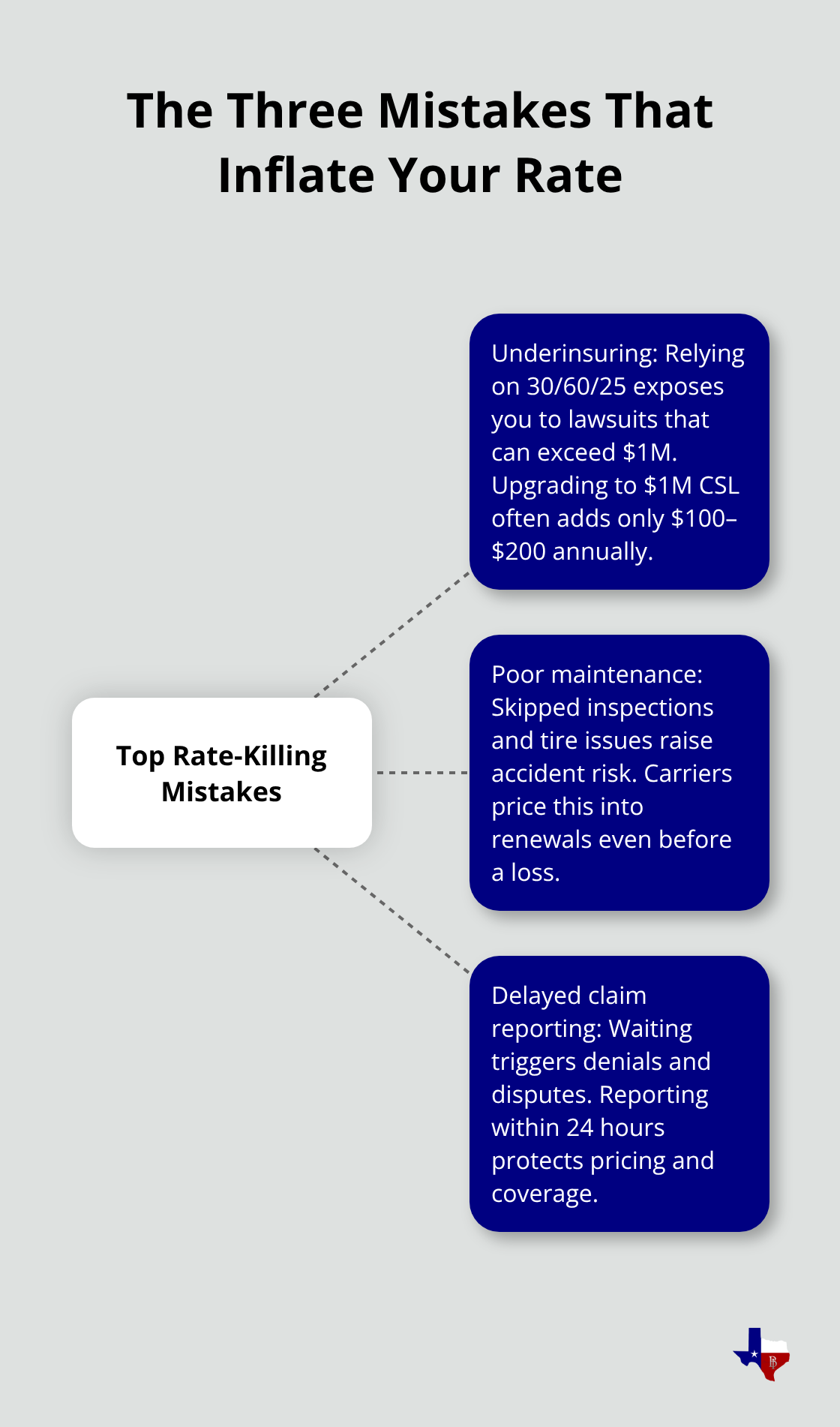
Fleet managers in Texas routinely make three preventable errors that permanently inflate their premiums and leave their businesses exposed to financial devastation. The first mistake involves accepting state minimum liability coverage as adequate protection, which destroys businesses after serious accidents. Texas requires only 30/60/25 coverage, but a single lawsuit from a severe collision can easily exceed $1 million in damages, forcing your company to pay amounts beyond your policy limits from operating capital. The Insurance Information Institute recommends $1 million combined single limit for most commercial operations, and this upgrade costs only $100 to $200 annually compared to the bare minimum. Fleet owners who skip this modest investment are gambling with their entire business on the false assumption that catastrophic accidents won’t happen to them. The financial math is brutal: choosing a $500 annual premium increase over a $1 million liability gap leaves your fleet exposed to claims that could total $500,000 or more out-of-pocket. New ventures in Texas face initial surcharges of 20 to 35 percent anyway, so underinsuring compounds an already expensive situation for growing operations.
Why Vehicle Maintenance Directly Impacts Your Rates
The second costly mistake involves ignoring vehicle maintenance and condition, which directly impacts both your accident rates and your premiums. Tire defects rank among the notable causes of Texas truck accidents, yet many fleet managers defer maintenance to cut costs, only to face higher insurance rates that dwarf any savings from skipped inspections. A vehicle that fails safety inspections or shows signs of poor maintenance becomes a claim waiting to happen, and carriers price this risk into your renewal quote even before an accident occurs. Carriers view poorly maintained fleets as higher risk and adjust your rates accordingly, transforming short-term savings into long-term cost increases.
How Prompt Claim Reporting Protects Your Coverage
The third mistake happens after accidents occur: failing to report claims promptly creates claim denials that leave your business unprotected and damages your loss history permanently. Carriers view delayed reporting as suspicious and may refuse coverage, transforming what should be an insured loss into an uninsured expense. Texas fleets that report claims within 24 hours maintain better relationships with carriers and preserve favorable renewal pricing, while those that delay reporting face investigation delays and potential coverage disputes. Prompt reporting demonstrates professionalism and protects your standing with your insurance company.
The Compounding Effect Across Your Fleet
These three errors compound across your fleet size, turning a $50 monthly mistake on one vehicle into thousands annually across multiple units. A five-vehicle operation that underinsures, skips maintenance, and delays claims can easily face $10,000 or more in additional annual costs compared to a fleet that avoids these mistakes. The cumulative impact of these preventable errors makes the difference between a profitable operation and one that struggles with rising insurance expenses year after year.
Final Thoughts
Your commercial auto costs in Texas depend on the decisions you make today and the actions you take going forward. Vehicle type, driver history, and coverage limits drive your rates, but you control what changes most. Bundling policies, implementing safety programs, and maintaining your fleet consistently lower premiums without sacrificing protection.
You need an agent who understands Texas commercial auto insurance and matches your specific operation to the right coverage at the right price. At Brooks Insurance, we represent multiple top-rated insurance companies, which gives you access to a larger selection of coverage options and pricing that fits your budget. Our licensed agents work with you to identify which cost-reduction strategies apply to your fleet and which coverage gaps expose your business to unnecessary risk.
Contact Brooks Insurance today to discuss your fleet’s protection and get an accurate estimate for your operation. Provide complete details about your vehicles, drivers, garaging location, and annual mileage so quotes reflect your real situation rather than generic assumptions. With over 50 years of experience serving Texas businesses, we know how to control commercial auto costs while keeping your fleet properly protected.
Disclaimer: The information provided in this blog is for general informational purposes only and does not constitute legal, financial, or insurance advice. Coverage options, terms, and availability may vary. Please consult with a licensed professional for advice specific to your situation